No results. Is a plant missing? Tell uscontact@wikiplant.net
Brazilian waterweed
Egeria densa
Care level: Very easy
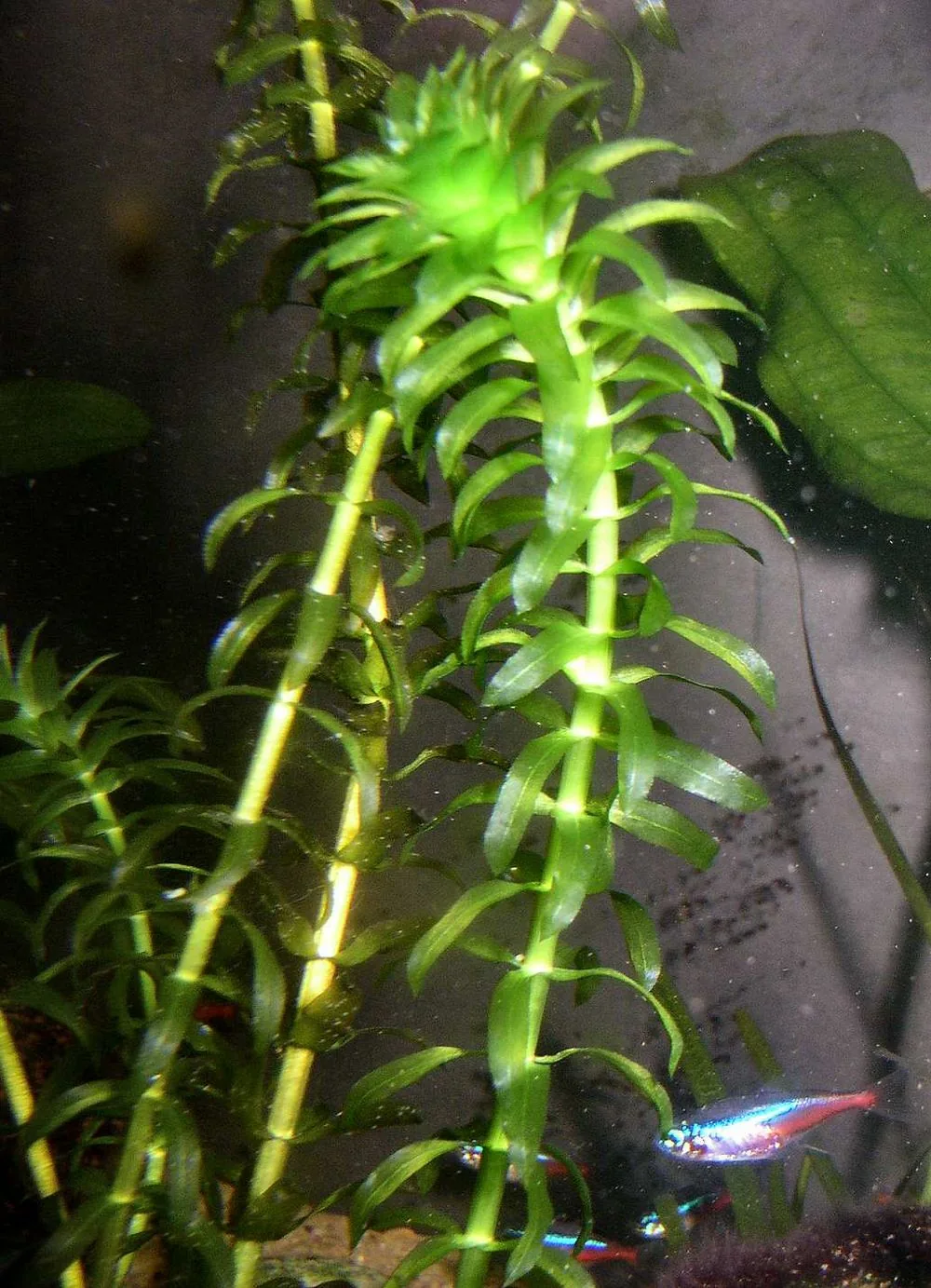
Brazilian waterweed, often sold as anacharis or simply as waterweed, is a fast-growing stem plant from South America with bright green stems densely clothed in whorls of small, narrow leaves, usually four or more to a whorl. It is a classic beginner's plant: it grows in low light without added CO2, planted or simply left floating, and it takes up so many nutrients from the water that it helps to keep algae down in a new tank.
Low to bright aquarium lighting. Growth is faster and denser with more light.
Water
Ordinary freshwater conditions, heated or unheated. Added CO2 is not needed.
CO2 & Feeding
Not applicable; this is a fully submerged aquarium plant.
Substrate
Any substrate, or none at all if it is left floating. It feeds mainly through its leaves.
Size
Stems 40-100cm long.
Growth speed
Fast
Tank Placement
Background
Beginner tip
Use it as a starter plant. A generous bunch planted from the first day absorbs the excess nutrients of a new aquarium while slower plants settle in, and it can be thinned out or removed later as the tank matures.
Care by Season
Spring
No seasonal rhythm in a heated tank. In an unheated tank growth picks up as the water warms.
Summer
Growth is at its fastest. Trim every week or two and thin floating mats so that light reaches the plants below.
Autumn
No seasonal change in a heated tank. In an unheated tank growth slows.
Winter
Slow growth in cool water. Remove dying stems before they foul the water.
Growing & Maintenance
Planting
Push single stems or small bunches a few centimetres into the substrate at the back of the tank, with any lead weight or band removed, or leave the stems floating.
Trimming
Cut the stems back before they cover the surface, replant the tops and discard bare lower sections.
Propagation
Any cut piece of stem with a few whorls grows into a new plant.
Pests & Diseases
Common problems
Pale, thin stems
Most likely cause: A lack of light or nutrients.
What to do: Add a liquid fertiliser or increase the light.
Bare lower stems
Most likely cause: The base is shaded by the growth above.
What to do: Cut and replant the tops and discard the bare sections.
A mat covering the surface
Most likely cause: Untrimmed stems.
What to do: Thin them out so that light reaches the rest of the tank.
Leaves dropping after a move
Most likely cause: A sudden change in temperature or water.
What to do: Leave it to settle; new growth from the tips is normal within a couple of weeks.
Stems that keep floating up
Most likely cause: Too shallow a planting, or fish pulling them out.
What to do: Plant deeper in small bunches, or let them float.
Pests & Diseases
Algae on the leaves
Signs: Green or brown film on the upper whorls, mostly in strong light.
Treatment: Trim off the worst stems and shorten the lighting period. Healthy, fast-growing stems outcompete algae.
Stems rotting after planting
Signs: The buried end turns brown and soft and the stem floats up.
Treatment: Remove the weight or band it was sold with, cut back to healthy green stem and replant, or leave the stems floating.
FAQ
Should I plant it or let it float?
Either works. Pushed into the substrate it makes a green background; left floating it gives cover to fry and shades the tank. Floating stems send down thin white roots of their own.
Does it need CO2 or strong light?
No. It grows in low light and without added CO2. With more light and nutrients it simply grows faster and denser.
Why are the stems pale and thin?
The plant keeps growing even when conditions are poor, but the stems turn light and thin. That is a sign that it is short of light or nutrients. Add a liquid fertiliser or give it more light.
How do I trim it?
Cut the stems to the length you want and replant the tops. Remove old, leafless lower sections, which do not recover.
Can it live in an unheated tank?
Yes. It tolerates cool water well, which makes it a common plant for unheated aquariums.
Can I put surplus stems in a pond or stream?
No. This plant has become a serious invasive weed in many countries, choking lakes and waterways. Dry out surplus stems and put them in the household waste; never release them outdoors.