No results. Is a plant missing? Tell uscontact@wikiplant.net
Bucephalandra
Bucephalandra spp.
Care level: Easy
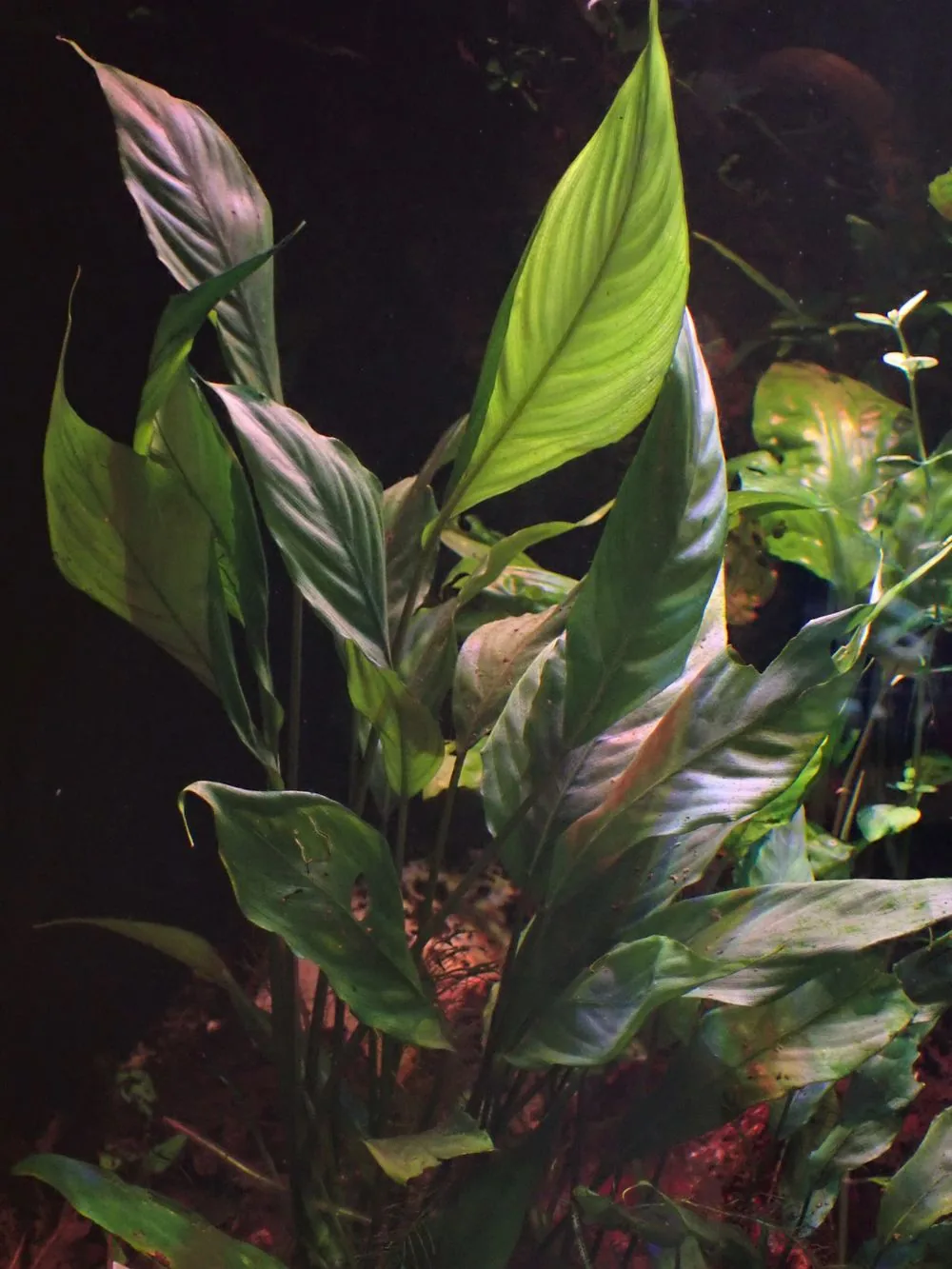
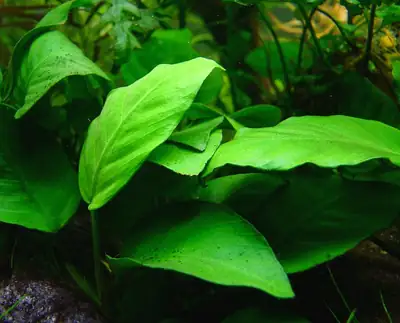
Bucephalandra is a group of small aroids from the island of Borneo, where they cling to rocks in and beside fast-flowing streams. In the aquarium they are treated like Anubias: tied or glued to stone or wood, where their creeping rhizome slowly sends out firm, glossy leaves with wavy edges, in dark green, bronze, red-brown or blue-tinted shades, often with a metallic sheen and tiny pale dots. They grow slowly, need little light and no added CO2, and are among the easiest and longest-lived plants for a planted tank.
Ordinary tropical freshwater with some current. Added CO2 is optional. Avoid sudden changes in water conditions.
CO2 & Feeding
Not applicable when grown submerged.
Substrate
No substrate. Attach the rhizome to stone or wood; never bury it.
Size
Leaves of about 5cm on a creeping rhizome; most forms stay under 10cm tall.
Growth speed
Slow
Tank Placement
Attached to hardscape
Common mistake
Never bury the rhizome. Pushed into the substrate it rots and the plant dies. Fix it to a stone or a piece of wood with thread or a drop of aquarium glue, or wedge it into a crack, with only the roots free to find their way down.
Care by Season
Spring
Growth is slow and steady all year in a heated, lit tank.
Summer
Remove old leaves that have collected algae and divide large clumps if you wish.
Autumn
No seasonal change. Keep water conditions stable.
Winter
No rest period.
Growing & Maintenance
Planting
Fix the rhizome to stone or wood with thread or aquarium glue, in a spot with some water movement and out of the brightest light. Remove the pot and rock wool first.
Fertilising
Add a liquid fertiliser regularly, as the plant feeds from the water through its leaves and roots.
Trimming
Cut off old or algae-covered leaves at the rhizome. No other trimming is needed.
Propagation
By division: cut the rhizome with a sharp blade into pieces with several leaves each and attach them separately.
Pests & Diseases
Common problems
Rhizome soft and brown
Most likely cause: It was buried in the substrate.
What to do: Lift it, cut away the rotten part and attach the healthy piece to stone or wood.
Leaves melt after planting
Most likely cause: A change of water conditions.
What to do: Wait; keep the tank stable and remove dead leaves.
Leaves covered in algae
Most likely cause: Too much light on slow-growing leaves.
What to do: Give more shade and shorten the light period.
Almost no new growth
Most likely cause: A naturally slow plant, or very few nutrients.
What to do: Add a liquid fertiliser and be patient.
The plant keeps coming loose
Most likely cause: Not yet rooted, or fish pulling at it.
What to do: Tie or glue it again and leave it for a few weeks.
Pests & Diseases
Algae on the leaves
Signs: Green spots, a dark film or black tufts on the slow-growing leaves, mostly under strong light.
Treatment: Move the plant to a shadier spot, remove the worst leaves and keep nutrients balanced.
Leaf melt
Signs: Leaves that turn soft and glassy and fall away after planting or a sudden change in the water.
Treatment: Remove the decaying leaves and leave the firm rhizome attached; it reshoots.
FAQ
How do I plant Bucephalandra?
Attach it. Tie the rhizome to stone or wood with cotton thread or fishing line, or use a small drop of gel superglue made for aquariums. Within a few weeks the roots grip by themselves. If you want it at the bottom, rest the rhizome on the surface and cover only the roots.
How much light does it need?
Little. It grows in low to medium light and does best away from the strongest lighting, where slow leaves would otherwise be overgrown by algae.
Does it need CO2 or fertiliser?
CO2 is not needed, though it speeds growth a little. As it takes nutrients from the water, a regular liquid fertiliser helps, especially in a tank with few fish.
Why did the leaves melt after I added it?
Bucephalandra reacts to sudden changes in water or to a move between tanks by shedding leaves, which turn soft and translucent. Leave the rhizome in place as long as it is firm; new leaves grow from it within weeks.
How fast does it grow?
Slowly: about one new leaf every week or two per shoot at best. That is why it is sold in small portions and why established clumps are valued.
Does it flower under water?
Yes. Healthy plants produce small white or pinkish spathes, like miniature arum flowers, even when fully submerged.