No results. Is a plant missing? Tell uscontact@wikiplant.net
Burro's Tail
Sedum morganianum
Care level: Easy
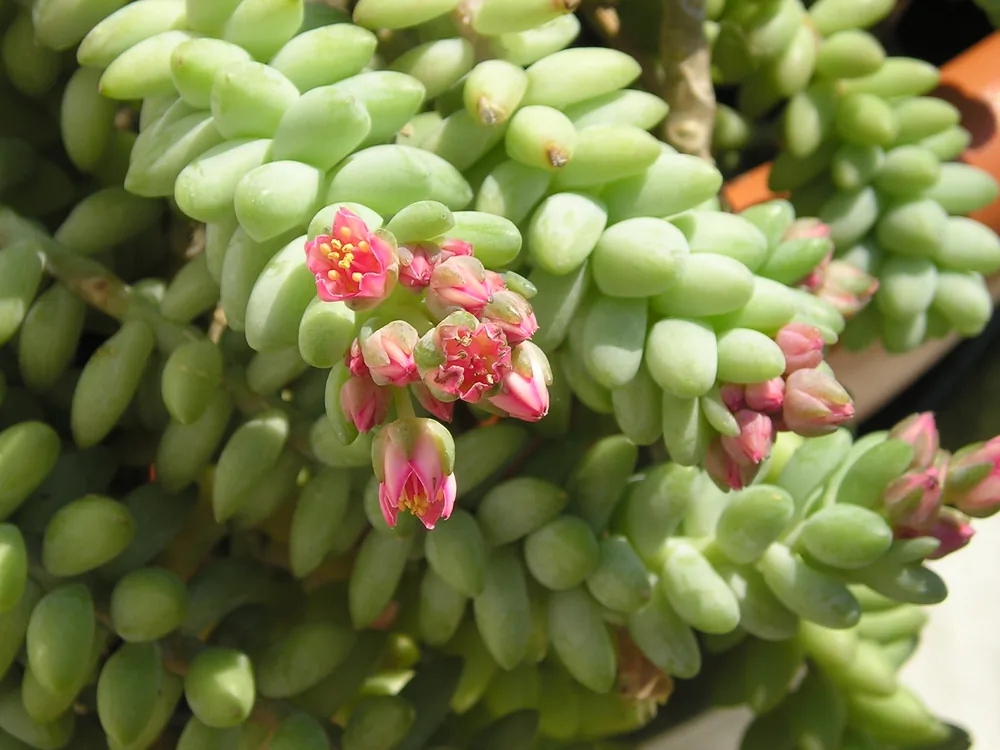
The plump, tightly overlapping leaves of burro's tail form thick trailing ropes that can grow several feet long over the years, resembling a donkey's tail hanging from its native cliffside habitats in Mexico and Honduras. Each leaf is covered in a delicate powdery coating called farina, which reflects sunlight and reduces water loss, but which also rubs off if the plant is handled or bumped, exposing the greener skin beneath.
BurritoSedum morganianum f. variegatumGolden Sedum
Light
Bright light with several hours of direct sun for tight, plump leaf growth.
Water
Let soil dry out completely between waterings, roughly every 2-3 weeks; the plump leaves store water.
Humidity
Prefers low humidity and good airflow; avoid misting the delicate leaves.
Soil
Fast-draining succulent or cactus mix.
Temperature
Normal room temperatures. It tolerates cool down to about 4°C but must stay frost-free.
Size
Trailing stems 30-120cm long.
Growth speed
Medium
Best position
south-east / south / south-west-facing windowanywhere up to about 1 m from the window
east / west-facing windowright by the window
See every window directionHide window directions
Best position
right by the window
about 1 m
about 2 m
about 4 m
4 m or more
north
too dark○
too dark○
too dark○
too dark○
too dark○
north-east
too dark○
too dark○
too dark○
too dark○
too dark○
east
works well✓
too dark○
too dark○
too dark○
too dark○
south-east
works well✓
works well✓
too dark○
too dark○
too dark○
south
works well✓
works well✓
too dark○
too dark○
too dark○
south-west
works well✓
works well✓
too dark○
too dark○
too dark○
west
works well✓
too dark○
too dark○
too dark○
too dark○
north-west
too dark○
too dark○
too dark○
too dark○
too dark○
✓works well~just about○too dark☼too much direct sun
A rough guide based on window direction and typical daylight through the year. Window size, curtains and whatever stands outside matter just as much.
✓Non-toxic to pets
Considered non-toxic to cats and dogs.
Source: ASPCA
Common mistake
Moving, repotting, or brushing against a burro's tail too often is a common way owners accidentally strip it bare, since the plump leaves detach at the slightest touch and rarely reattach once knocked loose.
Care by Season
Spring
Resume watering as soil fully dries and begin light feeding as trailing stems grow.
Summer
Water once soil is completely dry and give plenty of bright light, handling gently to avoid dropping leaves.
Autumn
Reduce watering frequency and stop feeding as growth slows.
Winter
Water sparingly, roughly once a month, and keep in a bright, cool but frost-free spot.
Growing & Maintenance
Soil and pot
A fast-draining succulent or cactus mix in a shallow pot or hanging basket with drainage holes.
Fertilising
Feed lightly once or twice during the growing season.
Propagation
From stem cuttings or from single fallen leaves, both of which root easily when laid on dry succulent mix.
Pests & Diseases
Common problems
Leaves dropping at the slightest touch
Most likely cause: Normal. The leaves are only loosely attached.
What to do: Find the plant a permanent spot and move it as little as possible.
Shrivelled, wrinkled leaves
Most likely cause: Thirst.
What to do: Water thoroughly with tepid water, then let the compost dry out fully.
Soft, translucent leaves and rotting stems
Most likely cause: Overwatering.
What to do: Stop watering, let the compost dry out completely and repot into fresh, fast-draining mix.
Stretched stems with gaps between the leaves
Most likely cause: Too little light.
What to do: Give it bright light with several hours of direct sun.
Pale, scorched leaves
Most likely cause: A sudden move into hot, direct sun.
What to do: Increase the sun exposure gradually.
Pests & Diseases
Mealybugs
Signs: White cottony fluff tucked between the closely packed leaves.
Treatment: Remove with an alcohol-soaked cotton swab, repeating until clear. Check the undersides of the leaves and the crevices where the leaf stem meets the main stalk.
Aphids
Signs: Small clustered insects near stem tips and new growth.
Treatment: Rinse gently with water and apply insecticidal soap if needed.
Root and stem rot
Signs: Mushy, discolored stems and leaves dropping easily from overwatering.
Treatment: Stop watering, let soil dry fully, and repot into dry, fast-draining mix.
FAQ
Why do the leaves on my burro's tail fall off so easily when I touch it?
This is a natural trait of the species, not a sign of poor health; the leaves are only loosely attached to the stem, which in the wild helps fallen leaves root and start new plants on the ground below.
Can I grow a new burro's tail plant from the leaves that fall off?
Yes, fallen leaves can be laid on top of dry succulent soil and will often sprout tiny roots and a new rosette within a few weeks, so dropped leaves aren't necessarily a loss.
Is burro's tail safe for cats and dogs?
Yes, burro's tail is not toxic to cats or dogs.
How often should I water a burro's tail?
Roughly every 2-3 weeks, once the compost has dried out completely, and about once a month in winter. The plump leaves store water.
Does a burro's tail flower?
Rarely as a houseplant. It is grown for its trailing stems of plump, overlapping leaves.
How cold can a burro's tail get?
It tolerates temperatures down to about 4°C. A bright, cool but frost-free spot suits it in winter.