No results. Is a plant missing? Tell uscontact@wikiplant.net
Canadian waterweed
Elodea canadensis
Care level: Very easy
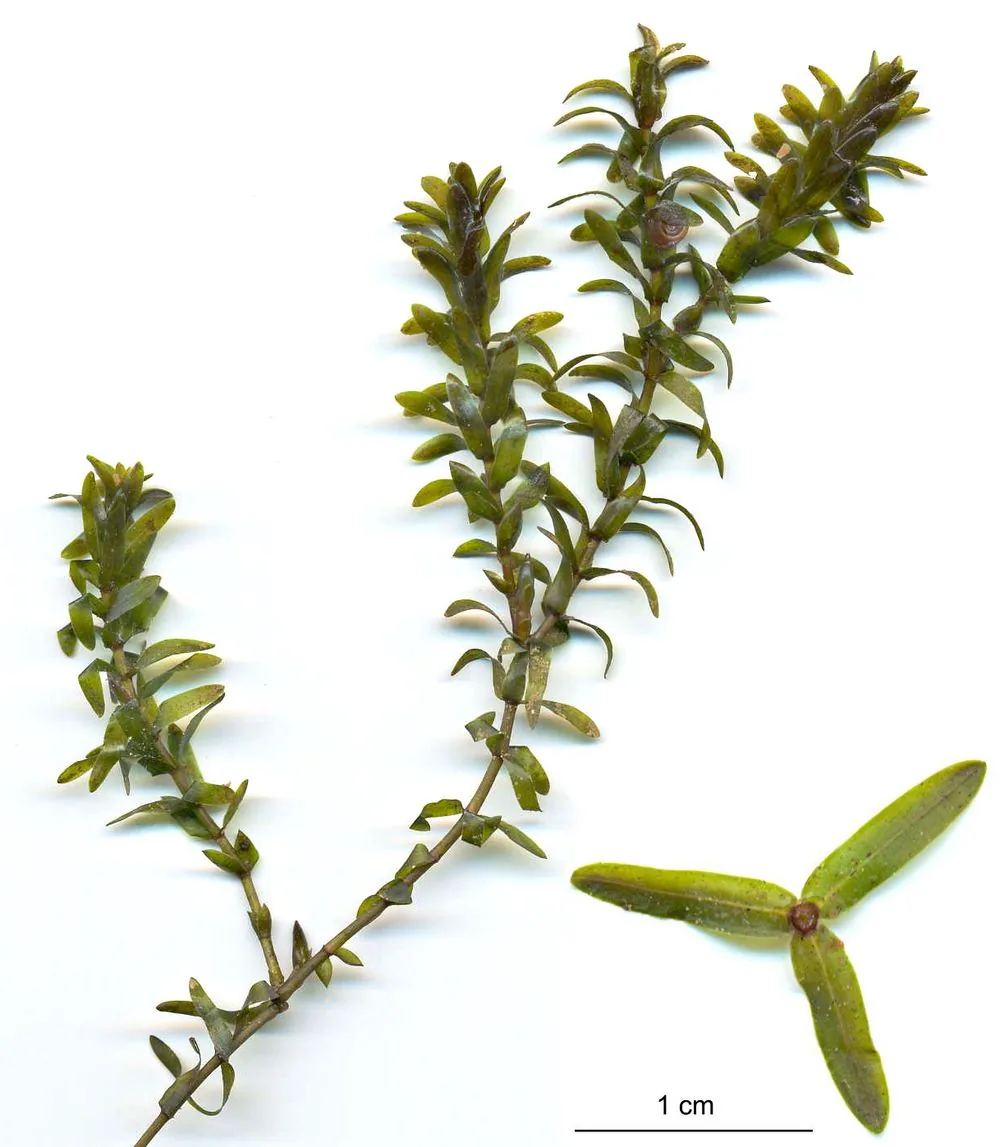
Canadian waterweed is a submerged stem plant from North America with slender, branching stems and small, narrow, dark green leaves set in whorls of three. It is a classic plant for unheated aquariums and garden ponds, where it grows fast, takes up nutrients and gives fish and invertebrates cover. It roots in the substrate but grows just as well floating, and every broken piece can become a new plant, which is both its strength in a tank and the reason it has spread through waterways far outside its native range.
Low to bright light. Growth is denser with more light.
Water
Cool, ordinary freshwater in an unheated tank or pond. Added CO2 is not needed.
CO2 & Feeding
Not applicable; this is a fully submerged plant.
Substrate
Any substrate, or none if it is left floating. It feeds mainly through its leaves.
Size
Stems 60cm to over 1m long.
Growth speed
Fast
Tank Placement
Background
Safety note
Never tip this plant, or water containing fragments of it, into a pond, ditch or stream. A single piece of stem can grow into a colony that fills a waterway. Dry out surplus stems and put them in the household waste.
Care by Season
Spring
Growth picks up as the water warms. Thin overwintered stems and replant healthy tips.
Summer
Growth is at its fastest. Trim every week or two in a tank and rake out surplus growth in a pond.
Autumn
Growth slows as the water cools.
Winter
In a pond the plant dies back to dormant shoots near the bottom and regrows in spring. In an unheated tank it keeps growing slowly.
Growing & Maintenance
Planting
Push stems or small bunches a few centimetres into the substrate at the back of the tank, with any lead weight removed, or leave them floating. In a pond, weight a bunch and drop it in.
Trimming
Cut the stems back before they cover the surface, replant the tops and remove bare lower sections. Lift out whole stems rather than leaving fragments.
Propagation
Any piece of stem with a few whorls grows into a new plant.
Pests & Diseases
Common problems
Thin, pale stems
Most likely cause: Water that is too warm, or a lack of light or nutrients.
What to do: Keep it in an unheated tank and give more light or a liquid fertiliser.
The plant fills the tank or pond
Most likely cause: Fast growth left untrimmed.
What to do: Remove part of the growth regularly.
Bare lower stems
Most likely cause: Shade from the growth above.
What to do: Cut and replant the tops and discard the bare sections.
Fragments drifting everywhere
Most likely cause: Brittle stems broken by fish or by trimming.
What to do: Net out loose pieces; each one will otherwise root.
Stems floating up after planting
Most likely cause: Too shallow a planting.
What to do: Plant deeper in small bunches, or let them float.
Pests & Diseases
Algae on the leaves
Signs: Green or brown threads caught among the whorls, mostly in strong light and still water.
Treatment: Remove the worst stems and reduce the light or the feeding of the tank. Healthy stems outgrow it.
Decline in warm water
Signs: Stems that turn thin, pale and brittle and shed their leaves in a heated tank.
Treatment: Move the plant to cooler water, or replace it with a species suited to warm tanks.
FAQ
Is Canadian waterweed suitable for a tropical tank?
It is a cool-water plant. It does best in an unheated aquarium or a pond, and in a warm tropical tank it tends to grow thin and decline. For warm water, Brazilian waterweed is the better choice.
How do I tell it from Brazilian waterweed?
Count the leaves in a whorl. Canadian waterweed has three small leaves at each joint, sometimes four. Brazilian waterweed is a larger plant with longer leaves in whorls of four to six.
Do I have to plant it?
No. Push the stems into the substrate for a background, or leave them floating. Floating stems send down fine white roots of their own.
How do I keep it under control?
Trim it often, as it grows fast, and remove whole stems rather than leaving loose fragments, since every piece regrows. In a pond, rake out part of the growth in summer so that it does not fill the water.
Does it help against algae?
A healthy, fast-growing stand takes up nutrients that algae would otherwise use, so it helps to keep the water clear. It is not a cure for a tank that is overstocked or overfed.
Does it flower?
Occasionally. Tiny white flowers on thread-like stalks reach the surface in summer. The plant spreads almost entirely by fragments, not seed.