No results. Is a plant missing? Tell uscontact@wikiplant.net
Duckweed
Lemna minor
Care level: Easy
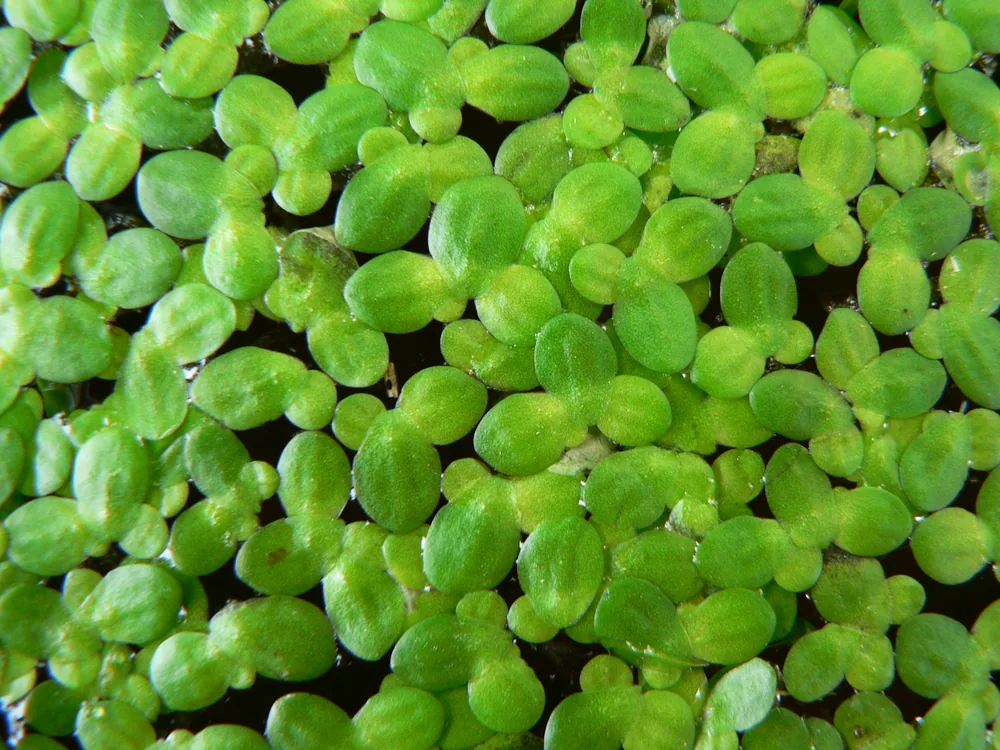
One of the smallest flowering plants on Earth, Duckweed consists of tiny 2-5mm oval fronds with a single trailing root, floating in dense mats across still ponds and slow waterways almost everywhere in the world. Betta and fry keepers value it for the cover and biofilm-grazing surface it provides, while others avoid it entirely because of how aggressively it multiplies and how hard it is to fully remove once established.
Common Duckweed (Lemna minor)Giant Duckweed (Spirodela)
Light
High light exposure at the surface (~40-60+ PAR) drives its extremely rapid multiplication; even moderate light supports fast growth.
Water
Weekly 20-30% water changes; extremely adaptable, pH 5.0-9.0, 15-30°C, tolerates poor water quality well.
CO2 & Feeding
No CO2 needed, draws carbon directly from the air; thrives on excess nutrients in the water column, which is part of why it spreads so fast.
Substrate
No substrate used, entirely free-floating with a single short root hanging in the water, never planted.
Temperature
15-30°C.
Growth speed
Fast
Tank Placement
Floating
Common mistake
Duckweed is notoriously difficult to eradicate once introduced, since even a single missed frond can regrow a full infestation within weeks, quarantine any new floating plants or fish-store bags carefully if you don't want it in your tank.
Care by Season
Spring
Multiplication accelerates rapidly with warmth and light; net out excess weekly to prevent full surface coverage.
Summer
Peak growth season, daily or near-daily removal may be needed to keep the surface from being completely covered.
Autumn
Growth slows as light and temperature drop; reduce removal frequency accordingly.
Winter
Multiplication nearly stops in cool water; existing fronds persist but rarely spread much further.
Growing & Maintenance
Planting
Do not plant it. It floats freely on the surface with a single short root hanging in the water.
Trimming
Net out the excess every week. In peak season it may need removing almost daily.
Pests & Diseases
Common problems
The whole surface covered
Most likely cause: Its extremely fast multiplication.
What to do: Net out the excess regularly and reduce the nutrients in the water.
Plants below losing light
Most likely cause: A closed layer of duckweed at the surface.
What to do: Keep part of the surface open.
Duckweed appearing in a tank where it was never added
Most likely cause: It hitchhikes on new plants.
What to do: Quarantine and rinse new plants thoroughly.
It keeps coming back after removal
Most likely cause: A single missed frond regrows a full cover.
What to do: Net it out at every water change, with less light and fewer nutrients.
No spread in winter
Most likely cause: Cool water. Multiplication nearly stops.
What to do: Nothing to do. It resumes when the water warms.
Pests & Diseases
Overgrowth blocking light
Signs: Entire surface covered, plants and fish below receiving little to no light
Treatment: Net out excess duckweed regularly and reduce nutrient input or light duration to slow regrowth.
Hitchhiker contamination
Signs: Duckweed appearing unexpectedly after adding new plants or fish
Treatment: Quarantine and rinse new floating plants thoroughly before adding them to an established tank.
FAQ
How do I get rid of duckweed once it's in my tank?
Manual removal with a fine net during every water change, combined with reduced lighting and nutrients, is the main approach; some keepers add duckweed-eating fish or invertebrates to help control it.
Is duckweed good or bad for an aquarium?
It is genuinely useful for surface cover, nutrient export, and fry protection in tanks where it is wanted, but it can quickly cover the entire surface and block light to plants and fish below if left unchecked.
Does Duckweed need CO2 or fertiliser?
No. It draws carbon straight from the air and lives on the excess nutrients in the water.
How much light does Duckweed need?
Strong light at the surface drives the fastest growth. It still multiplies under moderate light.
What water does Duckweed need?
Almost any: pH 5.0-9.0 and 15-30°C. It tolerates poor water quality well.
How fast does Duckweed grow?
Extremely fast in warmth and light. It can cover the whole surface within a short time, so weekly netting is part of keeping it.