No results. Is a plant missing? Tell uscontact@wikiplant.net
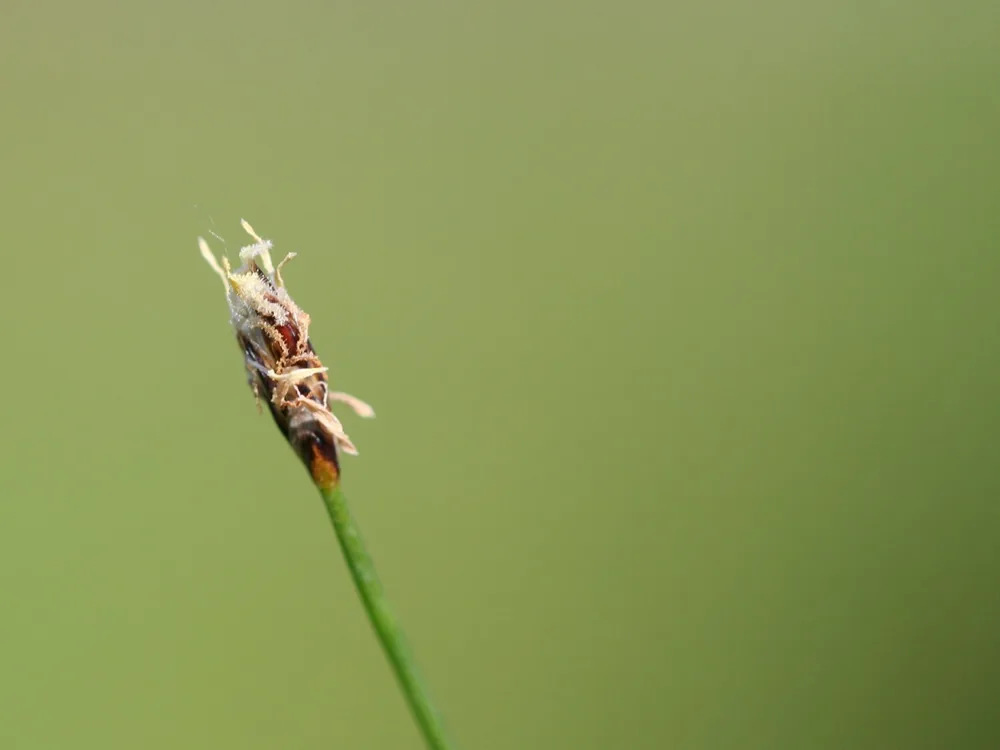
Dwarf Hairgrass
Eleocharis acicularis
Care level: Moderate
A true grass-like sedge found in shallow ponds and wetland margins across the northern hemisphere, Dwarf Hairgrass spreads underwater by sending out thin runners just below the substrate surface, eventually forming a dense green lawn. It is the classic choice for aquascapers wanting a natural meadow look in the foreground of a planted tank.
High light required (~50+ PAR) to grow low and dense; under weak light it grows tall and sparse instead of carpeting.
Water
Weekly 20-30% water changes; prefers pH 6.0-7.5, 20-28°C, soft to moderately hard water.
CO2 & Feeding
Injected CO2 is strongly recommended for a dense, low carpet; without it growth is much slower and less compact.
Substrate
Nutrient-rich aquasoil is ideal for fast runner spread; root tabs help in inert gravel substrates.
Temperature
20-28°C.
Tank Placement
Foreground
Common mistake
Planting single blades too sparsely is the most common reason carpets fail to fill in, space small tufts of 3-5 blades every couple of centimeters so the runners have less bare ground to cross before they mesh together.
Care by Season
Spring
Best season to plant new tufts as runner spread is fastest with rising light and temperature.
Summer
Peak growth, trim every one to two weeks to maintain a low, dense carpet.
Autumn
Growth slows; reduce trimming frequency and keep an eye on any thinning patches.
Winter
Growth nearly halts in cooler water; avoid heavy trimming until growth resumes.
Growing & Maintenance
Planting
Plant small tufts of a few blades close together, in nutrient-rich aquasoil in the foreground. Root tabs help in plain gravel.
Trimming
Once the carpet has filled in, trim the top third every couple of weeks to keep it low and dense.
Propagation
It spreads by runners through the substrate.
Pests & Diseases
Common problems
Tall, thin growth and no carpet
Most likely cause: Too little light, or no CO2.
What to do: Give it high light and inject CO2.
Blades melting after planting
Most likely cause: The plant is adapting to the tank.
What to do: Keep CO2 and light consistent. New runners follow.
Hair algae in the carpet
Most likely cause: Algae settling among the fine blades.
What to do: Remove it with tweezers and add algae-eating shrimp.
A carpet that stays patchy
Most likely cause: Tufts planted too far apart.
What to do: Plant small tufts close together.
Growth almost stopping
Most likely cause: Cool water.
What to do: Keep the water at 20-28°C and avoid heavy trimming until growth resumes.
Pests & Diseases
Melting after planting
Signs: Blades turn brown or translucent and collapse shortly after planting
Treatment: Keep CO2 and light consistent; new runners typically emerge from the base within a couple of weeks even if original blades melt.
Hair algae in the carpet
Signs: Fine green threads tangled among the grass blades
Treatment: Manually remove with tweezers, add algae-eating shrimp or otocinclus, and check that CO2 and nutrient dosing are balanced with the light intensity.
FAQ
Why won't my Dwarf Hairgrass carpet and instead just grows tall and thin?
This almost always means insufficient light or no CO2, without strong light it grows upward chasing light rather than spreading horizontally into a low carpet.
How do I trim a Dwarf Hairgrass carpet?
Once it fills in, trim the top third with scissors or aquascaping shears every couple of weeks to keep it low and encourage denser, thicker growth.
Does Dwarf Hairgrass need CO2?
It is strongly recommended. Without injected CO2 it grows much more slowly and less compactly.
How much light does Dwarf Hairgrass need?
High light. Under weak light it grows tall and sparse and does not carpet.
What water does Dwarf Hairgrass need?
Soft to moderately hard water at pH 6.0-7.5 and 20-28°C. Change 20-30% of the water every week.
How do I plant Dwarf Hairgrass?
In small tufts of a few blades, set close together. Single blades planted far apart are the usual reason a carpet fails to fill in.