No results. Is a plant missing? Tell uscontact@wikiplant.net
Dwarf sagittaria
Sagittaria subulata
Care level: Very easy
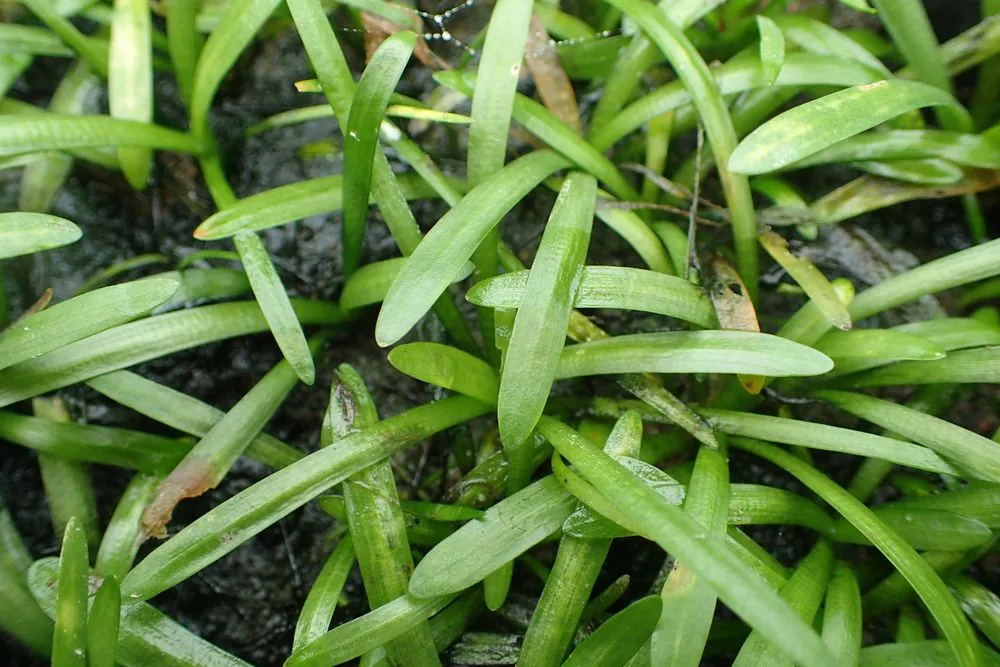
Dwarf sagittaria is a grass-like aquarium plant from the Americas with narrow, bright green, ribbon-shaped leaves that grow in small rosettes. Each plant sends out short runners that root and make new rosettes, so a few plants soon knit into a compact lawn. It is one of the least demanding choices for the front of a tank: it grows in low light, in plain gravel and without added CO2, and it tolerates a wide range of water conditions.
Low to bright aquarium lighting. It stays shorter and denser with more light.
Water
It tolerates a wide range of freshwater conditions. Added CO2 is not needed, though it speeds growth.
CO2 & Feeding
Not applicable; this is a fully submerged aquarium plant.
Substrate
Any substrate, from plain gravel to a nutrient-rich planted substrate. Root fertiliser helps in plain gravel.
Size
5-30cm tall, occasionally up to 50cm.
Tank Placement
Foreground
Did you know?
Its height is unpredictable. The same plant can stay at 5-10cm in one tank and suddenly stretch to 30cm or even 50cm in another, often as it ages or when it is crowded. A plant that has grown tall will often stay lower again if it is moved to an open spot.
Care by Season
Spring
No seasonal rhythm in a heated tank; growth is steady all year.
Summer
Growth is fastest in a warm, well-lit tank. Trim runners and thin crowded patches.
Autumn
No seasonal change indoors; carry on as usual.
Winter
No seasonal change in a heated tank. Growth slows if the water cools.
Growing & Maintenance
Planting
Plant single rosettes 2-4cm apart in the foreground, with the crown just above the substrate.
Fertilising
Push root fertiliser tablets into the substrate near the plants every few months, especially in plain gravel.
Trimming
Remove old, yellowing leaves at the base and cut runners that leave the area. Do not trim the leaves across; a cut leaf dies back.
Propagation
Separate rooted young plants from the runners and replant them where needed.
Pests & Diseases
Common problems
Leaves suddenly 30cm tall or more
Most likely cause: Crowding, shade or age.
What to do: Thin the group, move plants into the open and replant young runners.
Yellowing leaves
Most likely cause: A lack of nutrients at the roots.
What to do: Add root fertiliser tablets.
Slow spreading
Most likely cause: Low light or poor substrate.
What to do: Give more light and feed the roots.
Plants floating up
Most likely cause: Planted too shallowly, or uprooted by digging fish.
What to do: Replant a little deeper, keeping the crown uncovered.
Runners invading other plants
Most likely cause: Normal spreading.
What to do: Cut the runners and remove the young plants.
Pests & Diseases
Algae on the leaves
Signs: Green film or dark tufts on the older leaves, mostly in strong light with slow growth.
Treatment: Remove the worst leaves, shorten the lighting period and feed the roots so that the plant grows away from it. Algae-eating shrimp and snails help.
Melting after planting
Signs: Leaves turn glassy and dissolve in the first weeks in a new tank.
Treatment: Leave the roots and crown in place and remove the dying leaves. New underwater leaves follow.
FAQ
How do I plant dwarf sagittaria to get a carpet?
Plant single rosettes 2-4cm apart across the area you want covered, with the crown, where the leaves meet the roots, just above the substrate. The runners fill the gaps within a few weeks to months.
Why has my dwarf sagittaria suddenly grown tall?
This species varies a great deal in height. Crowding, shade from other plants and age can all make it stretch. Thin the group, give it more light and open space, and replace the tallest plants with young runners.
Does it need CO2 or special substrate?
No. It grows in low light and without added CO2, and it roots in plain gravel or sand. It does feed mainly through its roots, so fertiliser tablets pushed into the substrate improve growth and colour.
Why are the leaves turning yellow or transparent?
Yellowing leaves usually point to a lack of nutrients at the roots. Leaves that turn glassy and melt shortly after planting are the old leaves, grown above water at the nursery, being replaced by underwater ones.
How do I stop it spreading into other plants?
Cut the runners with scissors as they cross the line you want to keep, and pull out the young plants. The removed plants can be replanted elsewhere.
Does it flower?
Sometimes. It can send a long, thin stem to the surface, where small white flowers open just above the water.