No results. Is a plant missing? Tell uscontact@wikiplant.net
Glossostigma
Glossostigma elatinoides
Care level: Hard
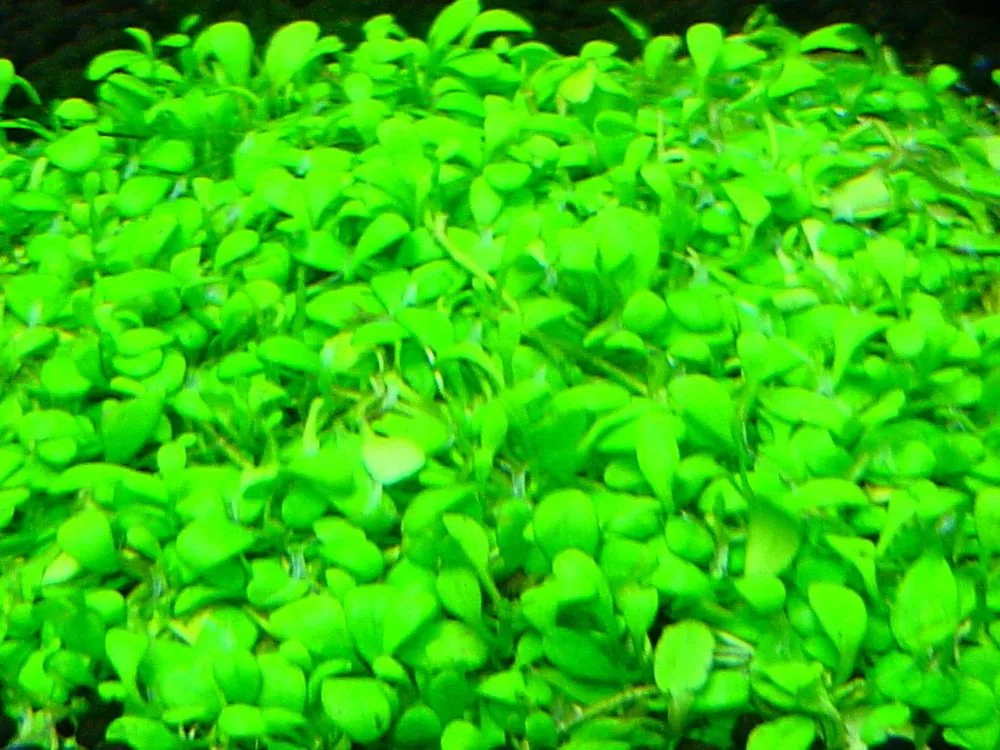
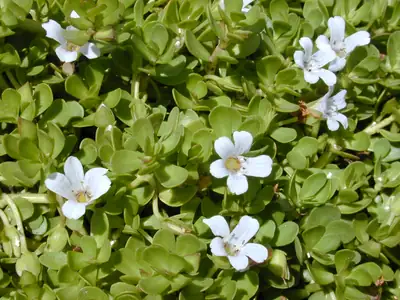
Glossostigma is one of the smallest aquarium plants and the classic choice for a bright green lawn across the front of a planted tank. It comes from the muddy margins of pools and streams in Australia and New Zealand, where it creeps over wet ground. Each runner carries pairs of tiny, tongue-shaped leaves only a few millimetres long, and under the right conditions the runners spread fast and knit into a carpet 2-3cm high. It is a demanding plant: it needs intense light, added CO2 and regular trimming, and it will not carpet without them.
Intense light, reaching the bottom unshaded. This is the plant's first requirement.
Water
Soft to medium freshwater with added CO2. Stable CO2 matters as much as the amount.
CO2 & Feeding
Not applicable; this is grown fully submerged in the aquarium.
Substrate
A fine, nutrient-rich aquarium soil. Coarse gravel does not hold the short roots.
Size
2-3cm tall; creeping runners knit into a carpet.
Growth speed
Fast
Tank Placement
Foreground
Common mistake
If it grows upwards, it lacks light. In strong light Glossostigma hugs the substrate; in weak light, or in the shade of taller plants, the shoots turn vertical, stretch and never form a carpet. Fix the light before anything else.
Care by Season
Spring
Growth is steady all year in a heated, lit tank. Trim every few weeks.
Summer
Growth is at its fastest under long, bright light. Do not let the carpet thicken beyond 2-3cm.
Autumn
Replant healthy pieces into any gaps.
Winter
No rest period. Keep light, CO2 and fertiliser steady.
Growing & Maintenance
Planting
Plant small clumps a few centimetres apart with tweezers, deep enough that only the leaf tips show. In a new tank, the dry-start method, growing it on moist soil under film before filling, helps it root.
Fertilising
Use a nutrient-rich soil and add a complete liquid fertiliser regularly. Pale or yellow new leaves point to a shortage, often of nitrogen or iron.
Trimming
Cut the carpet back close to the substrate every few weeks and remove all the clippings from the water.
Propagation
By runners: lift a piece of carpet, divide it into small clumps and replant them.
Pests & Diseases
Common problems
Shoots grow upright
Most likely cause: Too little light, or shade from other plants.
What to do: Increase the light and trim the upright growth.
Yellow, dying patches under the carpet
Most likely cause: A carpet left to grow too thick.
What to do: Trim hard and regularly.
The carpet floats up in sheets
Most likely cause: Dead lower layers, or fish digging.
What to do: Trim more often and replant healthy pieces.
Slow, pale growth
Most likely cause: Too little CO2 or nutrients.
What to do: Add CO2 and fertilise regularly.
Newly planted clumps melt
Most likely cause: The change from emersed to submerged growth.
What to do: Remove the decaying leaves; new runners appear within a couple of weeks.
Pests & Diseases
Algae in the carpet
Signs: Green threads or dark tufts tangled between the tiny leaves, in a tank with strong light and unstable CO2.
Treatment: Trim the carpet hard, remove the clippings, stabilise the CO2 and shorten the light period until the plant is growing strongly again.
Uprooting by fish and shrimp
Signs: Small clumps floating at the surface every morning in a newly planted tank.
Treatment: Plant deeper, and add bottom-dwelling fish and larger shrimp only once the carpet has rooted.
FAQ
Does Glossostigma need CO2?
In practice, yes. It needs intense light, and a plant under intense light without added CO2 stalls and is overrun by algae. CO2 and soft water both speed its growth noticeably.
How do I plant it?
Divide the portion into small clumps of a few stems and push each one into the substrate with tweezers, a few centimetres apart, so that only the leaves show. Planted like this, the gaps close within a few weeks.
Why is my Glossostigma growing tall instead of carpeting?
Too little light reaches it. Increase the lighting, lower the lamp or remove whatever is shading it, and trim the upright shoots. New growth then creeps again.
How often do I need to trim it?
Often, as it grows fast. Once the carpet is more than a couple of centimetres thick, the lower layers are shaded, yellow and come loose in sheets. Cut the carpet back hard with curved scissors every few weeks and net out the clippings.
Why is the carpet lifting off the bottom?
It has grown too thick, so the layer underneath has died and no longer holds, or fish are digging under it. Trim more often, and replant healthy pieces if a section floats up.
What substrate does it need?
A fine-grained, nutrient-rich aquarium soil is best. The roots are short and fine and cannot grip coarse gravel.