No results. Is a plant missing? Tell uscontact@wikiplant.net
Hygrophila
Hygrophila polysperma
Care level: Easy
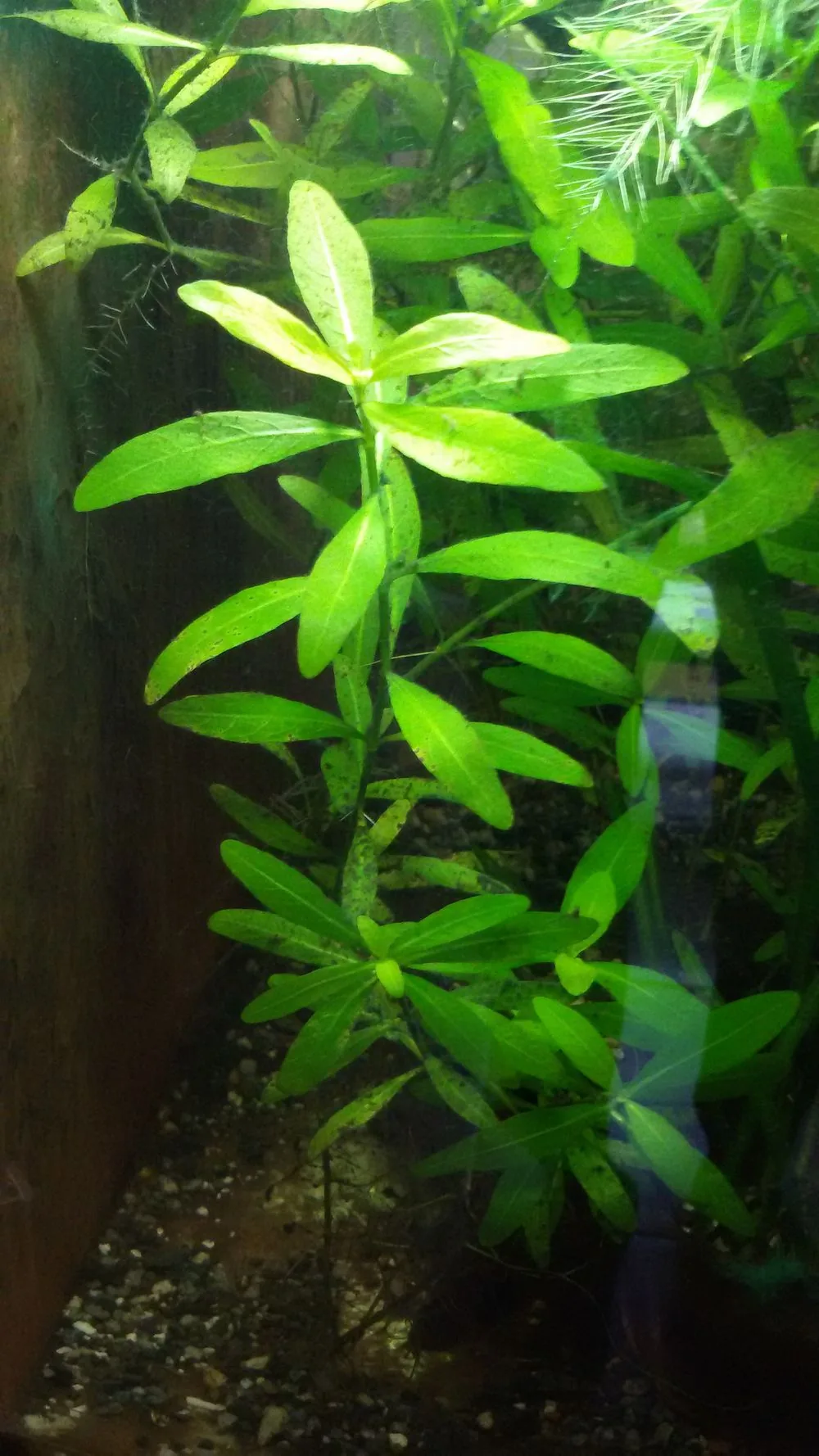
Hygrophila is the fast-growing, undemanding stem plant that fills in the background of more beginner aquascapes than almost any other species, valued for growing readily under ordinary aquarium lighting without added CO2. Each stem carries pairs of bright green, slightly translucent oval leaves closely spaced along an upright growth, and a single healthy stem quickly branches and fills out into a dense background thicket. It is one of the plants most often recommended as a first stem plant precisely because it tolerates a wide range of water conditions and beginner mistakes.
Moderate to bright aquarium lighting. It survives under low light but grows slowly and leggy; brighter light gives denser, more compact growth.
Water
Average freshwater aquarium parameters suit it well; it is tolerant of a wide range of hardness and pH, which is part of why it is considered easy.
CO2 & Feeding
Not applicable; this is a fully submerged aquarium plant.
Substrate
Any standard aquarium substrate, from plain gravel to a nutrient-rich planted substrate; it is not demanding about substrate type.
Growth speed
Fast
Tank Placement
Background
Signature feature
Hygrophila grows so readily from cuttings that a thinning session is effectively free propagation: cutting a stem anywhere along its length and replanting the top portion produces a new, independently rooting plant within a couple of weeks, while the original base regrows side shoots. This is also why it is considered an invasive species in parts of the world outside its native range, and trimmings should never be released into natural waterways.
Care by Season
Spring
No seasonal dormancy in a stable, heated aquarium; growth continues steadily year-round.
Summer
Continuous growth; thin and trim regularly, since this is one of the faster-growing common stem plants.
Autumn
No seasonal change indoors; care continues as in other months.
Winter
No seasonal change indoors, provided the tank is heated; an unheated tank in a cold room may see growth slow with lower water temperature.
Growing & Maintenance
Planting
Plant the stems in any standard aquarium substrate, from plain gravel to a planted substrate, in the background.
Trimming
Thin and trim it regularly. It is one of the faster-growing common stem plants.
Propagation
Replant the cut tops. Each cutting roots and becomes a new plant.
Pests & Diseases
Common problems
Tall, leggy stems, bare lower down
Most likely cause: Too little light reaching the base, often because the group has grown dense.
What to do: Cut the tops, replant them and thin the group.
Algae on the older leaves
Most likely cause: Too much light for the nutrients available.
What to do: Shorten the lighting period and remove the worst leaves.
Melting or yellowing after a water change
Most likely cause: A sudden change in water parameters.
What to do: Keep the changes small and regular. The plant recovers.
Slow, stretched growth
Most likely cause: Low light.
What to do: Give it moderate to bright lighting.
Growth slowing in winter
Most likely cause: An unheated tank in a cold room.
What to do: Keep the tank heated.
Pests & Diseases
Algae on older leaves
Signs: A dusting of green or brown algae on the oldest, lower leaves of the plant, usually alongside slowed new growth.
Treatment: This is typically a sign of excess light relative to nutrients or CO2 rather than a pest problem. Trimming off heavily algae-covered leaves and adjusting the light or feeding schedule usually resolves it; a few algae-eating shrimp or snails help keep new growth clean.
Melting or yellowing after a water change
Signs: Sudden yellowing or softening of leaves shortly after a large water change or a move to a new tank.
Treatment: Usually a reaction to a sudden change in water parameters rather than disease. Trim away affected growth; the plant typically recovers and sends up healthy new shoots once conditions settle.
FAQ
My hygrophila is growing tall and leggy with bare lower stems. How do I fix this?
This is normal stem-plant behaviour when light intensity drops toward the substrate, usually because the plant has outgrown the space or a neighbouring plant is shading it. Cut the stems back hard, close to the substrate, and replant the healthy top sections; within a few weeks the cut bases send up new, denser side shoots and the replanted tops root and grow on, giving a fuller look than leaving the original leggy stems in place.
Can hygrophila be grown without CO2 injection and with basic lighting?
Yes, this is one of the main reasons it is recommended to beginners. It grows well under ordinary aquarium lighting without supplemental CO2 or a rich substrate, though growth is naturally faster and more compact with brighter light and CO2 if those are available. A plant that grows slowly and pale in a low-tech tank usually just needs more light rather than any added equipment.
How much light does Hygrophila need?
Moderate to bright aquarium lighting. It survives under low light, but grows slowly and leggy.
How do I propagate Hygrophila?
From cuttings. Every stem top you cut off while thinning can be replanted and will root.
How fast does Hygrophila grow?
Fast. It grows all year in a heated tank and needs regular thinning.
What water does Hygrophila need?
Ordinary freshwater aquarium water. It tolerates a wide range of hardness and pH, which is one reason it suits beginners.