No results. Is a plant missing? Tell uscontact@wikiplant.net
Java Moss
Taxiphyllum barbieri
Care level: Easy
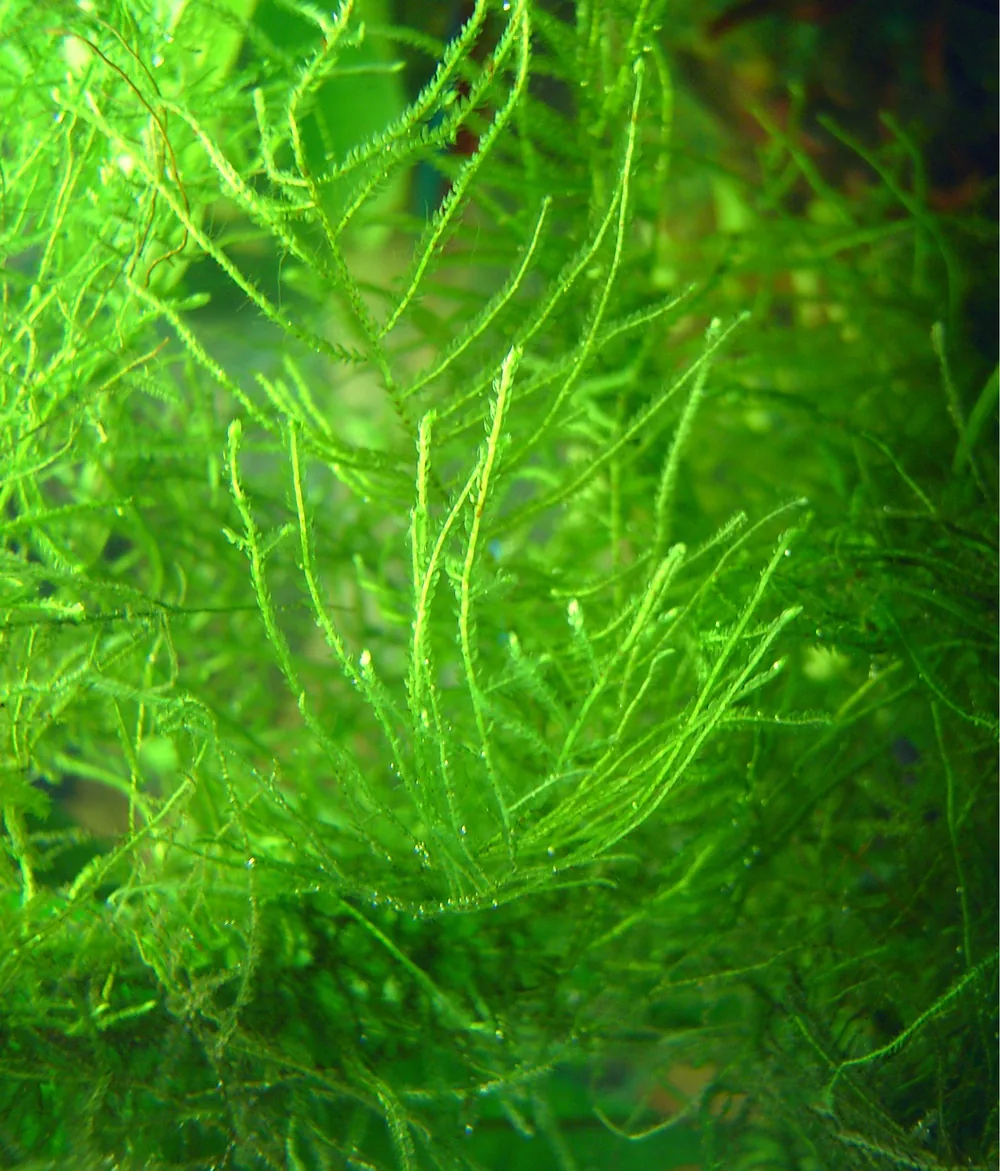
This true moss (not a flowering plant) grows wild on rocks, roots, and riverbanks across Southeast Asia, forming dense tangled mats without any roots, stems, or leaves in the conventional sense. Its fine branching structure makes it prized as both a decorative carpet on wood and rock and as a nursery for fish fry and shrimp, which hide and forage among its dense growth.
Very low light tolerant (~10-15 PAR); grows leggier and less dense in deep shade but survives fine.
Water
Weekly 20-30% water changes; extremely adaptable, pH 5.5-8.0, 15-28°C.
CO2 & Feeding
No CO2 needed, though it grows noticeably denser and greener with injected CO2 and light liquid fertilizer.
Substrate
No substrate at all, it is tied or glued to driftwood, rock, or mesh rather than planted; never has true roots.
Temperature
15-28°C.
Tank Placement
Attached to hardscape
Propagation tip
Java Moss has no roots at all, it attaches to surfaces with tiny rhizoids. Any torn-off fragment tied to new hardscape will grow into a full new mat, making it one of the easiest aquarium plants to propagate and share.
Care by Season
Spring
Ideal time to divide and re-tie sections onto new hardscape as growth picks up.
Summer
Faster growth can trap more debris and encourage algae in the mat; rinse gently during water changes.
Autumn
Growth slows; trim back overgrown mats to keep water flow reaching the interior.
Winter
Tolerates cooler water well but growth will be minimal until temperatures rise again.
Growing & Maintenance
Planting
Tie or glue small portions to driftwood, rock or mesh. It is never planted in the substrate.
Trimming
Trim back overgrown mats so that water still flows through the interior.
Propagation
Any fragment tied to new wood or rock grows on.
Pests & Diseases
Common problems
Brown, messy moss
Most likely cause: Too little light, or debris trapped in the dense mat.
What to do: Give it slightly more light and rinse the moss gently in tank water.
Debris collecting in the mat
Most likely cause: The dense growth traps detritus.
What to do: Shake and rinse it gently during water changes.
Green dust or hair algae in the moss
Most likely cause: Algae settling in the mat.
What to do: Remove it by hand or with a toothbrush.
Leggy, thin growth
Most likely cause: Deep shade.
What to do: Move it to a spot with a little more light.
Hardly any growth
Most likely cause: Cool water.
What to do: Nothing to do. It picks up again when the water warms.
Pests & Diseases
Detritus buildup
Signs: Mat looks dirty, brownish, or has poor water flow through it
Treatment: Gently agitate and rinse the moss in tank water during water changes, or trim overly thick sections.
Green dust or hair algae
Signs: Fine green threads growing through the moss mat
Treatment: Manually remove by hand or with a toothbrush, add algae-eating shrimp, and reduce light duration.
FAQ
How do I attach Java Moss to driftwood or rock?
Tie small portions on with cotton thread or fine fishing line, or use a moss mesh/mat; it will anchor itself with rhizoids within a few weeks and the thread can then be removed.
Why does my Java Moss look brown and messy instead of green and lush?
This usually means too little light or trapped detritus in the dense mat, increase light slightly and gently rinse or comb the moss during water changes to remove debris.
Does Java Moss need CO2?
No. It grows without it, though it becomes noticeably denser and greener with injected CO2 and a little liquid fertiliser.
How much light does Java Moss need?
Very little. It survives in deep shade, where it only grows leggier and less dense.
What water does Java Moss need?
It is extremely adaptable: pH 5.5-8.0 and 15-28°C. Change 20-30% of the water every week.
How do I propagate Java Moss?
By dividing it. Tear off a portion and tie it to new wood or rock, where it anchors itself and grows on.