No results. Is a plant missing? Tell uscontact@wikiplant.net
Limnophila
Limnophila sessiliflora
Care level: Very easy
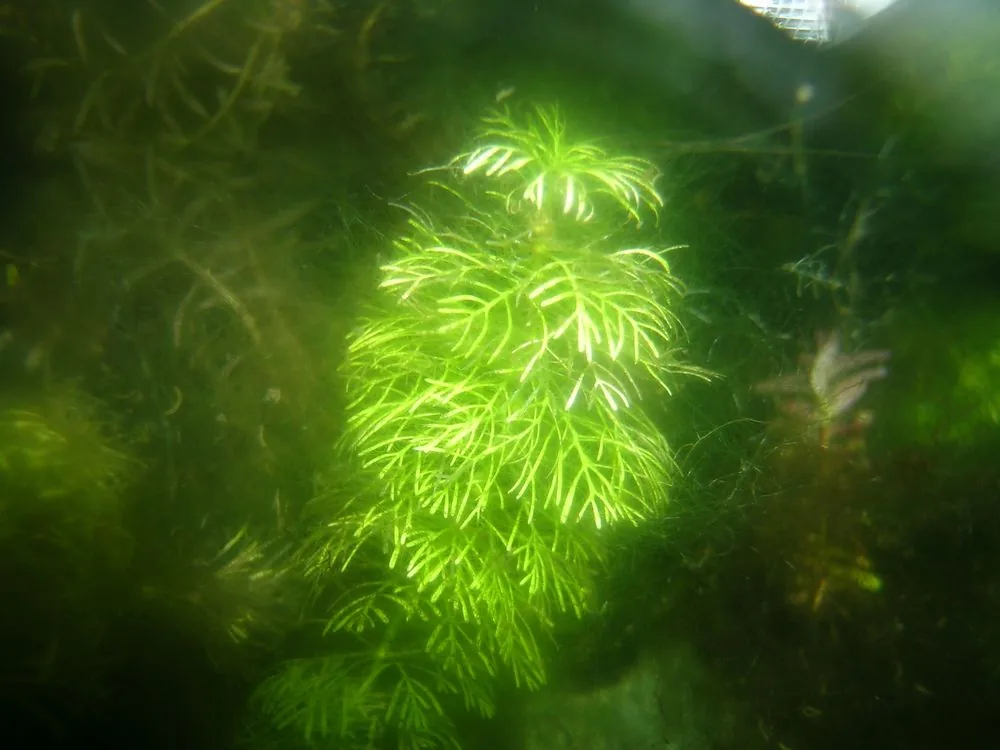
Limnophila sessiliflora, often sold as dwarf ambulia, is a fast-growing stem plant from Asia with whorls of finely divided, feathery, bright green leaves. It is one of the least demanding plants for the back of a tank: it grows in low light and without added CO2, and it roots from any cut stem. Planted in a group, it quickly forms a soft green curtain that hides equipment and gives small fish cover.
Low to bright aquarium lighting. It survives in low light but grows denser and more compact with more.
Water
Ordinary freshwater aquarium conditions suit it. Added CO2 is not needed, though it helps to keep the growth compact.
CO2 & Feeding
Not applicable; this is a fully submerged aquarium plant.
Substrate
Any aquarium substrate, from plain gravel to a nutrient-rich planted substrate. It also feeds through its leaves.
Size
Stems 15-40cm long and 4-7cm wide.
Growth speed
Fast
Tank Placement
Background
Beginner tip
Plant it in groups of several stems rather than singly, and replant the trimmed tops among them. A group fills out into a dense bush, while single stems always look thin.
Care by Season
Spring
No seasonal rhythm in a heated tank; growth is steady all year.
Summer
Growth is at its fastest in a warm, well-lit tank. Trim every week or two.
Autumn
No seasonal change indoors; carry on as usual.
Winter
No seasonal change in a heated tank. Growth slows if the water cools.
Growing & Maintenance
Planting
Push the stems into the substrate at the back of the tank, in a group of several, a few centimetres apart so that light reaches the lower leaves.
Trimming
Cut the stems back before they reach the surface and remove bare lower sections. It is a fast grower, so expect to trim often.
Propagation
Replant the cut tops. Each one roots and becomes a new plant, and the trimmed plant sends out side shoots.
Pests & Diseases
Common problems
Tall, thin stems with long gaps between the leaves
Most likely cause: Weak light.
What to do: Give more light, or trim and replant the tops more often.
Bare lower stems
Most likely cause: The group is too dense for light to reach the base.
What to do: Thin the group and replant the tops.
Pale shoot tips
Most likely cause: A lack of micronutrients, mainly iron.
What to do: Add a complete liquid fertiliser that contains iron.
A mat on the surface shading the tank
Most likely cause: The stems were left to grow along the surface.
What to do: Cut them back well below the surface.
Stems that float up after planting
Most likely cause: They were not pushed deep enough, or fish dug them out.
What to do: Replant them a little deeper, in small bunches.
Pests & Diseases
Algae in the fine leaves
Signs: Green or brown threads and fuzz caught among the feathery leaves, usually with slow new growth.
Treatment: Trim off the worst stems, shorten the lighting period and check that the plants are getting enough nutrients. A few algae-eating shrimp help to keep new growth clean.
Leaf drop after planting
Signs: A new plant sheds leaves or looks thin in its first weeks in the tank.
Treatment: Nursery plants are often grown above water and replace those leaves with underwater ones. Leave the stems in place and trim away what dies; new growth follows.
FAQ
Does limnophila need CO2 or strong light?
No. It grows in low light and without added CO2, which is why it suits a first planted tank. In weak light it does become leggy, with long gaps between the whorls; more light or added CO2 keeps it denser.
Why is my limnophila tall and thin, with bare lower stems?
The light is too weak to reach the lower part of the stems, often because the group has grown dense or reached the surface. Cut the tops off, replant them and remove the bare lower parts.
Why are the shoot tips pale?
Pale new growth is a sign that the plant lacks micronutrients, iron above all. A complete liquid fertiliser that contains iron usually brings the colour back within a couple of weeks.
How do I trim limnophila?
Cut the stems at any height with sharp scissors. The cut top can be replanted as a new plant, and the rooted lower part sends out side shoots and becomes bushier.
What happens when it reaches the surface?
The stems keep growing along the surface and form a floating mat that shades the plants below. Trim before it gets that far if the rest of the tank needs the light.
Can I put trimmings in a pond or stream?
No. This is a vigorous plant that has become an invasive weed in warm regions outside its native range. Put trimmings in the household waste, never in a pond, ditch or waterway.