No results. Is a plant missing? Tell uscontact@wikiplant.net
Red Root Floater
Phyllanthus fluitans
Care level: Moderate
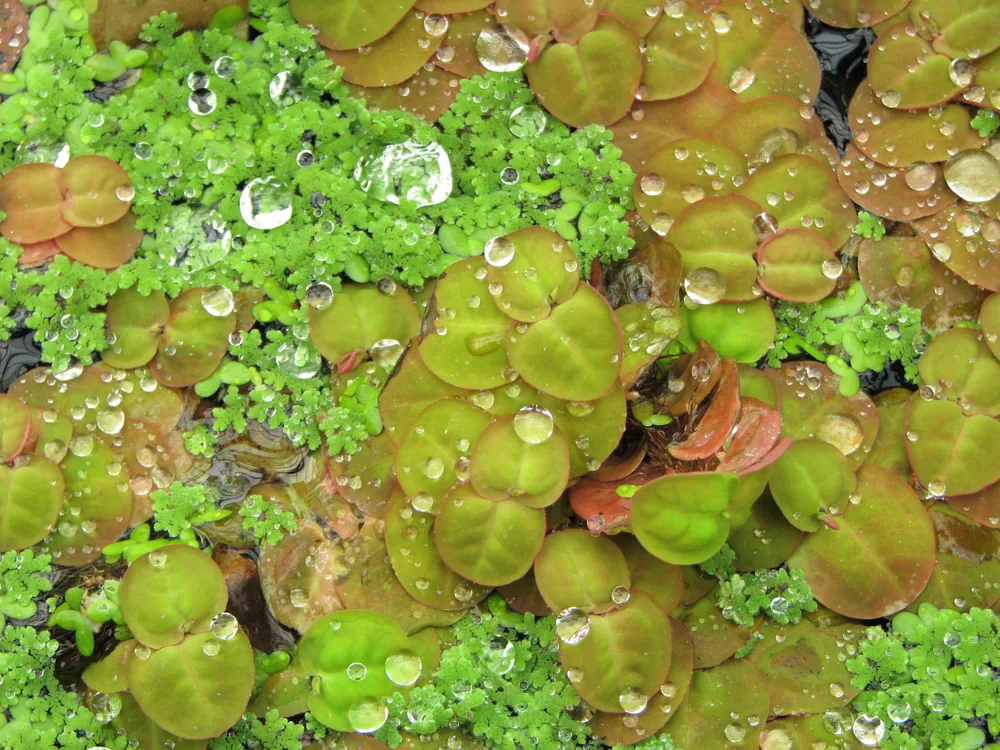
Native to slow-moving Amazon basin waters, Red Root Floater gets its name from the vivid crimson roots that dangle beneath its small round leaves, which themselves flush red at the edges when given strong light. Its compact size and striking color have made it a favorite accent floater for aquascapers who want visual interest at the surface without the bulk of larger floating plants.
High light needed at the surface (~40-60+ PAR) for full red coloration; stays mostly green under weaker or filtered light.
Water
Weekly 20-30% water changes; prefers soft, slightly acidic water, pH 6.0-7.0, 22-28°C; sensitive to strong surface agitation.
CO2 & Feeding
No CO2 required since it draws carbon from the air; benefits from liquid fertilizer, particularly iron and potassium, for stronger coloration.
Substrate
No substrate at all, entirely free-floating at the surface with roots trailing in the water column.
Temperature
22-28°C.
Tank Placement
Floating
Beginner tip
The signature red coloration only develops under strong direct light, under dim or filtered light the leaves and roots stay mostly green, so place it away from taller floating plants or emergent hardscape that could shade it.
Care by Season
Spring
Multiplication increases with warmth and light; thin the surface coverage as rosettes multiply.
Summer
Peak growth and best coloration under strong summer light, watch for overcrowding shading inner plants.
Autumn
Growth and coloration fade somewhat as light decreases; reduce thinning frequency.
Winter
Growth slows considerably in cooler, dimmer conditions; protect from cold drafts near the surface.
Growing & Maintenance
Planting
Float it on the surface in a calm part of the tank, away from the filter outflow.
Fertilising
Liquid fertiliser, particularly iron and potassium.
Trimming
Thin the surface cover as the rosettes multiply.
Pests & Diseases
Common problems
Leaves staying green
Most likely cause: Weak or filtered light.
What to do: Give it strong, direct light at the surface.
Rosettes breaking apart or sinking
Most likely cause: Strong surface ripples or filter turbulence.
What to do: Move it to a calmer part of the surface.
Inner plants shaded out
Most likely cause: Overcrowding at the surface.
What to do: Thin the cover regularly.
Growth slowing in winter
Most likely cause: Cooler, dimmer conditions.
What to do: Keep the water at 22-28°C and thin less often.
Damaged leaves near an open tank lid
Most likely cause: Cold draughts across the surface.
What to do: Protect the surface from cold draughts.
Pests & Diseases
Fading color (excess green)
Signs: Leaves and roots stay green instead of developing red tones
Treatment: Move to a spot with stronger, more direct light and ensure it isn't shaded by taller floating plants.
Rosette breakup from turbulence
Signs: Small plants fragmenting or roots tearing near strong flow or filter output
Treatment: Relocate to a calmer surface area away from filter agitation or bubbles.
FAQ
Why isn't my Red Root Floater turning red?
Weak or shaded light is the most common reason, it needs strong, direct light at the surface to develop its red leaf edges and root color; low light keeps it mostly green.
Why does my Red Root Floater keep falling apart or sinking?
Strong surface ripples or filter turbulence can break apart its delicate rosettes; keep it in a calmer area of the surface away from strong current or bubbles.
Does Red Root Floater need CO2?
No. As a floating plant it draws carbon straight from the air.
How much light does Red Root Floater need?
High light at the surface for full red colour. Under weaker or filtered light it stays mostly green.
What water does Red Root Floater need?
Soft, slightly acidic water at pH 6.0-7.0 and 22-28°C, with a calm surface. Change 20-30% of the water every week.
How does Red Root Floater multiply?
By itself. The rosettes multiply across the surface in warmth and light, so you only need to thin them.