No results. Is a plant missing? Tell uscontact@wikiplant.net
String of Pearls
Senecio rowleyanus
Care level: Moderate
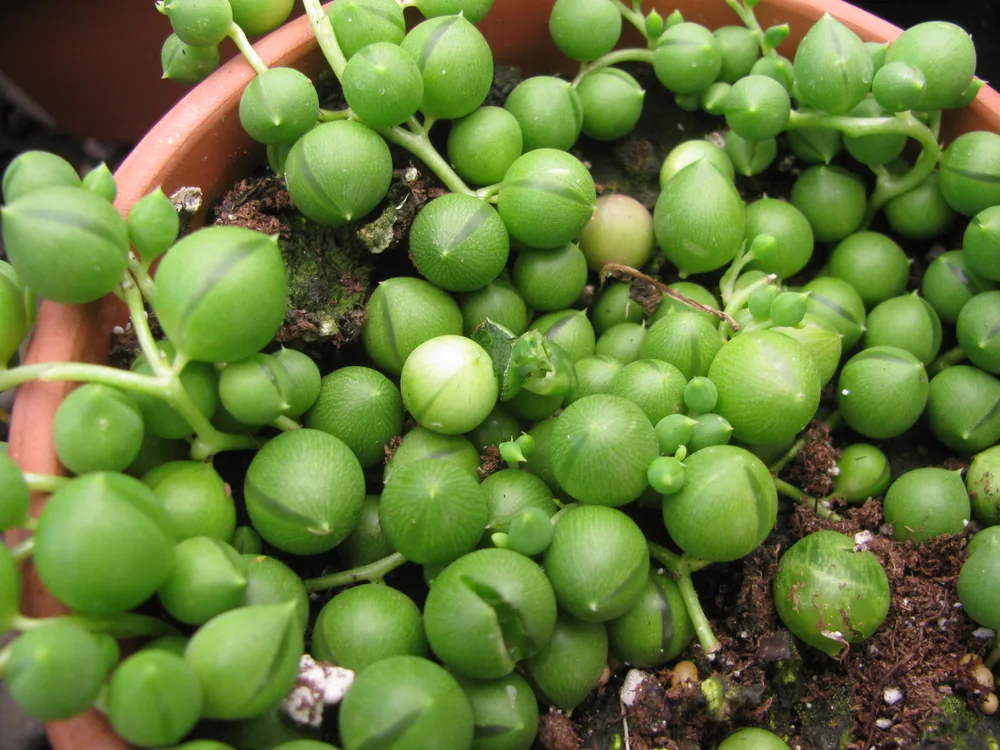
Each tiny bead on a string of pearls is actually a modified leaf, swollen into a near-spherical shape to store water and reduce surface area exposed to the sun, an adaptation that lets it survive as groundcover in the arid rocky terrain of South West Africa. A translucent stripe runs down one side of each pearl, acting like a tiny window that lets light reach the chlorophyll inside even when the plant is partly buried in sand.
Bright light with several hours of direct sun daily; low light causes leggy, sparse growth.
Water
Let soil dry out completely between waterings, roughly every 2-3 weeks, since the pearls store water.
Humidity
Prefers low humidity and good airflow; excess moisture in the air can encourage rot.
Soil
Fast-draining succulent or cactus mix with extra perlite or coarse sand.
Temperature
21-27°C in summer and a cooler 10-16°C in winter. No frost.
Size
Strands 30-60cm long, spreading 30-90cm.
Best position
south-east / south / south-west-facing windowanywhere up to about 1 m from the window
east / west-facing windowright by the window
See every window directionHide window directions
Best position
right by the window
about 1 m
about 2 m
about 4 m
4 m or more
north
too dark○
too dark○
too dark○
too dark○
too dark○
north-east
too dark○
too dark○
too dark○
too dark○
too dark○
east
works well✓
too dark○
too dark○
too dark○
too dark○
south-east
works well✓
works well✓
too dark○
too dark○
too dark○
south
works well✓
works well✓
too dark○
too dark○
too dark○
south-west
works well✓
works well✓
too dark○
too dark○
too dark○
west
works well✓
too dark○
too dark○
too dark○
too dark○
north-west
too dark○
too dark○
too dark○
too dark○
too dark○
✓works well~just about○too dark☼too much direct sun
A rough guide based on window direction and typical daylight through the year. Window size, curtains and whatever stands outside matter just as much.
?Pet safety not confirmed
As a precaution, keep it out of reach of children and pets.
Propagation tip
Trailing stems root very easily: lay a cutting across moist succulent soil and new roots will form at the nodes within a couple of weeks, making it simple to fill out a sparse pot or start entirely new plants.
Care by Season
Spring
Resume watering as soil fully dries and begin light feeding once new pearls start forming.
Summer
Water a little more regularly but always let soil dry fully first, and keep in bright light.
Autumn
Reduce watering frequency and stop fertilizing as growth naturally slows.
Winter
Water very sparingly, roughly once a month, and keep in a bright, cool but frost-free spot.
Growing & Maintenance
Soil and pot
A fast-draining succulent or cactus mix with extra perlite or coarse sand, in a shallow pot with drainage holes.
Fertilising
A light feed in spring and summer, once new pearls are forming. None in autumn and winter.
Pruning
Trim thin or bare strands back to healthy growth.
Propagation
From stem cuttings 8-13cm long, laid on or set into succulent mix.
Pests & Diseases
Common problems
Shrivelled, deflated pearls
Most likely cause: Underwatering.
What to do: Water thoroughly, then let the mix dry out completely again.
Soft, mushy, translucent pearls
Most likely cause: Overwatering.
What to do: Stop watering, remove the affected strands and let the mix dry.
Long gaps between the pearls
Most likely cause: Too little light.
What to do: Move it somewhere brighter, with a few hours of direct sun.
Brown, scorched pearls
Most likely cause: Sudden strong sun on a plant that is not used to it.
What to do: Increase the sun exposure gradually.
Strands dying back after some years
Most likely cause: Age. Plants decline after a few years.
What to do: Start a new pot from healthy cuttings.
Pests & Diseases
Mealybugs
Signs: White cottony fluff nestled among the pearl-like leaves.
Treatment: Remove with an alcohol-soaked cotton swab and treat with insecticidal soap if widespread. Check the undersides of the leaves and the crevices where the leaf stem meets the main stalk.
Aphids
Signs: Small clustered insects on new trailing growth tips.
Treatment: Rinse gently with water and apply insecticidal soap as needed.
Root and stem rot
Signs: Shriveled or mushy, translucent pearls from overwatering.
Treatment: Stop watering immediately, remove affected strands, and repot into dry, fast-draining mix.
FAQ
Why are the pearls on my string of pearls shriveling and going soft?
Shriveled, deflated pearls usually mean underwatering, while soft, mushy, translucent pearls point to overwatering and possible rot; either way, check the soil moisture and adjust your watering schedule accordingly.
Why has my string of pearls gotten leggy with big gaps between beads?
This is a classic sign of insufficient light; move it somewhere brighter with a few hours of direct sun, and consider trimming and propagating the leggy stems to encourage fuller new growth.
How often should I water a String of Pearls?
Roughly every 2-3 weeks, once the mix has dried out completely, and about once a month in winter. The pearls store water, so soggy mix quickly rots the roots.
How do I propagate a String of Pearls?
From stem cuttings 8-13cm long. Lay them across moist succulent mix and they root at the nodes.
Does a String of Pearls flower?
Yes, though rarely indoors. The small white, daisy-like flowers appear in summer and smell of cinnamon.
How do I care for a String of Pearls in winter?
Keep it bright and cool, at 10-16°C, and frost-free. Water very sparingly, about once a month.