No results. Is a plant missing? Tell uscontact@wikiplant.net
Turtle Vine
Callisia repens
Care level: Easy
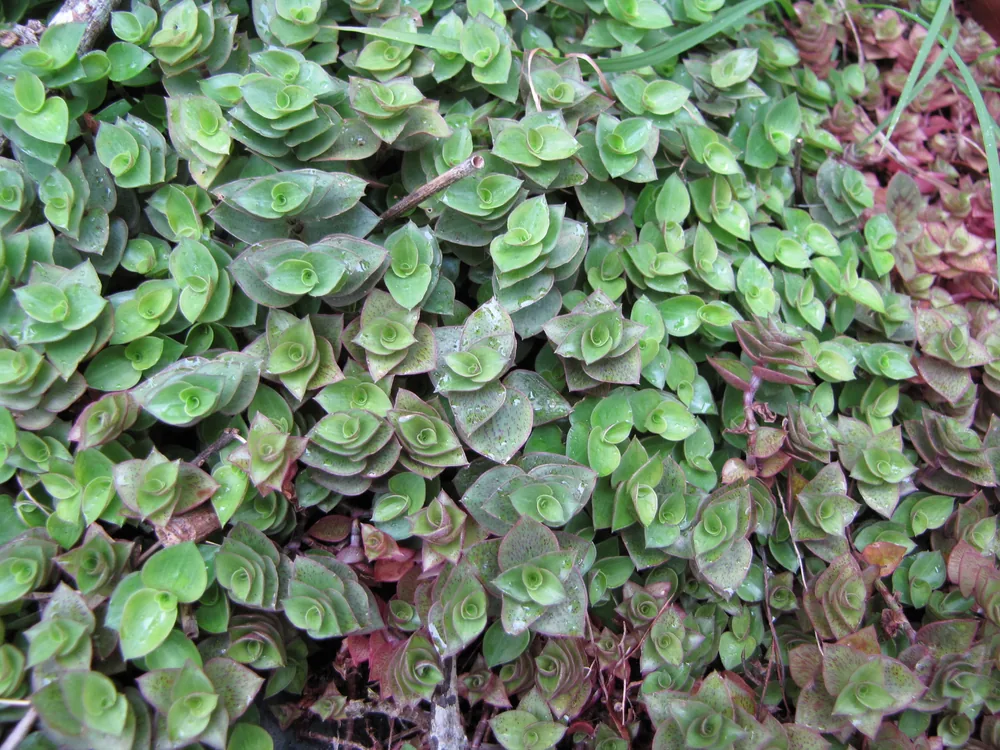
Callisia repens gets its common name from its tightly overlapping, rounded leaves that resemble the layered shell of a turtle, and in its native Central and South America it spreads rapidly along the forest floor as a low groundcover, a habit that translates into one of the fastest-filling trailing houseplants around.
Water when the top few centimeters of soil dry out, roughly weekly; avoid letting it sit in water.
Humidity
Tolerates average indoor humidity well.
Soil
Standard well-draining potting mix.
Temperature
16-27°C. No frost.
Size
10-15cm tall, spreading 60-120cm.
Growth speed
Fast
Best position
east / south-east-facing windowanywhere up to about 2 m from the window
north / north-east / north-west-facing windowanywhere up to about 1 m from the window
south / west-facing windowabout 1 m from the window or further back
Watch for strong direct sun at south / west windows.
See every window directionHide window directions
Best position
right by the window
about 1 m
about 2 m
about 4 m
4 m or more
north
works well✓
works well✓
too dark○
too dark○
too dark○
north-east
works well✓
works well✓
too dark○
too dark○
too dark○
east
works well✓
works well✓
works well✓
too dark○
too dark○
south-east
works well✓
works well✓
works well✓
too dark○
too dark○
south
just about~
works well✓
works well✓
too dark○
too dark○
south-west
just about~
just about~
works well✓
too dark○
too dark○
west
just about~
works well✓
works well✓
too dark○
too dark○
north-west
works well✓
works well✓
too dark○
too dark○
too dark○
✓works well~just about○too dark☼too much direct sun
A rough guide based on window direction and typical daylight through the year. Window size, curtains and whatever stands outside matter just as much.
?Pet safety not confirmed
As a precaution, keep it out of reach of children and pets.
Propagation tip
Turtle Vine roots so eagerly that a stem cutting dropped straight into a glass of water or pressed onto moist soil will typically show new roots within a week, making it one of the quickest houseplants to bulk up into a full hanging basket from just a few cuttings.
Care by Season
Spring
Resume regular watering and light feeding as trailing stems put out new growth.
Summer
Water consistently and pinch back leggy stems to keep growth bushy.
Autumn
Reduce watering frequency as growth slows.
Winter
Water sparingly and keep away from cold windows and drafts.
Growing & Maintenance
Soil and pot
A standard, well-draining potting mix with added perlite, in a pot with drainage holes.
Fertilising
A light feed in spring and summer. None in winter.
Pruning
Pinch back leggy stems to keep the growth dense.
Propagation
From stem cuttings. They root at the nodes in water or on moist mix.
Pests & Diseases
Common problems
Leggy stems with bare stretches
Most likely cause: Too little light.
What to do: Move it to bright, indirect light and pinch the stems back.
Mushy stems
Most likely cause: Overwatering and root rot.
What to do: Remove the rotten stems and let the top few centimetres dry before watering.
Scorched leaves
Most likely cause: Intense direct sun.
What to do: Give it bright light without strong sun.
Dry, crispy leaves
Most likely cause: The compost has dried out completely.
What to do: Water thoroughly and then about once a week.
Bald patch in the middle of the pot
Most likely cause: Older stems lose their leaves as they trail.
What to do: Snip stem tips and tuck them back into the pot to fill it.
Pests & Diseases
Mealybugs
Signs: White cottony tufts at leaf and stem junctions
Treatment: Dab with rubbing-alcohol soaked cotton swab, repeating weekly. Check the undersides of the leaves and the crevices where the leaf stem meets the main stalk.
Spider mites
Signs: Fine webbing and speckled leaves in dry conditions
Treatment: Rinse foliage and increase humidity; treat with insecticidal soap if needed. Check the undersides of the leaves and the crevices where the leaf stem meets the main stalk.
Root rot
Signs: Soft, mushy stems near the soil line from overwatering
Treatment: Remove from wet soil, trim rotten stems, and repot in fresh, well-draining mix.
FAQ
Why is my Turtle Vine getting leggy with bare stems?
Sparse, stretched growth almost always means it's not getting enough light, Turtle Vine naturally forms a dense mat in bright conditions, so moving it closer to a window and pinching back leggy stems will encourage bushier regrowth.
Can I use Turtle Vine cuttings to fill out the same pot?
Yes, simply snip several stem tips, let the cut ends sit a few hours, and tuck them into the same pot's soil; because it roots so readily, this is the standard way growers thicken up a sparse Turtle Vine into a full mound.
How often should I water a Turtle Vine?
About once a week, when the top few centimetres of compost have dried. Water sparingly in winter and never leave it standing in water.
How much light does a Turtle Vine need?
It needs bright, indirect light to stay dense. In low light the stems stretch, and intense sun scorches the leaves.
How big does a Turtle Vine get?
Only 10-15cm tall, but it spreads or trails 60-120cm. It grows fast.
Does a Turtle Vine flower?
Yes. It carries small white or pink three-petalled flowers from late spring to early summer.