No results. Is a plant missing? Tell uscontact@wikiplant.net
Water Hyacinth
Eichhornia crassipes
Care level: Easy
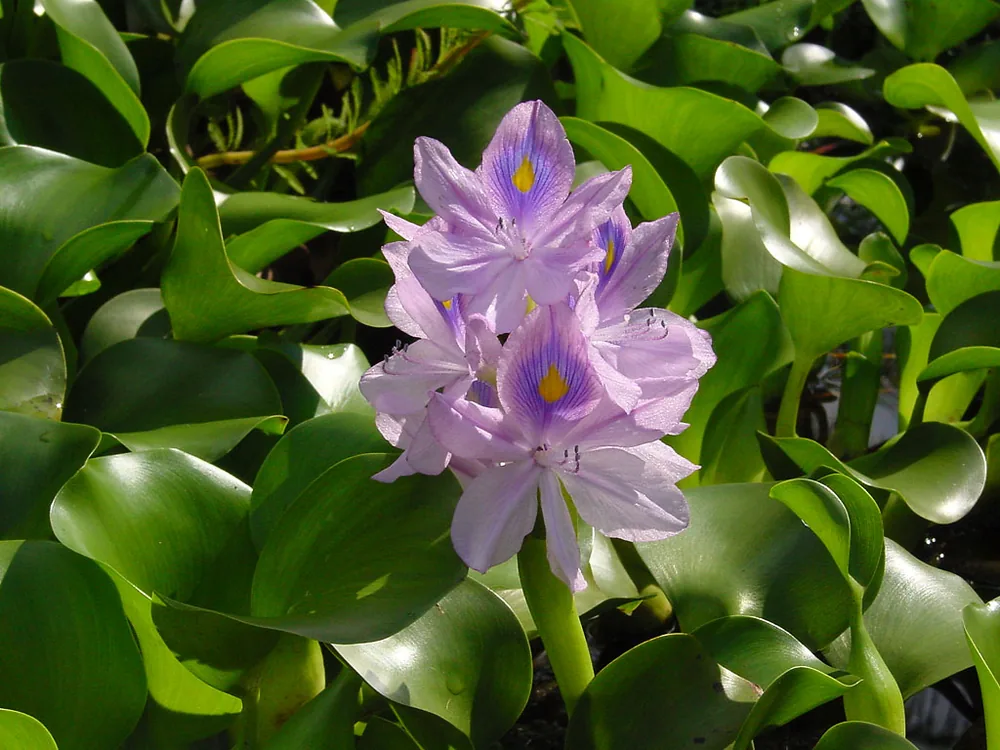
Native to the Amazon basin, Water Hyacinth floats using distinctive bulbous, spongy petioles that act like natural pontoons, trailing a thick curtain of dark roots that fry and shrimp use as a nursery and grazing ground. It produces striking lavender-blue flowers above the water and is one of the fastest-multiplying aquatic plants known, which is exactly why it is treated as a severely invasive weed in warm waterways around the world.
!Invasive species: EU restrictions
This species is on the EU list of invasive alien species of Union concern.
In the EU it is generally illegal to keep, grow, sell, transport or release it.
Never release it, or any part of it, into waterways or the wild. Dispose of it with the household waste, not in water or on the compost.
Rules outside the EU, and national rules, can differ.
High light needed (~50+ PAR), ideally direct or strong overhead lighting since it grows partly emersed above the surface.
Water
Weekly 20-30% water changes; adaptable, pH 6.5-7.5, 22-30°C; grows in still to slow-moving water.
CO2 & Feeding
No CO2 needed as it draws carbon from the air; a very heavy nutrient feeder, making it excellent for stripping excess nitrate and phosphate from the water.
Substrate
No substrate used at all, entirely free-floating with thick trailing roots hanging in the water column.
Temperature
22-30°C. Below about 15°C growth stalls and the leaves can rot.
Growth speed
Fast
Tank Placement
Floating
Common mistake
Water Hyacinth must never be released into any natural pond, lake or waterway. It is one of the world's most damaging invasive aquatic weeds, and in the EU it is generally illegal to keep, grow or sell.
Care by Season
Spring
Multiplication accelerates via runners; thin regularly to prevent it from covering the entire surface.
Summer
Fastest growth of the year in warm, bright, open-top setups, remove excess plantlets frequently.
Autumn
Growth slows as light and temperature drop; reduce thinning as multiplication slows.
Winter
Very sensitive to cold: growth stalls and leaves can rot below about 15°C.
Pests & Diseases
Common problems
Roots rotting
Most likely cause: Cold water or poor water quality.
What to do: Keep the water warm and clean with regular water changes.
The whole surface covered
Most likely cause: Fast multiplication by runners.
What to do: Thin the population weekly.
Leaves rotting in winter
Most likely cause: Water below about 15°C.
What to do: Nothing to do. It does not tolerate cold water.
Cramped, damaged leaves
Most likely cause: A tank with a lid. The leaves grow well above the waterline.
What to do: Do not move it to a pond. In the EU it is generally illegal to keep or release it.
Weak, pale growth
Most likely cause: Too little light.
What to do: Give it strong overhead light.
Pests & Diseases
Root rot from cold or poor water quality
Signs: Trailing roots turn brown, slimy, or disintegrate
Treatment: Keep water warm and clean with regular water changes, removing badly affected plants promptly.
Uncontrolled surface coverage
Signs: Rapid spread covering the entire water surface, blocking light below
Treatment: Thin the population weekly by removing excess plantlets, and never discard surplus into natural waterways.
FAQ
Is Water Hyacinth legal to keep in the EU?
Generally not. Eichhornia crassipes (now Pontederia crassipes) is on the EU list of invasive alien species of Union concern, so in the EU it is generally illegal to keep, grow, sell, transport or release it. National rules, and rules outside the EU, can differ.
Can I release excess Water Hyacinth into a local pond or river?
No. It is a globally recognised invasive species that clogs waterways and outcompetes native plants. Put it in the household waste, never in natural water or on the compost.
Does Water Hyacinth need CO2?
No. It draws carbon from the air, since it grows partly above the water.
How much light does Water Hyacinth need?
High light, ideally direct or strong overhead lighting.
What water does Water Hyacinth need?
Still to slow-moving water at pH 6.5-7.5 and 22-30°C. It is very sensitive to cold.
Does Water Hyacinth flower?
Yes. It carries pale blue to lavender flowers with a yellow mark, from summer to autumn.