No results. Is a plant missing? Tell uscontact@wikiplant.net
Air Plant
Tillandsia ionantha
Care level: Easy
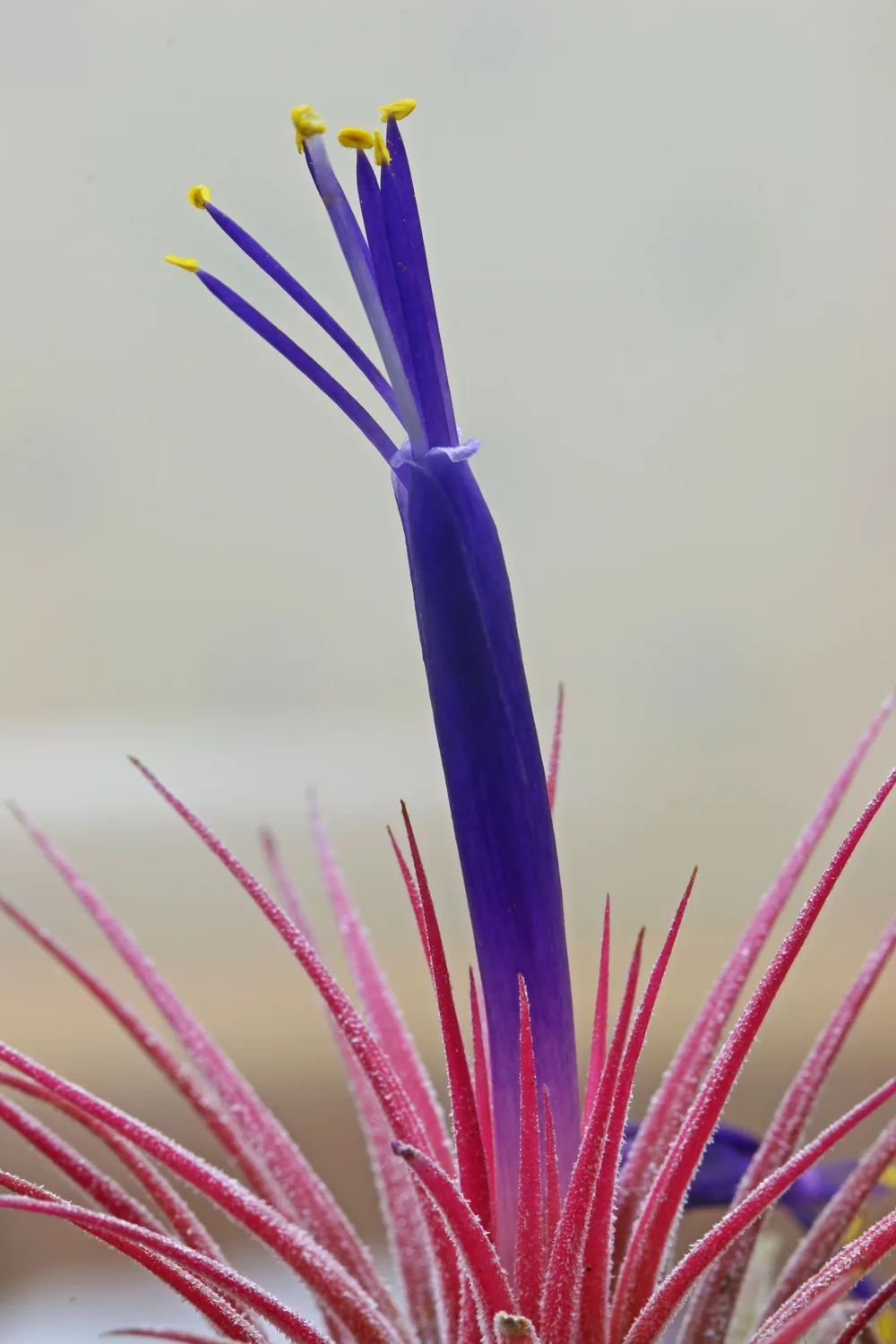
Tillandsia ionantha is an epiphyte from Mexico and Central America that grows with no soil at all, clinging to tree branches and absorbing water and nutrients through specialized scales on its leaves called trichomes; this is also why it blushes a vivid red before flowering, a color change fueled by the same pigments that protect it from intense sun in the wild.
Bright indirect light; some gentle morning direct sun is fine.
Water
Soak in water for 20-30 minutes once or twice a week, then shake off excess and let dry upside down.
Humidity
Prefers moderate to high humidity; mist between soakings in dry rooms.
Soil
Grown without soil; mount on wood, bark, or place in an open dish or shell.
Best position
east / south-east-facing windowanywhere up to about 2 m from the window
north / north-east / north-west-facing windowanywhere up to about 1 m from the window
south / west-facing windowabout 1 m from the window or further back
Watch for strong direct sun at south / west windows.
See every window directionHide window directions
Best position
right by the window
about 1 m
about 2 m
about 4 m
4 m or more
north
works well✓
works well✓
too dark○
too dark○
too dark○
north-east
works well✓
works well✓
too dark○
too dark○
too dark○
east
works well✓
works well✓
works well✓
too dark○
too dark○
south-east
works well✓
works well✓
works well✓
too dark○
too dark○
south
just about~
works well✓
works well✓
too dark○
too dark○
south-west
just about~
just about~
works well✓
too dark○
too dark○
west
just about~
works well✓
works well✓
too dark○
too dark○
north-west
works well✓
works well✓
too dark○
too dark○
too dark○
✓works well~just about○too dark☼too much direct sun
A rough guide based on window direction and typical daylight through the year. Window size, curtains and whatever stands outside matter just as much.
?Pet safety not confirmed
As a precaution, keep it out of reach of children and pets.
Common mistake
Letting the plant sit wet after soaking is the most common way to kill it; always shake off excess water and set it upside down or on its side so it dries fully within a few hours, since standing water trapped in the base leads to rot.
Care by Season
Spring
Resume regular soaking and add a diluted bromeliad fertilizer occasionally.
Summer
Soak more often in hot, dry weather and ensure good airflow to prevent rot.
Autumn
Maintain regular soaking as temperatures cool.
Winter
Keep away from cold drafts and reduce soaking slightly if the room is cooler and less bright.
Growing & Maintenance
Planting
Never plant it in soil. Mount it on wood, bark or a ceramic or glass holder, or sit it in an open dish, where air can reach the whole plant.
Fertilising
A liquid fertiliser at half strength or less during the growing season, added to the soaking water.
Propagation
From pups. The plant forms offsets at its base and slowly becomes a clump; a pup can be gently separated to make a new plant.
Pests & Diseases
Common problems
Soft, brown base and leaves that pull out
Most likely cause: Rot from water left sitting in the plant.
What to do: Always shake off the excess water and dry the plant upside down. A rotted plant cannot be saved.
Rolled, tightly curled leaves with dry tips
Most likely cause: Too little water.
What to do: Soak it for 20-30 minutes, then go back to soaking once or twice a week.
Top leaves turning red
Most likely cause: Normal. The plant colours up just before it flowers.
What to do: Nothing to do but enjoy it.
Bleached or scorched patches
Most likely cause: Strong direct sun.
What to do: Move it to bright, indirect light. Gentle morning sun is fine.
The plant slowly declines after flowering
Most likely cause: Normal. Each plant flowers once, then puts its energy into pups.
What to do: Keep caring for it while the pups grow, then separate them.
Pests & Diseases
Mealybugs
Signs: White cottony fluff nestled between leaf bases.
Treatment: Remove with an alcohol-soaked swab and rinse well afterward. Check the undersides of the leaves and the crevices where the leaf stem meets the main stalk.
Scale insects
Signs: Small brown bumps on leaves.
Treatment: Scrape off gently and treat with a diluted horticultural oil rinse.
Rot from poor drying
Signs: Blackened, mushy base after watering.
Treatment: Always shake off excess water and dry upside down in good airflow after soaking.
FAQ
Why is my Air Plant turning red?
A shift to red or pink coloring, especially at the center, usually signals the plant is preparing to flower, a natural and exciting stage rather than a problem; the base plant will eventually produce offsets, or 'pups', after blooming.
Do Air Plants really not need soil at all?
Correct, they are epiphytes that naturally grow attached to trees or rocks and absorb water and nutrients through their leaves rather than roots in soil; mounting them on wood or bark or simply displaying them in an open dish works perfectly well.
How often should I water an Air Plant?
Soak it in water for 20-30 minutes once or twice a week. Then shake off the excess and let it dry upside down. Mist between soakings if the room is dry.
Does an Air Plant flower?
Yes, once. The top leaves turn bright red before the flower appears. After flowering, the plant produces pups.
How do I propagate an Air Plant?
By separating the pups that form at its base. Leave them attached if you would like a clump instead.
How much light does an Air Plant need?
It needs bright, indirect light. A little gentle morning sun is fine, but strong direct sun scorches it.