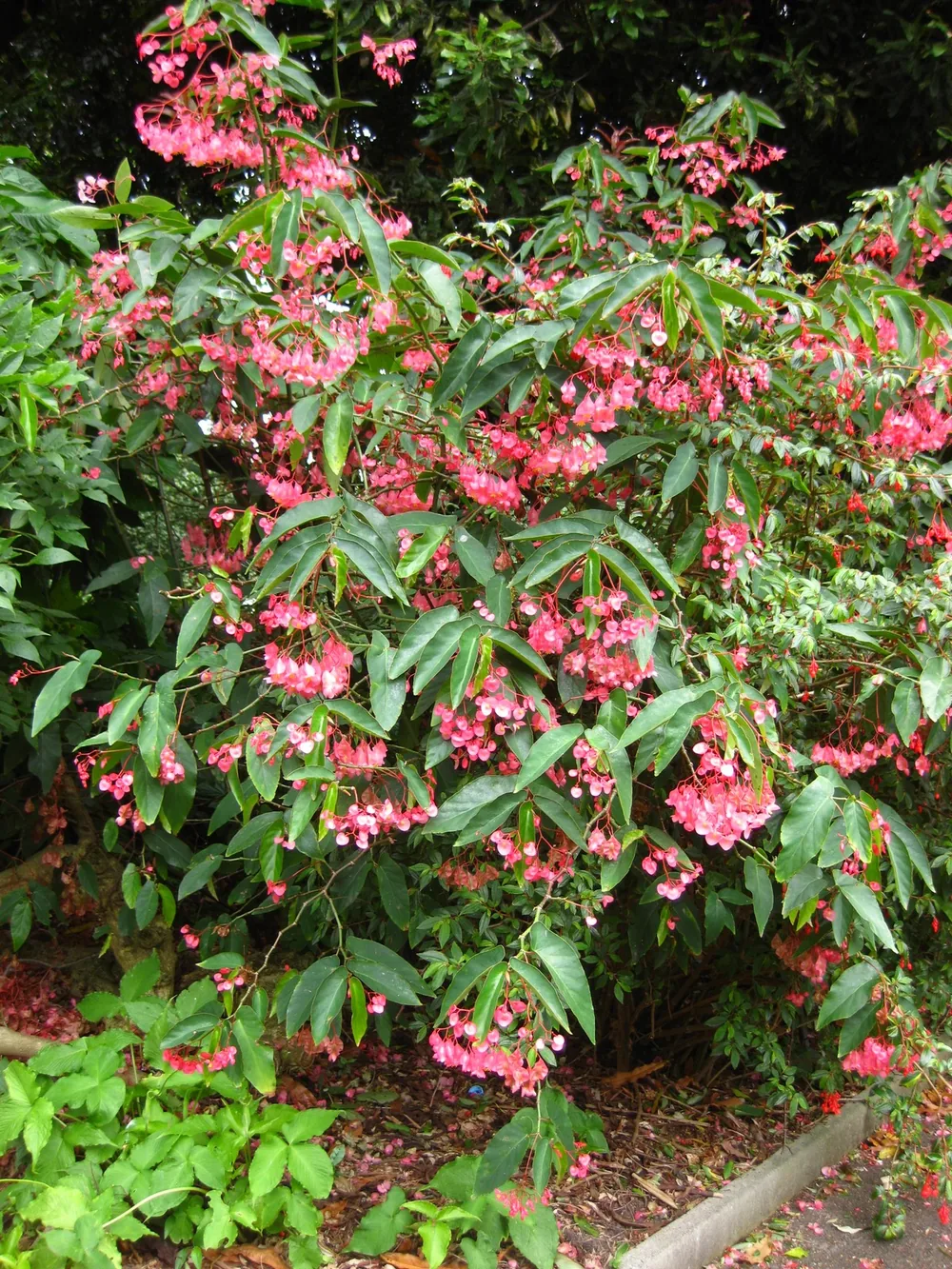
Angel Wing Begonia (Begonia coccinea)

Angel Wing Begonia

Begonia coccinea
Care level: Moderate

Angel Wing Begonias get their name from their asymmetrical, wing-shaped leaves, often dusted with silvery spots, held on tall, jointed canes that look almost bamboo-like. Unlike many begonias grown purely for foliage, this species also produces long-lasting, pendant clusters of flowers that can bloom on and off for much of the year in good light.

I have this plant

Information

Varieties and related species
Silver-spotted formsBronze-leaf hybridsCane-type hybrids

Light

Bright indirect light; a few hours of gentle morning sun encourages flowering, but harsh afternoon sun scorches leaves.

Water

Water when the top 2-3cm of soil is dry, roughly every 7-10 days; avoid wetting the leaves to prevent fungal spotting.

Humidity

Prefers moderate to high humidity; dry air can cause crispy leaf edges.

Soil

Light, well-draining potting mix rich in organic matter.

Best position

  • east / south-east / south / west-facing windowanywhere up to about 2 m from the window
  • north / north-east / north-west-facing windowanywhere up to about 1 m from the window
  • south-west-facing windowabout 1 m from the window or further back

Watch for strong direct sun at south-west windows.

See every window direction Hide window directions
Best positionright by the windowabout 1 mabout 2 mabout 4 m4 m or more
northworks wellworks welltoo darktoo darktoo dark
north-eastworks wellworks welltoo darktoo darktoo dark
eastworks wellworks wellworks welltoo darktoo dark
south-eastworks wellworks wellworks welltoo darktoo dark
southworks wellworks wellworks welltoo darktoo dark
south-westjust aboutworks wellworks welltoo darktoo dark
westworks wellworks wellworks welltoo darktoo dark
north-westworks wellworks welltoo darktoo darktoo dark

works well just about too dark too much direct sun

A rough guide based on window direction and typical daylight through the year. Window size, curtains and whatever stands outside matter just as much.

Toxic to pets

Toxic to cats and dogs if eaten.

Eating it can cause vomiting and an upset stomach.

If your pet has eaten some, contact your vet.

Source: ASPCA

Propagation tip

A cane cutting a few nodes long, placed in water or moist soil, roots readily within a few weeks, making this one of the easiest begonias to multiply from a single mature plant.

Care by Season

Spring

Resume regular feeding and watering as new cane growth and flower clusters appear.

Summer

Keep humidity up and water consistently; this is peak flowering season.

Autumn

Reduce feeding and ease off watering slightly as growth slows.

Winter

Water more sparingly, keep away from cold drafts, and expect a rest period with fewer blooms.

Growing & Maintenance

Soil and pot

A light, free-draining potting mix rich in organic matter, in a pot with drainage holes.

Fertilising

Feed regularly from spring, when new canes and flower clusters appear, through summer. Ease off in autumn.

Pruning

Pinch out the growing tips to make the plant branch, and cut tall, bare canes back in spring.

Support

Tie tall canes loosely to a stake. The plant grows upright and becomes top-heavy.

Propagation

From cane cuttings a few nodes long, which root in water or moist compost within a few weeks.

Pests & Diseases

Common problems

Spotted or scabby patches on the leaves

Most likely cause: Water sitting on the foliage, or conditions that are too damp.
What to do: Water at the base, keep the leaves dry and give the plant more air.

Tall and leggy, with few lower leaves

Most likely cause: Low light. The canes grow upright and stretch.
What to do: Move it to brighter light and pinch out the tips to encourage branching.

Crispy leaf edges

Most likely cause: Dry air.
What to do: Raise the humidity around the plant.

Scorched leaves

Most likely cause: Harsh afternoon sun.
What to do: Give bright, indirect light, with gentle morning sun at most.

Few flowers

Most likely cause: Too little light.
What to do: A few hours of gentle morning sun encourages flowering.

Pests & Diseases

Powdery mildew

Signs: White powdery patches on leaves, common in still, humid air
Treatment: Improve airflow, avoid wetting foliage, and remove affected leaves.

Mealybugs

Signs: White cottony clumps at leaf and stem joints
Treatment: Dab with a rubbing-alcohol swab and repeat weekly. Check the undersides of the leaves and the crevices where the leaf stem meets the main stalk.

Botrytis (gray mold)

Signs: Fuzzy gray mold on stems or flowers, usually from excess moisture
Treatment: Remove affected parts, improve ventilation, and avoid overhead watering.

FAQ

Why does my Angel Wing Begonia have spotted or scabby patches on its leaves?

This is usually oedema or fungal leaf spot from water sitting on the foliage or overly damp conditions; water at the soil level rather than overhead, and improve airflow around the plant.

Why is my Angel Wing Begonia getting tall and leggy with few leaves lower down?

This cane-type begonia naturally grows upright and can get top-heavy in lower light; pinching the growing tips periodically encourages branching, and moving it to brighter indirect light helps keep growth more compact.

Is the Angel Wing Begonia toxic to cats and dogs?

Yes, the Angel Wing Begonia is toxic to cats and dogs. Eating it upsets the stomach. Keep it out of reach of pets.

How often should I water an Angel Wing Begonia?

Roughly every 7-10 days, when the top 2-3cm of compost is dry. Water at the base and keep the leaves dry to avoid fungal spots.

How do I propagate an Angel Wing Begonia?

From a cane cutting a few nodes long. Stand it in water or moist compost and it roots within a few weeks.

How much light does an Angel Wing Begonia need?

It needs bright, indirect light. A few hours of gentle morning sun help it flower, but harsh afternoon sun scorches the leaves.

You might also like