No results. Is a plant missing? Tell uscontact@wikiplant.net
False Shamrock
Oxalis triangularis
Care level: Easy
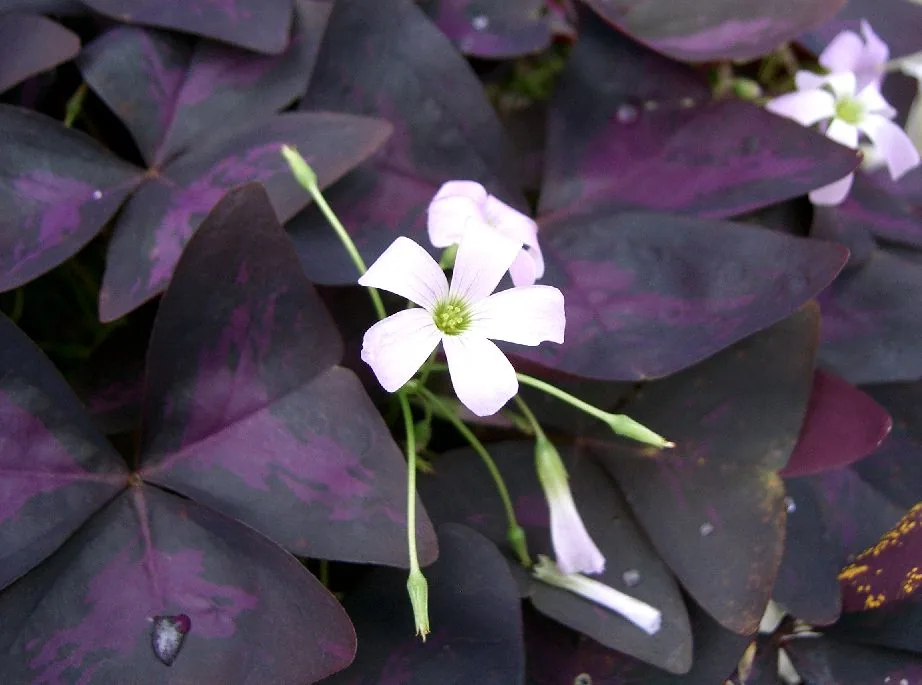
Despite its common name, False Shamrock isn't a clover at all but a South American oxalis grown from small underground corms, and its striking purple, triangular leaflets fold up like an umbrella closing each night and reopen at dawn, a movement called nyctinasty. That daily folding and unfolding, along with a leafless winter dormancy, is completely normal and not a sign of a struggling plant.
Bright indirect light; leaves fold up at night and in low light, and reopen in brighter conditions.
Water
Keep soil lightly moist during active growth, watering when the top 2-3cm dries; withhold water almost entirely during dormancy.
Humidity
Tolerates average household humidity without special care.
Soil
Well-draining potting mix, since the plant grows from small bulb-like corms that can rot if kept too wet.
Size
15-45cm tall and 30-60cm wide.
Growth speed
Medium
Best position
east / south-east-facing windowanywhere up to about 2 m from the window
north / north-east / north-west-facing windowanywhere up to about 1 m from the window
south / west-facing windowabout 1 m from the window or further back
Watch for strong direct sun at south / west windows.
See every window directionHide window directions
Best position
right by the window
about 1 m
about 2 m
about 4 m
4 m or more
north
works well✓
works well✓
too dark○
too dark○
too dark○
north-east
works well✓
works well✓
too dark○
too dark○
too dark○
east
works well✓
works well✓
works well✓
too dark○
too dark○
south-east
works well✓
works well✓
works well✓
too dark○
too dark○
south
just about~
works well✓
works well✓
too dark○
too dark○
south-west
just about~
just about~
works well✓
too dark○
too dark○
west
just about~
works well✓
works well✓
too dark○
too dark○
north-west
works well✓
works well✓
too dark○
too dark○
too dark○
✓works well~just about○too dark☼too much direct sun
A rough guide based on window direction and typical daylight through the year. Window size, curtains and whatever stands outside matter just as much.
!Toxic to pets
Toxic to cats and dogs if eaten.
Eating it can cause vomiting and an upset stomach.
If your pet has eaten some, contact your vet.
Source: ASPCA
Did you know?
Oxalis triangularis leaves also fold shut in response to darkness or heavy shade during the day, not just at night, so a plant that suddenly looks "closed" in daytime is usually just reacting to lower light.
Care by Season
Spring
Resume watering as new leaves sprout from the corms after any winter dormancy.
Summer
Water regularly and keep in bright indirect light; some growers see a brief summer dormancy in heat.
Autumn
Watering typically resumes or continues if the plant broke dormancy; feed lightly to support new growth.
Winter
It's normal for foliage to die back and go dormant; reduce watering to almost nothing until new growth appears.
Growing & Maintenance
Soil and pot
A loamy, well-drained potting mix. The small corms rot if they are kept too wet.
Fertilising
A light feed while the plant is in active growth. None during dormancy.
Pruning
When the foliage dies back for its rest, cut it off at soil level.
Propagation
By dividing the corms when the plant is dormant or when you repot.
Pests & Diseases
Common problems
All the leaves die back
Most likely cause: Normal dormancy, in autumn or in heat and drought.
What to do: Stop watering almost entirely and wait. New leaves sprout from the corms after a few weeks.
Leaves folded shut during the day
Most likely cause: Low light. The leaves also close at night.
What to do: Move it to brighter light.
Long, leaning leaf stalks
Most likely cause: Too little light.
What to do: Give it bright, indirect light and turn the pot regularly.
Mushy corms and collapsing leaves
Most likely cause: Compost that is kept too wet.
What to do: Let the compost dry out fully, remove the rotten corms and replant the firm ones in fresh mix.
Wilting in summer heat
Most likely cause: The plant is heading into a summer rest.
What to do: Move it somewhere cooler and reduce watering until it regrows.
Pests & Diseases
Spider mites
Signs: Fine webbing and pale stippling on leaflets in dry air
Treatment: Raise humidity slightly and rinse foliage periodically. Check the undersides of the leaves and the crevices where the leaf stem meets the main stalk.
Aphids
Signs: Small insects clustering on new stems and leaves
Treatment: Rinse off with water or apply insecticidal soap.
Corm rot
Signs: Mushy, blackened corms and collapsing growth from overwatering
Treatment: Let soil dry out fully, remove rotten corms, and repot healthy ones in fresh, well-draining mix.
FAQ
Why does my False Shamrock lose all its leaves and look dead?
This is a natural dormancy period for plants grown from corms; cut back watering almost entirely once foliage dies back, and new leaves will typically sprout again within a few weeks to months once dormancy ends.
Is False Shamrock the same as a lucky clover?
No, despite the similar triangular leaflets, Oxalis triangularis is unrelated to true clovers (Trifolium); it's grown for its striking purple foliage and light-sensitive leaf movement rather than any connection to lucky four-leaf clovers.
Is False Shamrock toxic to cats and dogs?
Yes, False Shamrock is toxic to cats and dogs. Eating it upsets the stomach. Keep it out of reach of pets that chew.
How often should I water a False Shamrock?
When the top 2-3cm of compost has dried, while it is growing. During dormancy, withhold water almost entirely.
Does False Shamrock flower?
Yes. It carries small white to pale pink flowers from summer into autumn, above the purple leaves.
How do I propagate a False Shamrock?
By division. Separate the small corms when the plant is dormant or at repotting and plant them in fresh mix.