No results. Is a plant missing? Tell uscontact@wikiplant.net
Peace Lily
Spathiphyllum wallisii
Care level: Easy
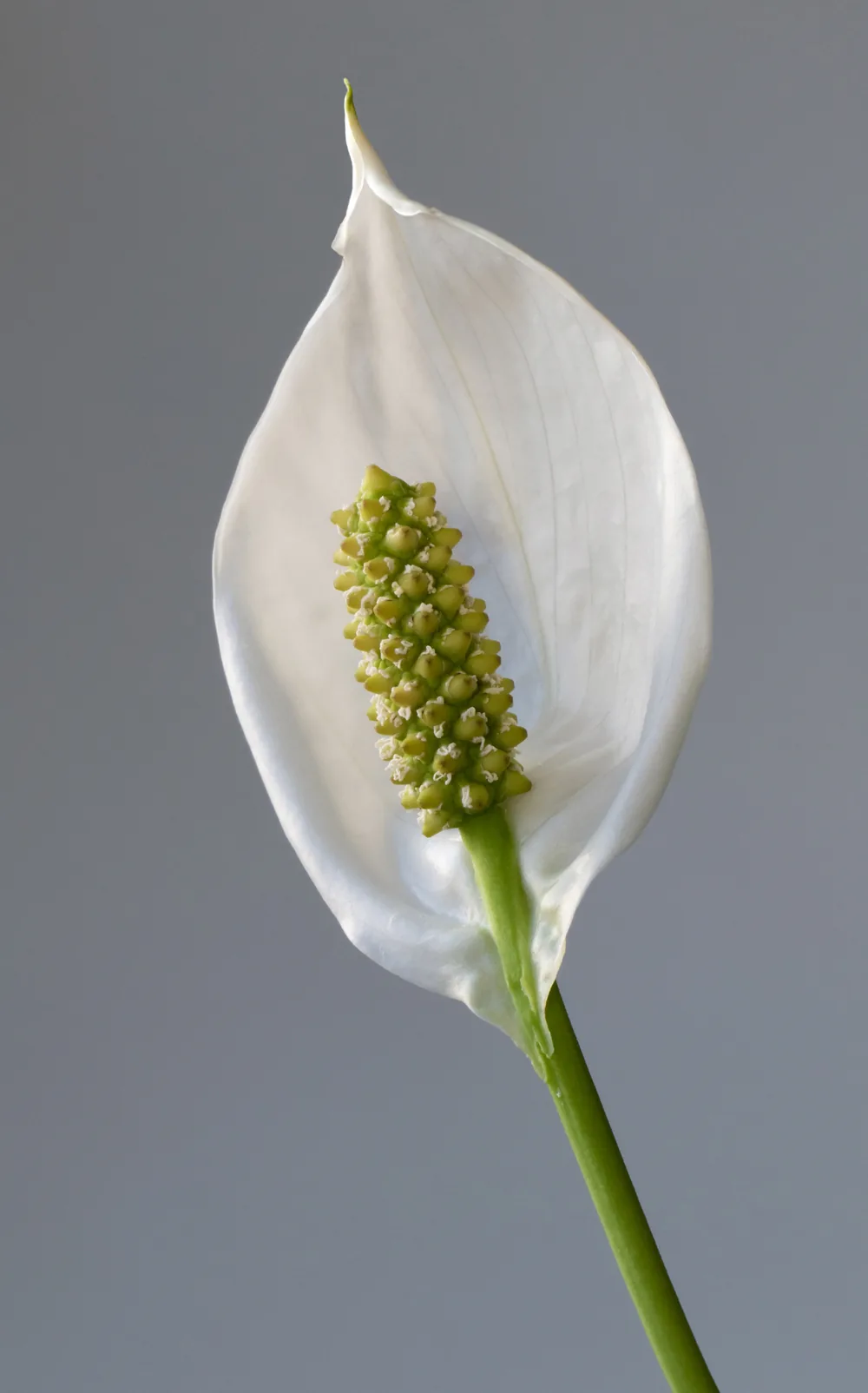
Despite the name, the peace lily isn't a true lily at all - it's an aroid from the tropical rainforests of Central and South America, and its white 'flower' is actually a modified leaf called a spathe wrapped around a tiny spike of true flowers.
Thrives in low to medium indirect light; direct sun scorches the leaves.
Water
Keep soil evenly moist and water about once a week; the plant droops visibly when thirsty and perks up quickly after watering.
Humidity
Enjoys high humidity; mist regularly or place on a pebble tray.
Soil
Rich, well-draining potting mix that retains some moisture.
Temperature
20-29°C by day. Growth slows sharply below 16°C and prolonged cold below 4°C damages the plant.
Size
Typically about 90cm tall and wide indoors. Dwarf varieties stay smaller.
Best position
north / north-east-facing windowanywhere up to about 2 m from the window
east-facing windowabout 1 m from the window or further back
west-facing windowabout 2 m from the window or further back
Watch for strong direct sun at east / west windows.
See every window directionHide window directions
Best position
right by the window
about 1 m
about 2 m
about 4 m
4 m or more
north
works well✓
works well✓
works well✓
just about~
just about~
north-east
works well✓
works well✓
works well✓
just about~
just about~
east
just about~
works well✓
works well✓
works well✓
works well✓
south-east
too much direct sun☼
just about~
just about~
works well✓
works well✓
south
too much direct sun☼
too much direct sun☼
too much direct sun☼
just about~
works well✓
south-west
too much direct sun☼
too much direct sun☼
just about~
works well✓
works well✓
west
too much direct sun☼
too much direct sun☼
works well✓
works well✓
works well✓
north-west
too much direct sun☼
just about~
works well✓
just about~
just about~
✓works well~just about○too dark☼too much direct sun
A rough guide based on window direction and typical daylight through the year. Window size, curtains and whatever stands outside matter just as much.
!Toxic to pets
Toxic to cats and dogs if eaten.
Chewing it can irritate the mouth, causing drooling and trouble swallowing.
If your pet has eaten some, contact your vet.
Source: ASPCA
Did you know?
Peace lilies are famous for drooping dramatically the moment they get thirsty, then fully recovering within a few hours of watering - a built-in warning system that makes them one of the easiest plants to water correctly by feel alone.
Care by Season
Spring
Resume feeding monthly with a diluted fertilizer as flowering begins.
Summer
Keep soil consistently moist and maintain high humidity for lush blooms.
Autumn
Reduce feeding and let the soil surface dry slightly more between waterings.
Winter
Water less frequently and keep away from cold drafts; flowering may pause.
Growing & Maintenance
Soil and pot
A rich houseplant compost with some perlite, which stays evenly moist without sitting wet. The pot needs drainage holes.
Repotting
Every 1-2 years in spring, when the plant wilts quickly between waterings or roots fill the pot. Move up one size.
Fertilising
A diluted balanced liquid feed once a month in spring and summer. Too much feed gives lush leaves, few flowers and brown leaf tips.
Pruning
Cut spent flower stalks and yellow leaves off as low as possible at the base. Nothing else is needed.
Propagation
By division only. At repotting, split the clump into sections that each have several leaves and their own roots, and pot them separately.
Pests & Diseases
Common problems
Drooping leaves
Most likely cause: Thirst. The plant wilts dramatically as soon as the compost dries out.
What to do: Water thoroughly and it recovers within hours. If it droops while the compost is still wet, check the roots for rot.
Brown leaf tips
Most likely cause: Dry air, too little water, too much direct sun, or a build-up of fertiliser salts.
What to do: Raise the humidity, water more evenly and keep it out of direct sun. Feed at a weak dose and rinse the compost through between feeds.
Yellow leaves
Most likely cause: Overwatering. Roots sitting in wet compost begin to rot.
What to do: Let the surface dry slightly before watering again and never leave water in the saucer.
No flowers
Most likely cause: Too little light. In deep shade the plant makes healthy leaves but rarely blooms.
What to do: Move it to a brighter place without direct sun.
White flowers turning green
Most likely cause: Normal ageing. Each bloom fades to pale green after about ten days and then lasts for weeks.
What to do: Nothing to treat. Cut the stalk off at the base once the flower looks tired.
Scorched, pale patches on the leaves
Most likely cause: Direct sunlight.
What to do: Move the plant out of the sun into shade or indirect light.
Pests & Diseases
Mealybugs
Signs: White cottony clusters in leaf axils and along stems.
Treatment: Dab with rubbing-alcohol-soaked cotton swab and repeat weekly. Check the undersides of the leaves and the crevices where the leaf stem meets the main stalk.
Spider mites
Signs: Fine webbing and speckled, dull leaves, especially in dry air.
Treatment: Increase humidity and wipe leaves; apply insecticidal soap if needed. Check the undersides of the leaves and the crevices where the leaf stem meets the main stalk.
Root rot
Signs: Wilting despite moist soil and blackened, mushy roots.
Treatment: Unpot, trim away rotten roots, and repot in fresh mix with better drainage.
FAQ
Why won't my peace lily flower?
Usually because it does not get enough light. A plant in deep shade grows healthy leaves but rarely blooms. Move it closer to a window, out of direct sun.
Should I let my peace lily wilt before watering?
No, water as soon as the leaves begin to droop. An occasional wilt does no harm and the plant recovers within hours, but repeated severe wilting stresses the roots.
Why does my peace lily have brown leaf tips?
Brown tips come from dry air, underwatering, direct sun or too much fertiliser. Feed at a weak dose, rinse the compost through now and then, and keep the plant out of the sun.
How often should I water a peace lily?
About once a week, keeping the compost moist but never soggy. Let the surface dry slightly between waterings. Watering from below, through the saucer, works well for this plant.
Is a peace lily toxic to cats and dogs?
Yes, the peace lily is toxic to cats and dogs. Chewing the plant irritates the mouth. Keep it out of reach of pets.
When should I repot a peace lily?
In late winter or early spring, and only when it is clearly needed. The plant likes to be somewhat pot-bound, so move up just one pot size.