No results. Is a plant missing? Tell uscontact@wikiplant.net
Guzmania
Guzmania lingulata
Care level: Easy
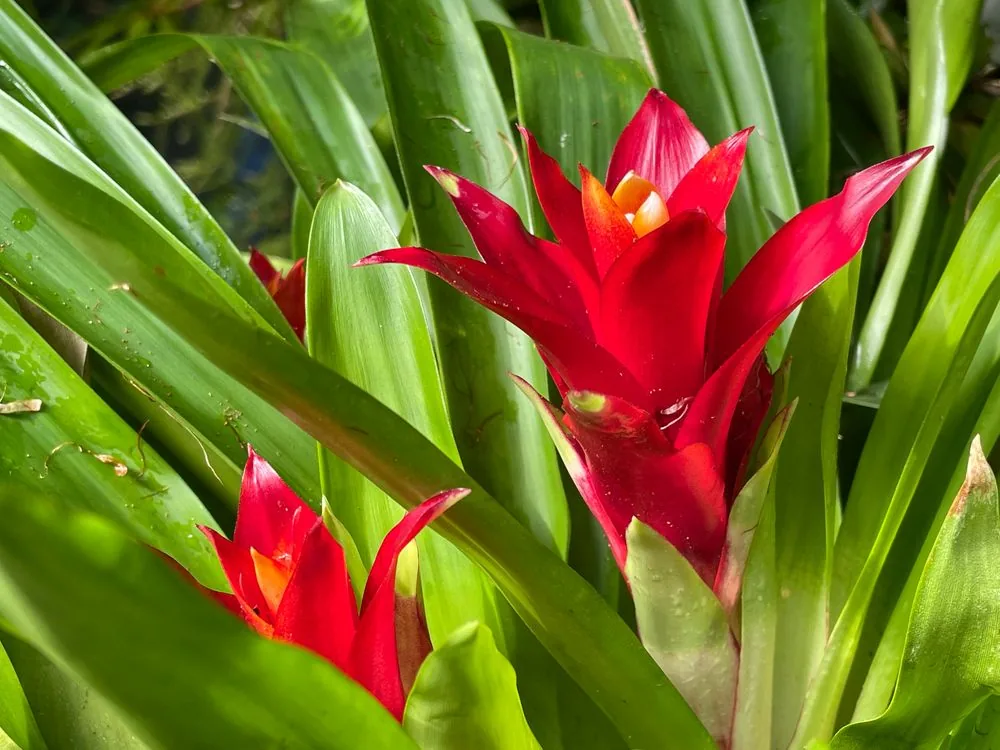
Guzmania is a bromeliad from the rainforests of tropical America, where it grows on tree branches. It forms a rosette of glossy, bright green, strap-shaped leaves that overlap into a central cup, and from the middle of that cup rises a star of red or orange bracts that keeps its colour for months. The true flowers, small and yellow or white, sit between the bracts and last only days. It needs warmth, soft water and filtered light, and tolerates shadier rooms better than most flowering plants.
Guzmania lingulata var. minorGuzmania coniferaGuzmania sanguinea
Light
Bright, filtered light. Partial shade is tolerated; direct sun is not.
Water
Keep a little soft water in the central cup and refresh it regularly. Keep the compost just moist, and barely moist in winter.
Humidity
High. Mist with soft water in the morning during the growing season, not in winter.
Soil
An open bromeliad or orchid compost. The plant can also be grown mounted on a branch.
Temperature
Warm, above 15°C all year, without cold draughts.
Size
30-60cm tall and 30-60cm wide.
Growth speed
Slow
?Pet safety not confirmed
As a precaution, keep it out of reach of children and pets.
Did you know?
Each rosette flowers once. After the bracts fade the mother plant slowly dies, but before it does it produces offsets, known as pups, around its base. These are the next generation and will flower in their turn.
Care by Season
Spring
Growth resumes. Separate offsets in mid-spring and begin misting.
Summer
Keep water in the cup, mist regularly and shade from direct sun.
Autumn
Reduce watering as the days shorten.
Winter
Keep it warm and barely moist, with only a little water in the cup, and do not mist.
Growing & Maintenance
Soil and pot
Use an open, free-draining bromeliad or orchid compost in a small pot; the roots mainly anchor the plant.
Fertilising
Feed monthly in the growing season with a liquid fertiliser at a quarter of the usual strength, applied to the compost or misted onto the leaves.
Pruning
Cut off the faded flower head low down, and remove the old rosette once it has died back.
Propagation
By removing offsets in mid-spring when they are about a third of the size of the parent.
Pests & Diseases
Common problems
The flower head turns brown
Most likely cause: The end of flowering; each rosette flowers once.
What to do: Cut it off and grow on the offsets.
The mother plant slowly dies
Most likely cause: Normal after flowering.
What to do: Leave it until the offsets are a third of its size, then separate them.
Brown leaf tips
Most likely cause: Dry air or hard water.
What to do: Use rainwater or soft water and mist in the growing season.
A rotting, foul-smelling centre
Most likely cause: Stagnant water in the cup, especially in a cool room.
What to do: Tip the cup out, refresh the water regularly and keep less in it in winter.
Pale, bleached leaves
Most likely cause: Direct sun.
What to do: Move it to filtered light.
Pests & Diseases
Mealybugs
Signs: White, cottony tufts deep between the leaf bases.
Treatment: Wipe them out with a cotton bud dipped in rubbing alcohol and flush the cup with clean water. Check the undersides of the leaves and the crevices where the leaf stem meets the main stalk.
Scale insects
Signs: Small brown, shell-like bumps on the undersides of the leaves.
Treatment: Wipe them off with a damp cloth and check again after two weeks.
Spider mites
Signs: Fine pale speckling on the leaves in warm, dry air.
Treatment: Rinse the leaves with soft water and raise the humidity. Check the undersides of the leaves and the crevices where the leaf stem meets the main stalk.
FAQ
How do I water a guzmania?
Water into the central cup formed by the leaves as well as onto the compost. Keep a little water in the cup, tip it out and refresh it every week or two, and keep the compost just moist. Use rainwater or soft water where you can.
Why is the coloured flower head turning brown?
It has finished. The bracts last several months and then fade, and the rosette that carried them will not flower again. Cut the old head off low down and look after the plant while its offsets grow.
What do I do with the pups?
Leave them on the mother plant until they are about a third of its size, then cut them away in mid-spring with a clean knife and pot them separately in bromeliad compost. Alternatively cut the old rosette out and leave the pups together as a clump.
How much light does it need?
Bright, filtered light is ideal, but it grows in partial shade and under artificial light too. Direct sun bleaches and scorches the leaves.
Why are the leaf tips brown?
Usually dry air, or hard tap water that leaves salts behind. Mist the plant with soft water in the growing season and flush the cup regularly.
Will the pups flower?
Yes, once they are mature, which takes a couple of years. A warm, bright place and regular feeding at low strength bring them on.