No results. Is a plant missing? Tell uscontact@wikiplant.net
Zebra Alocasia
Alocasia zebrina
Care level: Moderate
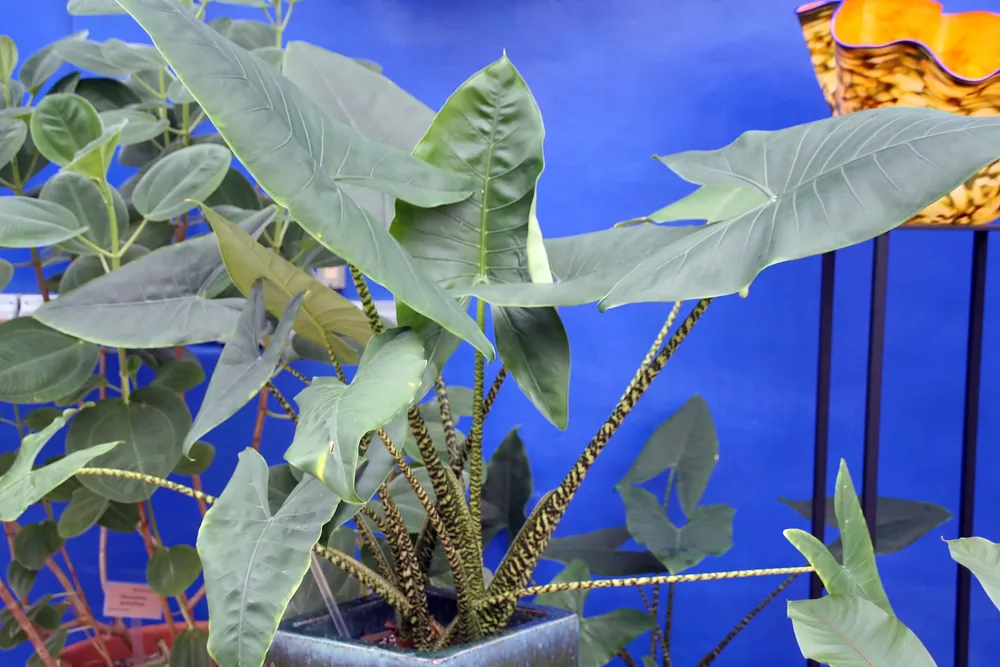
Alocasia zebrina takes its name and appeal from its striking petioles, the tall stalks beneath each arrow-shaped leaf, which are marked with bold, irregular dark and light banding reminiscent of a zebra's coat; native to the Philippine rainforest, it has become a favorite among collectors specifically for that stem pattern rather than the leaf itself.
Bright, indirect light; too much direct sun scorches the arrow-shaped leaves.
Water
Water when the top 2-3cm of soil is dry, keeping it consistently moist but never soggy.
Humidity
Needs high humidity (60%+) for healthy, unblemished leaves.
Soil
Chunky, well-draining aroid mix with bark and perlite.
Best position
north / north-east-facing windowanywhere up to about 1 m from the window
east-facing windowabout 1 m from the window or further back
west-facing windowabout 2 m from the window or further back
Watch for strong direct sun at east / west windows.
See every window directionHide window directions
Best position
right by the window
about 1 m
about 2 m
about 4 m
4 m or more
north
works well✓
works well✓
too dark○
too dark○
too dark○
north-east
works well✓
works well✓
too dark○
too dark○
too dark○
east
just about~
works well✓
works well✓
too dark○
too dark○
south-east
too much direct sun☼
just about~
just about~
too dark○
too dark○
south
too much direct sun☼
too much direct sun☼
too much direct sun☼
too dark○
too dark○
south-west
too much direct sun☼
too much direct sun☼
just about~
too dark○
too dark○
west
too much direct sun☼
too much direct sun☼
works well✓
too dark○
too dark○
north-west
too much direct sun☼
just about~
too dark○
too dark○
too dark○
✓works well~just about○too dark☼too much direct sun
A rough guide based on window direction and typical daylight through the year. Window size, curtains and whatever stands outside matter just as much.
!Toxic to pets
Toxic to cats and dogs if eaten.
Chewing it can irritate the mouth, causing drooling and trouble swallowing.
If your pet has eaten some, contact your vet.
Source: ASPCA
Did you know?
The distinctive zebra-striped stalks are the plant's real showpiece, so many growers deliberately train the leaves upward and space plants to show off the patterned petioles rather than let dense foliage hide them.
Care by Season
Spring
Resume feeding monthly as striking new stems and leaves emerge.
Summer
Water regularly and maintain high humidity for peak growth.
Autumn
Taper off fertilizer and slightly reduce watering frequency.
Winter
Water sparingly; some leaf drop is normal as the plant rests.
Growing & Maintenance
Soil and pot
A chunky, well-draining aroid mix with bark and perlite, in a pot with drainage holes.
Fertilising
Feed once a month while new stems and leaves emerge in spring and summer. Taper off in autumn.
Pruning
Remove an old leaf once it has yellowed, cutting the stalk at the base.
Propagation
By division at repotting, separating offsets that have their own roots.
Pests & Diseases
Common problems
Stem stripes fading
Most likely cause: Too little light.
What to do: Move it to a brighter spot with strong, indirect light.
Only one or two leaves at a time
Most likely cause: Normal. It grows one leaf at a time and sheds an older one as the new one opens.
What to do: Nothing to do.
Scorched patches on the leaves
Most likely cause: Too much direct sun.
What to do: Move it to bright, indirect light.
Leaves dropping in winter
Most likely cause: The plant is resting.
What to do: Water sparingly and keep it warm until growth restarts in spring.
Yellow leaves and a soft stem base
Most likely cause: Compost that stays soggy.
What to do: Let the top 2-3cm dry before watering again, trim the affected roots and repot in fresh, chunky mix.
Blemished or brown-edged leaves
Most likely cause: Low humidity.
What to do: Keep the humidity at 60% or more.
Pests & Diseases
Spider mites
Signs: Fine webbing and speckled discoloration on leaves.
Treatment: Increase humidity, rinse leaves, and apply insecticidal soap if needed. Check the undersides of the leaves and the crevices where the leaf stem meets the main stalk.
Mealybugs
Signs: White cottony clusters at leaf and stem joints.
Treatment: Remove with an alcohol-soaked swab and repeat weekly. Check the undersides of the leaves and the crevices where the leaf stem meets the main stalk.
Root rot
Signs: Soft, dark roots and wilting despite damp soil.
Treatment: Remove from wet soil, trim affected roots, and repot in fresh, well-draining mix.
FAQ
Why is my Alocasia Zebrina losing its stem striping?
Faded or less distinct banding on new petioles is usually linked to insufficient light; moving the plant to a brighter spot with strong indirect light tends to bring back more vivid striping on subsequent growth.
Is it normal for my Alocasia Zebrina to only have one or two leaves at a time?
Yes, this species typically grows one leaf at a time from a central point, with older leaves dying back as new ones emerge, so having just a couple of leaves present at once is completely normal rather than a sign of poor health.
Is Alocasia Zebrina toxic to cats and dogs?
Yes, Alocasia Zebrina is toxic to cats and dogs. Chewing it irritates the mouth. Keep it out of reach of pets.
How often should I water Alocasia Zebrina?
When the top 2-3cm of compost is dry. Keep it consistently moist but never soggy, and water sparingly in winter.
How much light does Alocasia Zebrina need?
It needs bright, indirect light. Too much direct sun scorches the leaves, while too little makes the zebra stripes on the stems fade.
How do I propagate Alocasia Zebrina?
By division. When you repot, separate an offset that has its own roots and pot it up on its own.