No results. Is a plant missing? Tell uscontact@wikiplant.net
Asparagus Fern
Asparagus setaceus
Care level: Easy
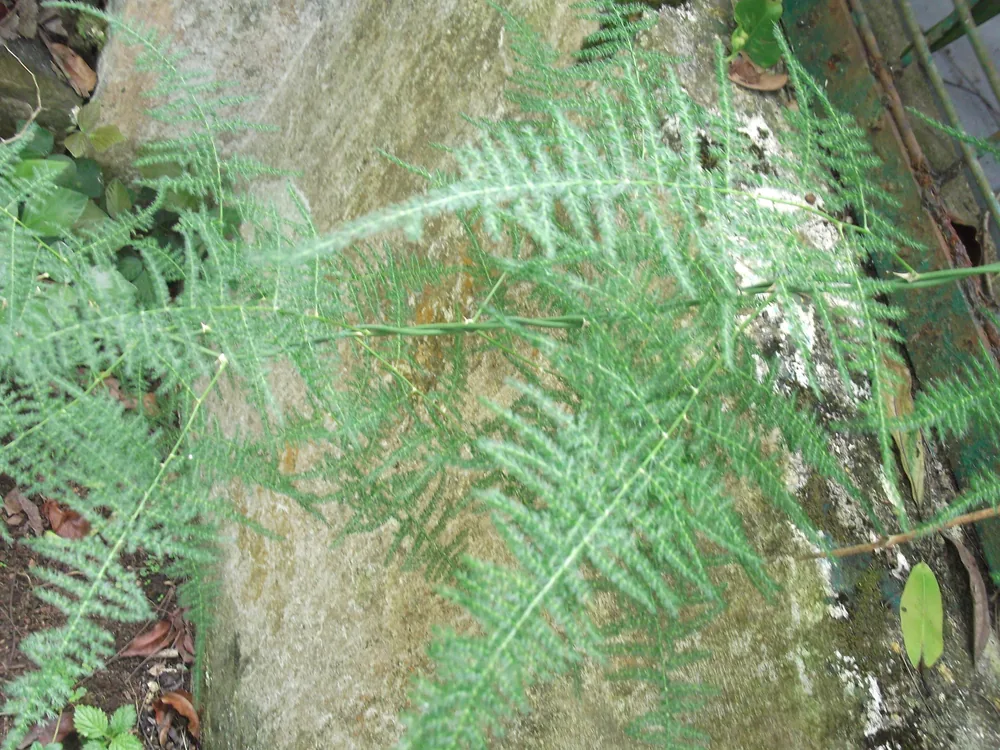
The asparagus fern is the lace-like plant every florist knows, used as filler in bouquets for more than a century and grown as a houseplant for its extraordinarily fine, layered foliage. It is not a fern at all: it is a relative of edible asparagus, and what look like leaves are flattened needle-like stems called cladodes. Give it bright indirect light and steady moisture and it produces flat horizontal tiers of feathery green that no real fern can match.
Bright indirect light. It tolerates moderate light but becomes sparse and leggy in it, and direct midday sun bleaches and scorches the fine foliage.
Water
Keep evenly moist through spring and summer, watering once the top 2 cm of compost dries. Reduce in winter but never let the tubers dry out completely.
Humidity
Likes humidity and browns at the tips in dry heated air. Group it with other plants or stand it on a damp pebble tray; it does particularly well in a bathroom.
Soil
Free-draining potting compost with added perlite. The tuberous roots are vigorous and quickly fill a pot, so the mix needs to stay open.
Temperature
Normal room temperatures. Keep it above 10°C in winter.
Best position
east / south-east-facing windowanywhere up to about 2 m from the window
north / north-east / north-west-facing windowanywhere up to about 1 m from the window
south / west-facing windowabout 1 m from the window or further back
Watch for strong direct sun at south / west windows.
See every window directionHide window directions
Best position
right by the window
about 1 m
about 2 m
about 4 m
4 m or more
north
works well✓
works well✓
too dark○
too dark○
too dark○
north-east
works well✓
works well✓
too dark○
too dark○
too dark○
east
works well✓
works well✓
works well✓
too dark○
too dark○
south-east
works well✓
works well✓
works well✓
too dark○
too dark○
south
just about~
works well✓
works well✓
too dark○
too dark○
south-west
just about~
just about~
works well✓
too dark○
too dark○
west
just about~
works well✓
works well✓
too dark○
too dark○
north-west
works well✓
works well✓
too dark○
too dark○
too dark○
✓works well~just about○too dark☼too much direct sun
A rough guide based on window direction and typical daylight through the year. Window size, curtains and whatever stands outside matter just as much.
!Toxic to pets
Toxic to cats and dogs if eaten.
Eating it can cause vomiting and an upset stomach.
If your pet has eaten some, contact your vet.
Source: ASPCA, which lists Asparagus densiflorus, a related species rather than this one.
Signature feature
It grows from a mass of fat white underground tubers that store water like a camel. This is why a badly neglected plant can drop every scrap of foliage, look completely dead, and then push up fresh shoots weeks after you start watering again. Do not throw one out until you have checked the tubers are still firm.
Care by Season
Spring
The main growth period. Repot every second year, or when tubers start lifting the plant out of its pot, and begin feeding monthly. Cut any tired old fronds to the base now.
Summer
Water regularly and keep humidity up. A plant can go outside in a shaded, sheltered spot for the summer, but never into direct sun.
Autumn
Slow watering as growth stops. Expect some needle drop when heating comes on; this is a reaction to dry air and not a sign of disease.
Winter
Keep above 10°C and out of the way of radiators and cold draughts. Water sparingly, stop feeding, and mist or use a pebble tray if the room is dry.
Growing & Maintenance
Soil and pot
Free-draining potting compost with added perlite. The tuberous roots are vigorous, so give them room.
Repotting
Every second year in spring, or when the tubers start lifting the plant out of its pot.
Fertilising
Feed during the main growth period in spring and summer. Stop in winter.
Pruning
Cut yellowed or bare stems off at the base. New shoots come up from the tubers. Wear gloves: mature stems carry small hooked spines.
Propagation
By dividing the clump of tubers when you repot.
Pests & Diseases
Common problems
Yellowing and shedding needles
Most likely cause: Too little light, or watering that is off in either direction.
What to do: Move it to bright, indirect light and keep the compost evenly moist in the growing season.
Brown tips
Most likely cause: Dry, heated air.
What to do: Group it with other plants or stand it on a tray of damp pebbles.
Needle drop in autumn
Most likely cause: A reaction to the heating coming on.
What to do: Keep it away from radiators and raise the humidity.
Sparse, leggy growth
Most likely cause: Moderate or low light.
What to do: Give it bright, indirect light.
Bleached fronds
Most likely cause: Direct midday sun.
What to do: Move it out of direct sun.
Tubers pushing the plant out of the pot
Most likely cause: The pot is full of roots.
What to do: Repot in spring into a larger pot.
Pests & Diseases
Red spider mite
Signs: Fine webbing threaded through the foliage and a dull, greyish, speckled look to the needles, always worst in dry heated air.
Treatment: Raise the humidity, rinse the plant thoroughly in the shower and repeat weekly. The dense foliage is hard to treat once infested, so early action matters. Check the undersides of the leaves and the crevices where the leaf stem meets the main stalk.
Scale insect
Signs: Small brown limpet-like bumps along the wiry stems, with a sticky film on the foliage and anything under the plant.
Treatment: Wipe the stems with a cloth dipped in soapy water or dab each scale with alcohol on a cotton bud. Check thoroughly, since they hide well among the cladodes.
Mealybug
Signs: White cottony tufts in the crown and where stems join, on a plant that is losing vigour.
Treatment: Remove with an alcohol-dipped cotton bud and treat repeatedly. Badly infested old fronds are easier to cut out at the base than to clean. Check the undersides of the leaves and the crevices where the leaf stem meets the main stalk.
FAQ
Why does my asparagus fern keep turning yellow and shedding needles everywhere?
Almost always light or water, and the two look identical from the outside. Too little light gives a plant that yellows evenly and thins out all over; irregular watering gives a plant that yellows from the oldest fronds inward and drops needles in a heap. It also sheds after any sudden move, especially into a heated room in autumn. Give it bright indirect light, water as soon as the top 2 cm dries, and cut yellowed fronds right back to the base, since they never recolour.
Does it really have thorns?
Yes, and this catches people out because the plant looks so soft. Mature stems carry small sharp hooked spines, hidden among the fine foliage, that will scratch your forearms when you repot or untangle it. Wear long sleeves and gloves for anything more than a light trim. The spines are also why an older plant left to climb a trellis becomes awkward to handle.
Is the asparagus fern toxic to cats and dogs?
Yes, the asparagus fern is toxic to cats and dogs. Eating it upsets the stomach. Keep it out of reach of pets.
Is the asparagus fern a real fern?
No, it is not a fern at all. It belongs to the asparagus family and grows from fat underground tubers, which is why it survives neglect better than a true fern.
How often should I water an asparagus fern?
Whenever the top 2cm of compost has dried, in spring and summer. Water sparingly in winter. The tubers store water, so a missed watering is not fatal.
When should I repot an asparagus fern?
Every second year in spring, or sooner if the tubers start lifting the plant out of its pot.