No results. Is a plant missing? Tell uscontact@wikiplant.net
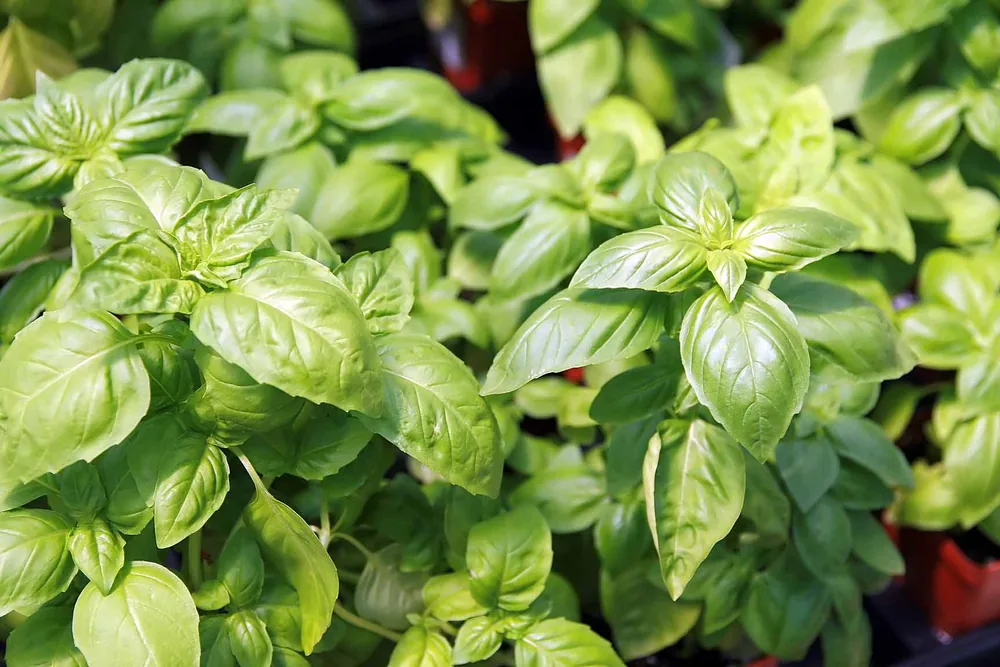
Basil
Ocimum basilicum
Care level: Moderate
Basil is one of the few culinary herbs that actually gets worse once it starts flowering: the plant redirects its energy into seed production, and the leaves quickly turn bitter and thin. That trait, more than anything about light or water, is what separates a thriving windowsill basil plant from one that fizzles out after a few weeks.
The periods shown are the ones published by RHS, for the species as a whole rather than one variety. For routine month-to-month care, see “Care by Season”.
Needs at least 6 hours of bright light daily; a sunny south or west-facing window suits it best.
Water
Keep soil evenly moist, watering when the top of the soil starts to feel dry, typically every 2-3 days.
Humidity
Prefers moderate to high humidity; dry indoor air can cause leaf edges to crisp.
Soil
Rich, well-draining potting mix; basil is a heavy feeder and benefits from regular light fertilizing.
Temperature
Warm. It suffers in cool draughts and does not survive frost.
Size
10-90cm tall and 10-35cm wide, depending on the variety.
Growth speed
Fast
Best position
south-east / south / south-west-facing windowanywhere up to about 1 m from the window
east / west-facing windowright by the window
See every window directionHide window directions
Best position
right by the window
about 1 m
about 2 m
about 4 m
4 m or more
north
too dark○
too dark○
too dark○
too dark○
too dark○
north-east
too dark○
too dark○
too dark○
too dark○
too dark○
east
works well✓
too dark○
too dark○
too dark○
too dark○
south-east
works well✓
works well✓
too dark○
too dark○
too dark○
south
works well✓
works well✓
too dark○
too dark○
too dark○
south-west
works well✓
works well✓
too dark○
too dark○
too dark○
west
works well✓
too dark○
too dark○
too dark○
too dark○
north-west
too dark○
too dark○
too dark○
too dark○
too dark○
✓works well~just about○too dark☼too much direct sun
A rough guide based on window direction and typical daylight through the year. Window size, curtains and whatever stands outside matter just as much.
✓Non-toxic to pets
Considered non-toxic to cats and dogs.
Source: ASPCA
Common mistake
Pinch the flower spikes off the moment they appear, and keep harvesting from the tips. That is what keeps the plant bushy and producing tender leaves for much longer.
Care by Season
Spring
Start seedlings or refresh soil, and begin regular light feeding as days lengthen.
Summer
Water often in heat and pinch back flower spikes regularly to keep leaves tender and productive.
Autumn
Growth slows as light drops; harvest heavily before cooler, dimmer days set in.
Winter
Basil struggles in low light and cool drafts; give it the warmest, brightest spot and expect it to need replacing come spring.
Growing & Maintenance
Soil and pot
A rich, well-draining potting mix in a pot with drainage holes.
Fertilising
A regular light feed while it is growing. Basil is a heavy feeder.
Pruning
Pinch out the stem tips and every flower spike as soon as it appears. Harvest from the tips, not the base.
Propagation
From seed, sown or planted out after the last frost, or from stem cuttings.
Pests & Diseases
Common problems
Bland or bitter leaves
Most likely cause: The plant has flowered.
What to do: Pinch off the flower spikes the moment they appear.
Tall, leggy plant with small leaves
Most likely cause: Too little light.
What to do: Give it at least six hours of bright light a day.
Sudden wilting of the whole plant
Most likely cause: Fusarium wilt.
What to do: Remove and discard the plant, and do not reuse the compost for basil.
Yellow leaves with a grey fuzz underneath
Most likely cause: Downy mildew.
What to do: Improve the airflow, water at the soil and remove the affected leaves.
Crisp leaf edges
Most likely cause: Dry indoor air.
What to do: Raise the humidity around the plant.
Pests & Diseases
Aphids
Signs: Small clustered insects on new growth, curling leaves
Treatment: Rinse with water or apply insecticidal soap.
Fusarium wilt
Signs: Sudden wilting and browning despite moist soil, often stem streaking
Treatment: Remove and discard affected plants; avoid replanting basil in the same soil.
Downy mildew
Signs: Yellow patches on top of leaves with gray fuzz underneath
Why does my basil taste bland or bitter after a while?
This usually happens once the plant has flowered or gone leggy from insufficient light; pinch off any flower spikes immediately and make sure it gets at least 6 hours of bright light to keep the leaves flavorful.
Can basil survive as a houseplant through winter?
It's genuinely difficult; basil is a warmth-loving annual that struggles with low winter light and cool drafts, so most growers treat it as disposable and start new seedlings each spring rather than keeping the same plant alive.
Is Basil safe for cats and dogs?
Yes, Basil is not toxic to cats or dogs.
How often should I water Basil?
Typically every 2-3 days, when the top of the soil starts to feel dry. Keep it evenly moist and water more often in heat.
How do I harvest Basil so that it keeps growing?
Pick from the tips. Pinching out the top of a stem makes it branch, so the plant gets bushier and stays productive.
When can I plant Basil outside?
After the last frost. It is a warmth-loving annual, and a single cold night can kill it.