No results. Is a plant missing? Tell uscontact@wikiplant.net
Blackcurrant
Ribes nigrum
Care level: Easy
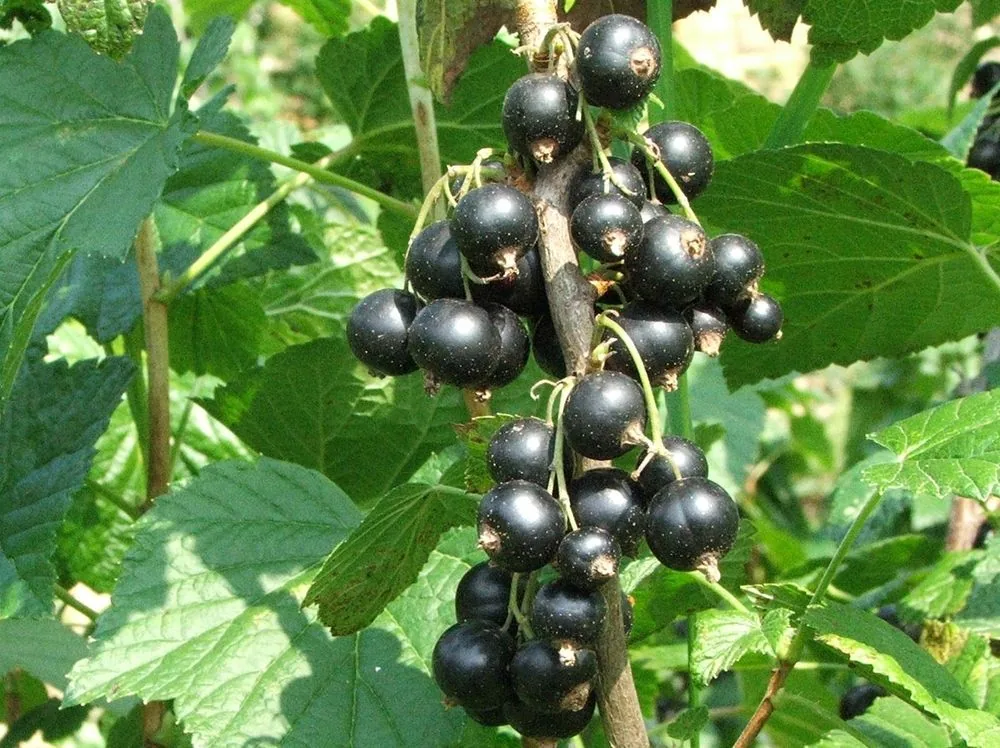
The blackcurrant is a deciduous fruit bush, 1-1.5m tall and wide, that carries strings of dark purple-black berries in midsummer. The fruit is sharp, rich in vitamin C and best cooked into jam, cordial and puddings, and the lobed leaves have a strong, unmistakable scent when rubbed. The bushes are self-fertile, fully hardy and productive for many years, as long as old wood is cut out regularly to make room for new.
As a precaution, keep it out of reach of children and pets.
Beginner tip
Plant a blackcurrant about 5cm deeper than it stood in its pot. Unlike most fruit bushes it crops best on young shoots that come up from below ground, and deep planting encourages plenty of them.
Care by Season
Spring
Flowers open early; protect them from frost. Feed with a general fertiliser and mulch.
Summer
The berries ripen in midsummer. Net against birds and water in dry weather.
Autumn
The leaves fall. Planting time begins; take hardwood cuttings.
Winter
Prune while the bush is dormant, removing up to a quarter of the oldest stems. Check for swollen buds.
Growing & Maintenance
Planting
Plant while dormant in a sunny spot, about 5cm deeper than the plant stood in its pot, then cut all the stems down to one or two buds above the ground to build a strong base.
Fertilising
Apply a general-purpose fertiliser in spring and mulch every year with well-rotted manure or compost.
Pruning
In winter, cut out up to a quarter of the oldest stems at ground level, plus weak and low-lying shoots.
Propagation
By hardwood cuttings taken from healthy bushes in autumn.
Pests & Diseases
Common problems
Flowers but little fruit
Most likely cause: Frost at flowering time.
What to do: Cover with fleece on frosty nights, or grow a later-flowering variety.
A falling crop on an old bush
Most likely cause: Too much old wood.
What to do: Cut out a quarter of the oldest stems each winter.
Round, swollen buds
Most likely cause: Big bud mite.
What to do: Remove and destroy the buds, or replace the bush.
Blistered red leaves
Most likely cause: Blister aphids.
What to do: Nothing is needed.
Small berries
Most likely cause: Dry soil while the fruit was swelling.
What to do: Water in dry spells and mulch.
Berries vanish as they ripen
Most likely cause: Birds.
What to do: Net the bush.
Pests & Diseases
Big bud mite
Signs: Buds that are swollen and round in winter and fail to open in spring.
Treatment: Pick off and destroy swollen buds. Replace badly affected bushes with a resistant variety, planted in a different place.
Blister aphid
Signs: Raised red or yellow blisters on the upper side of the leaves in early summer, with pale aphids underneath.
Treatment: The crop is not affected and no treatment is needed.
Birds
Signs: Ripe berries stripped from the bush.
Treatment: Net the bush before the fruit colours.
Powdery mildew
Signs: A white coating on young leaves and shoot tips that later turns brown.
Treatment: Cut out affected tips, and prune so that air moves through the bush.
FAQ
When and how do I prune blackcurrants?
In winter, while the bush is dormant. Blackcurrants fruit best on younger wood, so each year cut out up to a quarter of the oldest, darkest stems at ground level, along with any weak or low-lying shoots. The young, pale stems are next summer's crop.
Do I need two bushes for pollination?
No. Blackcurrants are self-fertile, so a single bush will crop by itself.
Why are some buds big and round in winter?
That is big bud, caused by tiny gall mites living inside the buds. The swollen buds fail to open properly, and the mites can also carry a virus that reduces the crop. Pick off and destroy swollen buds in winter, and replace a badly affected bush with a resistant variety.
Why did my bush flower but set little fruit?
A late frost at flowering time is the usual cause, as the flowers open early and are easily damaged. Cover the bush with fleece on frosty nights in spring, and choose a later-flowering variety for a cold garden.
Where should I plant a blackcurrant?
In a sunny spot in well-drained but moisture-retentive soil. It copes with most soils and with light shade. Mulch every year with well-rotted manure or compost.
How do I stop birds taking the fruit?
Net the bush as the berries begin to colour. Pick whole strings once the berries are fully black.