No results. Is a plant missing? Tell uscontact@wikiplant.net
Blueberry
Vaccinium corymbosum
Care level: Moderate
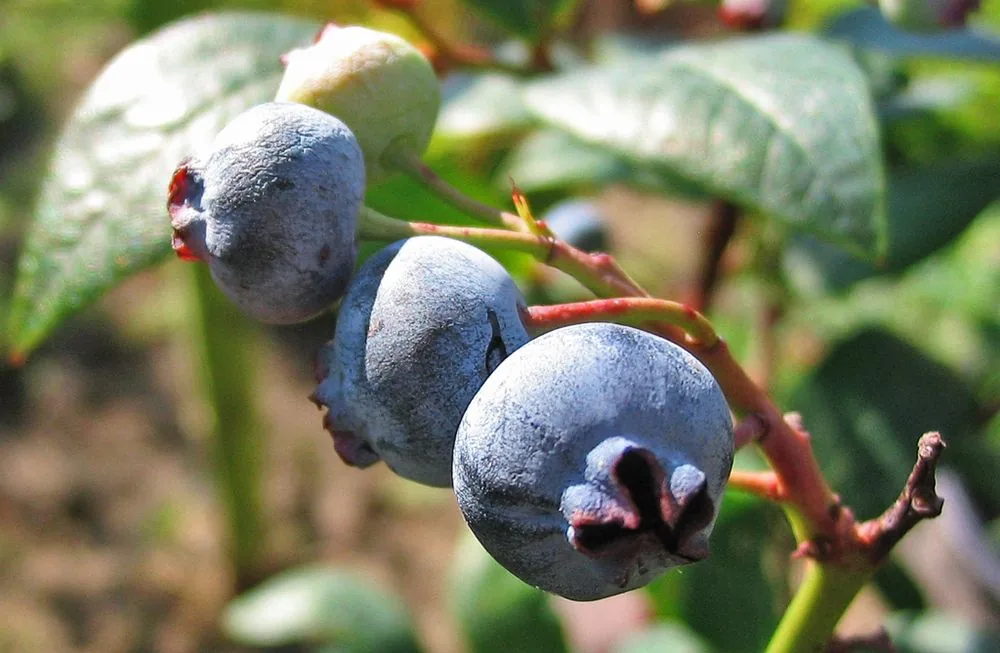
The highbush blueberry is a bushy deciduous shrub from eastern North America, grown for its blue-black berries in summer and almost as much for its looks: white or pink bell-shaped flowers in spring and leaves that turn red and purple in autumn. It is fully hardy and long-lived, and it does well in a large pot. Its one firm demand is acid soil, which decides whether it thrives or slowly starves.
As a precaution, keep it out of reach of children and pets.
Common mistake
Planting a blueberry in ordinary garden soil or multipurpose compost is the classic mistake. It needs acid soil with a pH of about 4.5-5.5. Where the garden soil is not acid, grow it in a pot or raised bed of ericaceous compost and water it with rainwater.
Care by Season
Spring
White or pink flowers open. Mulch with composted bark or pine needles and protect the flowers if a hard frost is forecast.
Summer
Water regularly with rainwater. Net against birds as the fruit colours, and pick over the bush several times.
Autumn
The leaves turn red and purple. A good time to plant.
Winter
Prune mature bushes in late winter. Protect pots in very hard frost.
Growing & Maintenance
Planting
Plant in a sheltered site in acid, moisture-retentive soil, or in a large pot or raised bed of peat-free ericaceous compost. Plant two or three varieties for a better crop.
Soil and pot
Keep the soil at pH 4.5-5.5. Mulch with acidic material such as composted bark and water with rainwater.
Pruning
In late winter, on mature plants, remove dead and weak growth and cut a few of the oldest stems out at the base.
Propagation
By softwood cuttings in late spring or semi-ripe cuttings in early summer.
Pests & Diseases
Common problems
Yellow leaves with green veins
Most likely cause: Soil that is not acid enough.
What to do: Grow it in ericaceous compost and water with rainwater.
Flowers but few berries
Most likely cause: Only one variety, or frost on the flowers.
What to do: Plant a second variety nearby and protect the flowers from late frost.
Berries vanish before picking
Most likely cause: Birds.
What to do: Net the bush as the fruit begins to colour.
Brown, dry leaf edges
Most likely cause: The pot or soil dried out.
What to do: Water regularly and mulch.
Weak growth and die-back in wet ground
Most likely cause: Root rot in waterlogged soil.
What to do: Improve the drainage or move the plant to a raised bed or pot.
An old bush cropping poorly
Most likely cause: Too many old, unproductive stems.
What to do: Cut some of the oldest stems out at the base in late winter.
Pests & Diseases
Birds
Signs: Berries disappear as soon as they turn blue.
Treatment: Cover the bush with netting, held clear of the branches, before the fruit colours.
Vine weevil
Signs: Notches in the leaf edges, and in pots a plant that wilts because white grubs are eating the roots.
Treatment: Check the compost of container plants for curved, cream-coloured grubs and remove them.
Powdery mildew
Signs: A white, powdery coating on the leaves, which may redden and drop early.
Treatment: Keep the plant well watered at the roots and thin crowded growth when you prune.
Spotted wing drosophila
Signs: Ripe berries turn soft and collapse, with tiny white maggots inside.
Treatment: Pick fruit as soon as it ripens and remove any soft or fallen berries.
FAQ
Why are my blueberry leaves turning yellow with green veins?
The soil is not acid enough. Above about pH 5.5 the plant cannot take up iron and manganese, and the leaves turn yellow between the veins. Move it into ericaceous compost and use rainwater, since hard tap water gradually raises the pH.
Do I need more than one blueberry bush?
One bush will fruit by itself, but the crop is heavier and the berries larger when two or three different varieties that flower at the same time grow near each other.
Can I grow blueberries in a pot?
Yes, and where the garden soil is not acid it is the best way. Use a large pot of peat-free ericaceous compost, keep it moist with rainwater, and give the pot some protection in a hard winter, as roots in a container are more exposed than roots in the ground.
When and how do I prune a blueberry?
Young bushes need little pruning. On mature plants, prune in late winter: cut out dead or weak growth and take a few of the oldest stems out at the base to make room for young, productive ones.
Why am I getting no berries?
Common reasons are birds, which strip the fruit as it colours; a late frost on the flowers; too much shade; or a plant weakened by soil that is not acid enough. Net the bush as the berries start to turn blue.
When are blueberries ready to pick?
In summer. The berries in a cluster ripen over several weeks, so pick over the bush several times. A ripe berry is blue all over and comes away easily.