No results. Is a plant missing? Tell uscontact@wikiplant.net
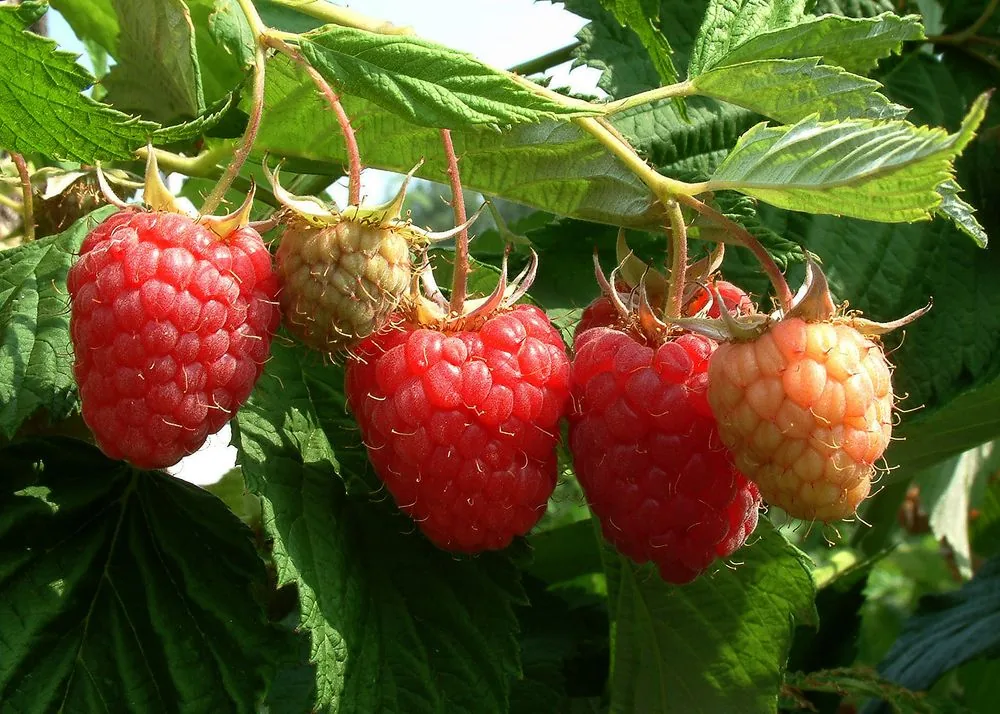
Raspberry
Rubus idaeus
Care level: Easy
The raspberry is a deciduous fruit bush that sends up tall, upright canes from a spreading root system and carries soft red fruit in summer or autumn. The leaves are divided into toothed leaflets, white-felted underneath, and the canes may or may not be prickly. It is fully hardy, crops for years in the same spot, and asks mainly for sun, a slightly acid soil and the right cut at the right time.
As a precaution, keep it out of reach of children and pets.
Did you know?
Each raspberry cane lives for only two years. On summer-fruiting varieties a cane grows in its first year, fruits in its second and then dies, which is why pruning simply means removing the canes that have just fruited.
Care by Season
Spring
New canes come up. Mulch the row, tie in the canes of summer-fruiting varieties and remove unwanted suckers.
Summer
Summer-fruiting varieties crop now. Pick every few days and water in dry spells.
Autumn
Autumn-fruiting varieties crop. On summer-fruiting varieties, cut the fruited canes to the ground and tie in the new ones.
Winter
The plants are dormant and it is planting time for bare-root canes. Cut all canes of autumn-fruiting varieties to the ground in late winter.
Growing & Maintenance
Planting
Plant canes while they are dormant, in a sunny row in fertile, well-drained, acid to neutral soil, and mulch after planting.
Pruning
Summer-fruiting: cut canes that have fruited to the ground in early to mid autumn. Autumn-fruiting: cut all canes to the ground in late winter.
Support
Tie summer-fruiting canes to horizontal wires stretched between posts. Autumn-fruiting varieties usually need none.
Propagation
Lift and replant healthy suckers while the plants are dormant. Take them only from disease-free plants.
Pests & Diseases
Common problems
Yellow leaves with green veins
Most likely cause: Soil that is too alkaline, so the plant cannot take up iron.
What to do: Mulch with acidic material such as composted bark.
No fruit after pruning
Most likely cause: The young canes of a summer-fruiting variety were cut away.
What to do: Remove only the canes that have fruited and keep the new ones.
Canes springing up outside the row
Most likely cause: The roots send out suckers.
What to do: Pull or dig them out while they are small.
Small, crumbly fruit
Most likely cause: Dry soil while the fruit was forming.
What to do: Water regularly from flowering to harvest and mulch the row.
Mouldy fruit
Most likely cause: Grey mould in wet weather or a crowded row.
What to do: Pick often and thin the canes.
Canes bending to the ground
Most likely cause: No support.
What to do: Tie the canes to wires between posts.
Pests & Diseases
Raspberry beetle
Signs: Dry, grey-brown patches at the stalk end of ripe fruit, often with a small pale grub inside.
Treatment: Pick promptly and discard damaged fruit. Autumn-fruiting varieties usually escape the worst of it.
Aphids
Signs: Clusters of small insects on the shoot tips and under the leaves, with curled young growth.
Treatment: Rinse them off with a firm jet of water and leave ladybirds and other predators to do the rest.
Grey mould
Signs: Fruit turns soft and is covered in grey fuzz, especially in wet weather.
Treatment: Pick ripe fruit often, remove mouldy fruit, and thin crowded canes so air can move through the row.
Leafhoppers
Signs: Pale, speckled mottling on the upper side of the leaves.
Treatment: Light damage needs no treatment and does not affect the crop.
FAQ
When and how do I prune raspberries?
It depends on the type. On summer-fruiting varieties, cut every cane that has fruited down to the ground in early to mid autumn and keep the new green canes for next year. Autumn-fruiting varieties fruit on the current year's canes, so all of their canes are cut to the ground in late winter.
Do raspberries need support?
Summer-fruiting varieties do: their canes reach 1.5-2.5m and bend under the fruit, so tie them to wires stretched between posts. Autumn-fruiting varieties are shorter and usually stand on their own.
Why are the leaves of my raspberries turning yellow between the veins?
Usually the soil is too chalky. Raspberries want an acid to neutral soil, and in alkaline ground they cannot take up enough iron. Mulch with an acidic material such as composted bark.
Why are there small grubs in my raspberries?
They are the larvae of the raspberry beetle, which feed inside the ripening fruit and leave dry, grey-brown patches at the stalk end. Autumn-fruiting varieties are usually less affected than summer-fruiting ones.
Do raspberries spread?
Yes. New canes come up from the roots, sometimes well away from the row. Pull or dig out those you do not want while they are young.
How much sun do raspberries need?
Full sun gives the best crop, but they also fruit in partial shade.