No results. Is a plant missing? Tell uscontact@wikiplant.net
Bay laurel
Laurus nobilis
Care level: Easy
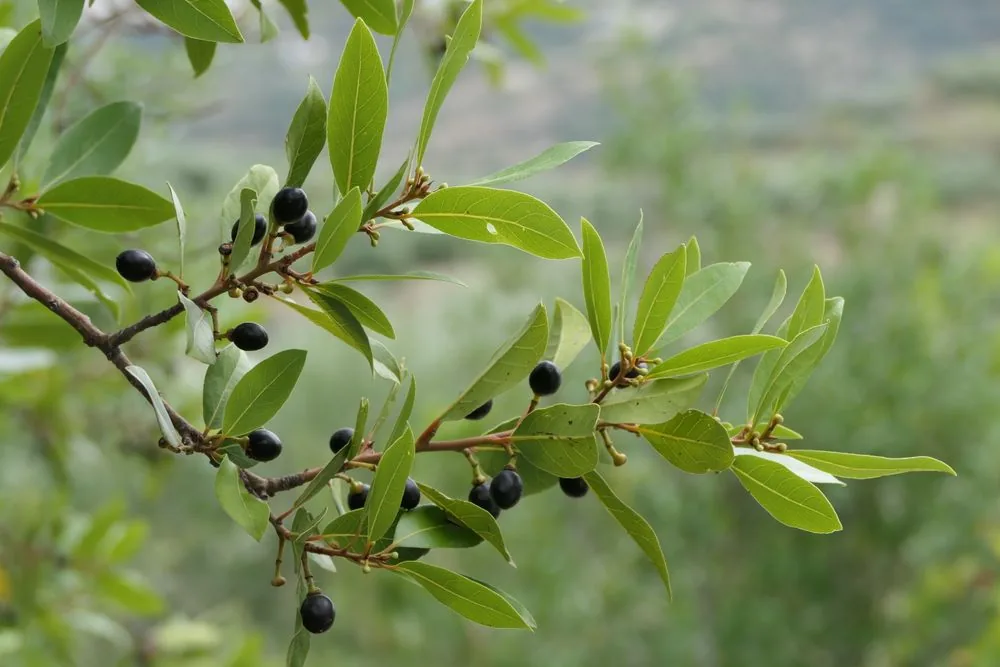
Bay laurel is the evergreen Mediterranean shrub whose leathery, aromatic leaves flavour stews, stocks and sauces. Left alone in a mild garden it becomes a large shrub or tree 8-12m tall, but it is far more often grown in a pot, clipped into a ball, cone or standard beside a door. It has small yellowish flowers in spring and, on female plants, dark berries. It wants sun, sharp drainage and shelter from cold wind.
Eating it can cause vomiting and an upset stomach.
If your pet has eaten some, contact your vet.
Source: NC State Extension, RHS
Safety note
Only true bay, Laurus nobilis, is used in cooking. Cherry laurel and other shrubs called laurel are poisonous and must never stand in for it. Check the Latin name on the label before picking leaves for the kitchen.
Care by Season
Spring
Trim off winter damage in late spring, repot or top-dress pots and start feeding.
Summer
Clip shaped plants with secateurs, water pots regularly and take semi-hardwood cuttings.
Autumn
Stop feeding. Move pots to a sheltered spot before the first hard frosts.
Winter
Protect from freezing wind; wrap the plant and the pot in fleece in hard frost. Water pots only lightly.
Growing & Maintenance
Planting
Plant in spring in well-drained soil in a sunny, sheltered position, or in a pot of loam-based compost. Raise pots on feet in winter so that they drain.
Pruning
Trim to shape in summer with secateurs. Remove frost-damaged growth in late spring; hard pruning is tolerated but regrowth is slow.
Propagation
By semi-hardwood cuttings in late summer, by layering, or by seed.
Pests & Diseases
Common problems
Brown, scorched leaves after winter
Most likely cause: Frost and cold wind.
What to do: Shelter the plant in winter and trim off the damage in late spring.
Yellow leaves
Most likely cause: Waterlogged compost, or a pot-bound, underfed plant.
What to do: Check the drainage, feed in summer and repot every couple of years.
Leaf spots
Most likely cause: Compost that stays too wet, especially in winter.
What to do: Water less and repot into fresh, free-draining compost.
Peeling or cracked bark on the lower stem
Most likely cause: Winter cold.
What to do: Usually cosmetic; leave it if the growth above is healthy.
Thick, curled leaf edges
Most likely cause: Bay sucker.
What to do: Remove the affected leaves.
Pests & Diseases
Bay sucker
Signs: Leaf edges that turn yellow, thicken and curl downwards, with small grey-white insects underneath in summer.
Treatment: Pick off and dispose of the affected leaves. No other treatment is needed.
Soft scale
Signs: Flat, oval, yellow-brown scales along the leaf veins, with sticky honeydew and black sooty mould.
Treatment: Wipe them off small plants with a damp cloth and wash the sooty mould away.
Powdery mildew
Signs: A white, powdery coating on young leaves.
Treatment: Trim off affected shoots and avoid crowding the plant against a wall or other plants.
FAQ
Can I cook with the leaves from my bay tree?
Yes, if it is true bay laurel, Laurus nobilis. Pick leaves all year round and use them fresh or dried; the dried leaf has the stronger flavour. Do not use cherry laurel or any other plant sold as laurel, as these are toxic.
Why are the leaves of my bay turning brown?
Usually cold wind or frost. Bay tolerates about -5 to -10°C, but freezing wind scorches the leaves. Move pots to a sheltered spot in winter and wrap the plant in fleece in hard frost. Trim off the damaged growth in late spring; it usually reshoots.
Is bay laurel toxic to cats and dogs?
Yes, mildly. The leaves contain essential oils that cause vomiting and diarrhoea, and tough whole leaves swallowed in quantity can cause a blockage. The berries should not be eaten either.
How do I grow bay in a pot?
Use a free-draining, loam-based compost in a pot with drainage holes, in a sunny or lightly shaded, sheltered spot. Water regularly in summer without letting the pot stand in water, feed through the growing season, and repot or refresh the top layer of compost every couple of years.
When and how do I prune a bay tree?
Trim shaped plants in summer with secateurs rather than shears, cutting just above a leaf, so that no leaves are left sliced in half. A bay that has outgrown its place can be cut back hard in late spring and will regrow slowly.
Why are the leaf edges yellow, thick and curled?
That is bay sucker, a small sap-sucking insect that feeds under the rolled edge in summer. Pick off and dispose of the affected leaves. The plant is not seriously harmed.