No results. Is a plant missing? Tell uscontact@wikiplant.net
Begonia rex
Begonia rex-cultorum
Care level: Moderate
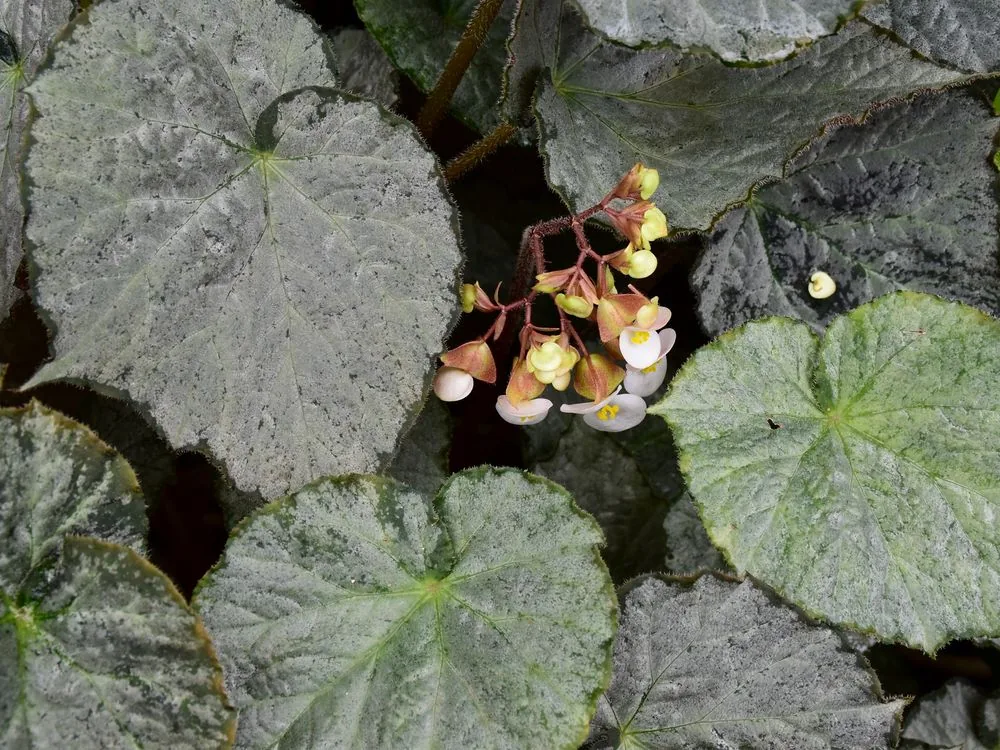
Begonia rex is grown for its leaves alone: large, lopsided and patterned in silver, green, purple, pink and near-black, often with a metallic sheen and a reddish underside. The plants sold under this name are hybrids that grow from a creeping rhizome and stay low, to about 30cm. The small pink flowers are a minor event. It is a tender plant for a warm room with bright, filtered light and steady humidity, and it rewards care more than neglect.
Bright, filtered light. Keep it out of direct sun, which scorches the leaves.
Water
Water when the top of the compost is dry, at the base and never over the leaves. Water sparingly in winter.
Humidity
Moderate to high. Stand the pot on a tray of wet pebbles rather than misting.
Soil
A loose, free-draining houseplant compost that holds some moisture without staying wet.
Temperature
It needs a minimum of 10-15°C all year, and prefers a steady room temperature.
Size
Up to about 30cm tall.
Growth speed
Medium
!Toxic to pets
Toxic to cats and dogs if eaten.
Eating it can cause vomiting and an upset stomach.
If your pet has eaten some, contact your vet.
Source: NC State Extension, RHS
Common mistake
Wetting the leaves is the classic mistake. Water that sits on the foliage invites powdery mildew and grey mould, so water the compost at the base and raise the humidity around the plant rather than misting it.
Care by Season
Spring
Growth resumes. Repot if the rhizome has reached the edge of the pot, and start feeding.
Summer
Keep the compost lightly moist and the humidity up. Shade it from strong sun.
Autumn
Reduce watering as growth slows and stop feeding.
Winter
Keep it warm and bright, away from cold windows and draughts, and water sparingly. Some leaf drop is normal.
Growing & Maintenance
Soil and pot
Use a loose, free-draining compost. A shallow, wide pot suits the creeping rhizome better than a deep one.
Repotting
Repot in spring when the rhizome reaches the rim of the pot. Set the rhizome on the surface of the compost and do not bury it.
Fertilising
Feed with a balanced liquid fertiliser at half strength every few weeks from spring to late summer.
Propagation
By leaf cuttings or sections of rhizome, kept warm and humid until new plants form.
Pests & Diseases
Common problems
White powder on the leaves
Most likely cause: Powdery mildew, encouraged by wet foliage and still air.
What to do: Remove affected leaves and water only at the base.
Brown, crisp leaf edges
Most likely cause: Dry air.
What to do: Raise the humidity with a pebble tray or by grouping plants.
Soft, collapsing stems and rhizome
Most likely cause: Rot from compost that stays wet.
What to do: Cut away the rot, repot in fresh, free-draining compost and water less.
Scorched, bleached patches
Most likely cause: Direct sun.
What to do: Move it to bright, filtered light.
Dull colours and thin growth
Most likely cause: Too little light.
What to do: Move it closer to a bright window, out of direct sun.
Leaves dropping in winter
Most likely cause: Cold, low light or overwatering.
What to do: Keep it above 15°C and water sparingly.
Pests & Diseases
Powdery mildew
Signs: A white, powdery coating on the leaves, which later brown and distort.
Treatment: Remove affected leaves, keep water off the foliage and improve the air movement around the plant.
Mealybugs
Signs: White, cottony tufts in the leaf joints and on the undersides of the leaves.
Treatment: Wipe them off with a cotton bud dipped in rubbing alcohol and repeat weekly until none return. Check the undersides of the leaves and the crevices where the leaf stem meets the main stalk.
Grey mould
Signs: Soft, brown patches covered in grey fuzz on leaves and stems, in cool, damp, still air.
Treatment: Cut away affected parts, clear fallen leaves from the pot, and keep the plant drier and better ventilated.
Vine weevil
Signs: Notches eaten from the leaf edges, or a plant that suddenly wilts because white grubs have eaten the roots.
Treatment: Check the compost for curved, cream-coloured grubs and remove them, then repot in fresh compost.
FAQ
Why are the leaves of my Begonia rex getting a white, powdery coating?
That is powdery mildew, the most common problem on this plant. It takes hold when the leaves stay damp and the air around them is still. Remove the affected leaves, water only at the base, and give the plant more space and air.
How often should I water Begonia rex?
Water when the top of the compost has dried, and let the excess drain away. The rhizome rots quickly in soggy compost, so slightly too dry is safer than too wet, especially in winter.
Is Begonia rex toxic to cats and dogs?
Yes. Begonias contain soluble calcium oxalates and can cause vomiting and drooling in cats and dogs. The underground parts are the most toxic. The sap can also irritate skin.
Does Begonia rex need direct sun?
No. It wants bright, filtered light. Direct sun scorches the leaves, while too little light dulls the colours and makes the plant thin.
How do I propagate Begonia rex?
From leaf cuttings. Lay a healthy leaf flat on moist compost, nick the main veins and keep it warm and humid; small plants form at the cuts. Sections of rhizome also root.
Why is my Begonia rex dropping leaves in winter?
It reacts to cold, low light and wet compost. Keep it above 15°C, move it closer to a window, and water sparingly until growth picks up in spring.