No results. Is a plant missing? Tell uscontact@wikiplant.net
White Bird of Paradise
Strelitzia nicolai
Care level: Moderate
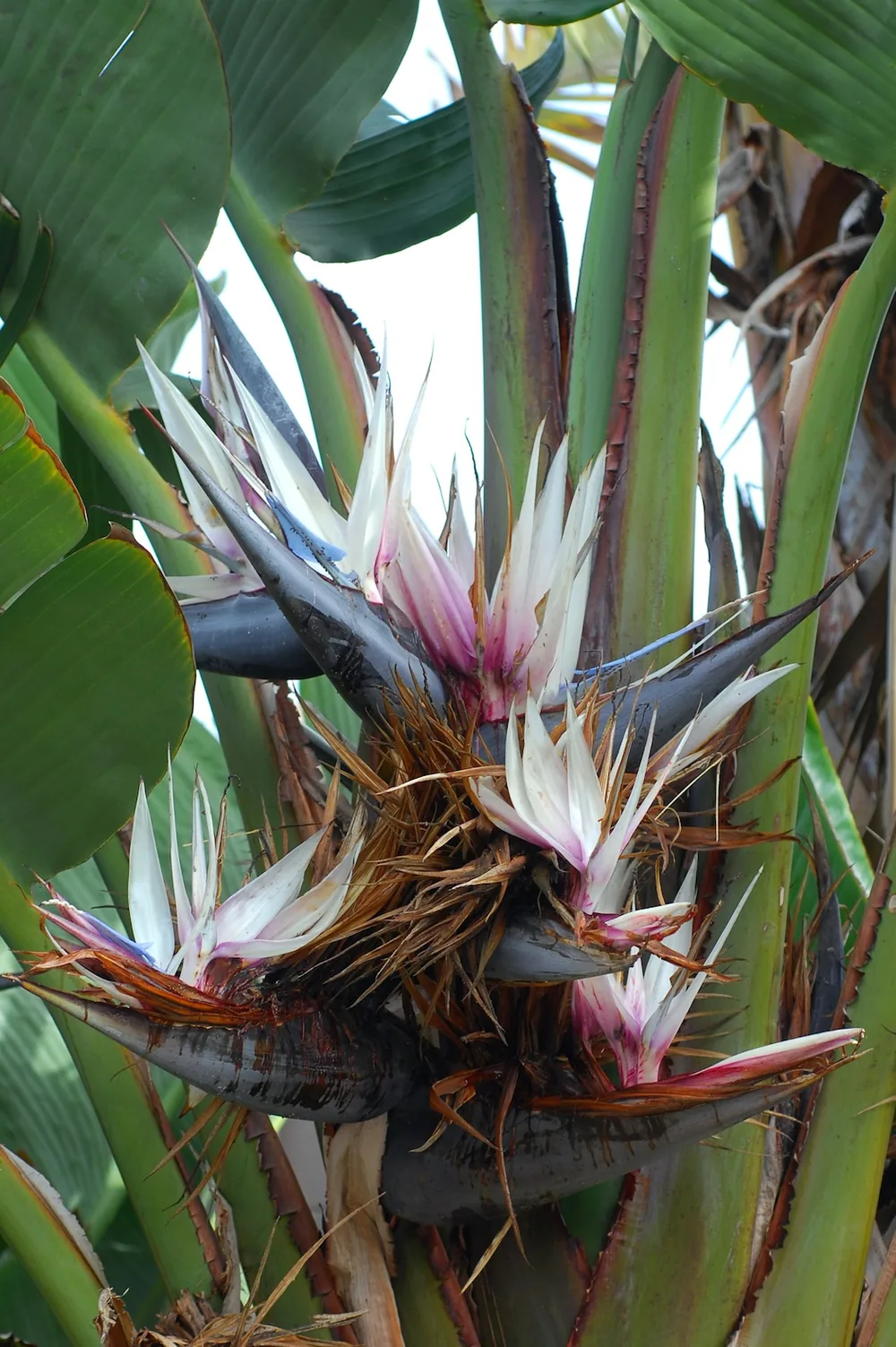
Strelitzia nicolai is the towering, tree-like cousin of the classic orange-flowered bird of paradise, capable of reaching 6 meters or more in the wild forests of South Africa; indoors it rarely flowers, but its dramatic banana-like leaves and architectural silhouette have made it a favorite for filling bright, high-ceilinged spaces.
Needs bright light with several hours of direct sun to grow well and eventually flower.
Water
Water when the top 3-4cm of soil is dry, typically every 1-2 weeks, more often in strong light.
Humidity
Tolerates average home humidity but appreciates occasional misting.
Soil
Rich, well-draining potting mix with added perlite for aeration.
Temperature
18-29°C. It does not tolerate temperatures below 10°C.
Size
6-9m tall in the ground in a warm climate; much smaller in a pot.
Growth speed
Medium
Best position
south-east / south / south-west-facing windowanywhere up to about 1 m from the window
east / west-facing windowright by the window
See every window directionHide window directions
Best position
right by the window
about 1 m
about 2 m
about 4 m
4 m or more
north
too dark○
too dark○
too dark○
too dark○
too dark○
north-east
too dark○
too dark○
too dark○
too dark○
too dark○
east
works well✓
too dark○
too dark○
too dark○
too dark○
south-east
works well✓
works well✓
too dark○
too dark○
too dark○
south
works well✓
works well✓
too dark○
too dark○
too dark○
south-west
works well✓
works well✓
too dark○
too dark○
too dark○
west
works well✓
too dark○
too dark○
too dark○
too dark○
north-west
too dark○
too dark○
too dark○
too dark○
too dark○
✓works well~just about○too dark☼too much direct sun
A rough guide based on window direction and typical daylight through the year. Window size, curtains and whatever stands outside matter just as much.
?Pet safety not confirmed
As a precaution, keep it out of reach of children and pets.
Common mistake
New leaves often unfurl already split or torn along the veins, which alarms many owners; this is actually a natural adaptation that lets wind pass through large leaves without snapping the stem, not a sign of damage or disease.
Care by Season
Spring
Increase watering as growth resumes and begin feeding every 2-4 weeks.
Summer
Water generously and move outdoors to a bright, sheltered spot if possible.
Autumn
Reduce feeding and bring back indoors before nighttime temperatures drop below 10°C.
Winter
Water sparingly, provide maximum available light, and stop fertilizing.
Growing & Maintenance
Soil and pot
A rich, well-draining potting mix with added perlite, in a heavy pot with drainage holes.
Fertilising
A balanced liquid feed every 2-4 weeks in spring and summer. None in winter.
Pruning
Remove badly torn or dead leaves by cutting the stalk at the base. Splits along the veins are normal and need no pruning.
Propagation
By division, or from seed. Plants raised this way can take five to six years to flower.
Pests & Diseases
Common problems
No flowers
Most likely cause: The plant is too young or gets too little light. It can take five to six years to bloom and rarely does so indoors.
What to do: Give it as much light as you can, with several hours of direct sun, and be patient.
New leaves splitting along the veins
Most likely cause: Normal for this species.
What to do: Nothing to do.
Leaves curling inward
Most likely cause: Thirst.
What to do: Water thoroughly once the top 3-4cm of compost is dry, more often in strong light.
Yellow lower leaves in wet compost
Most likely cause: Overwatering, which leads to root rot.
What to do: Let the compost dry more between waterings, trim rotten roots and repot in fresh mix.
Slow, pale growth
Most likely cause: Too little light.
What to do: Move it to the brightest spot you have.
Pests & Diseases
Spider mites
Signs: Fine webbing and speckled, dull leaves, especially in dry winter air.
Treatment: Wipe leaves down, boost humidity, and apply insecticidal soap. Check the undersides of the leaves and the crevices where the leaf stem meets the main stalk.
Scale insects
Signs: Small brown bumps on stems and leaf undersides with sticky residue.
Treatment: Scrape off scale and treat with horticultural oil.
Root rot
Signs: Yellowing lower leaves and soft, blackened roots.
Treatment: Remove from wet soil, trim rotten roots, and repot in fresh, fast-draining mix.
FAQ
Why won't my indoor Bird of Paradise flower?
Strelitzia nicolai rarely blooms indoors because it typically needs to be several years old and mature in size, plus far more direct sun than most homes offer; the leaves alone are usually the main appeal for indoor growers.
Why are new leaves on my Bird of Paradise splitting?
Splitting along the veins as leaves unfurl is completely normal for this species and helps the large leaves resist wind damage; it is not a pest or watering problem.
How often should I water a Bird of Paradise?
Typically every 1-2 weeks, when the top 3-4cm of compost is dry. It drinks more in strong light and in summer, and needs only sparing water in winter.
How big does a White Bird of Paradise get?
Outdoors in a warm climate it reaches 6-9m. In a pot indoors it stays far smaller, but it is still a large plant that needs space and a heavy pot.
What temperature does a Bird of Paradise need?
Between 18 and 29°C. It does not tolerate temperatures below 10°C, so bring it indoors before autumn nights get that cold.
How do I propagate a Bird of Paradise?
By dividing a large clump, or from seed. Either way it takes years before the new plant is mature enough to flower.