No results. Is a plant missing? Tell uscontact@wikiplant.net
Coffee plant
Coffea arabica
Care level: Moderate
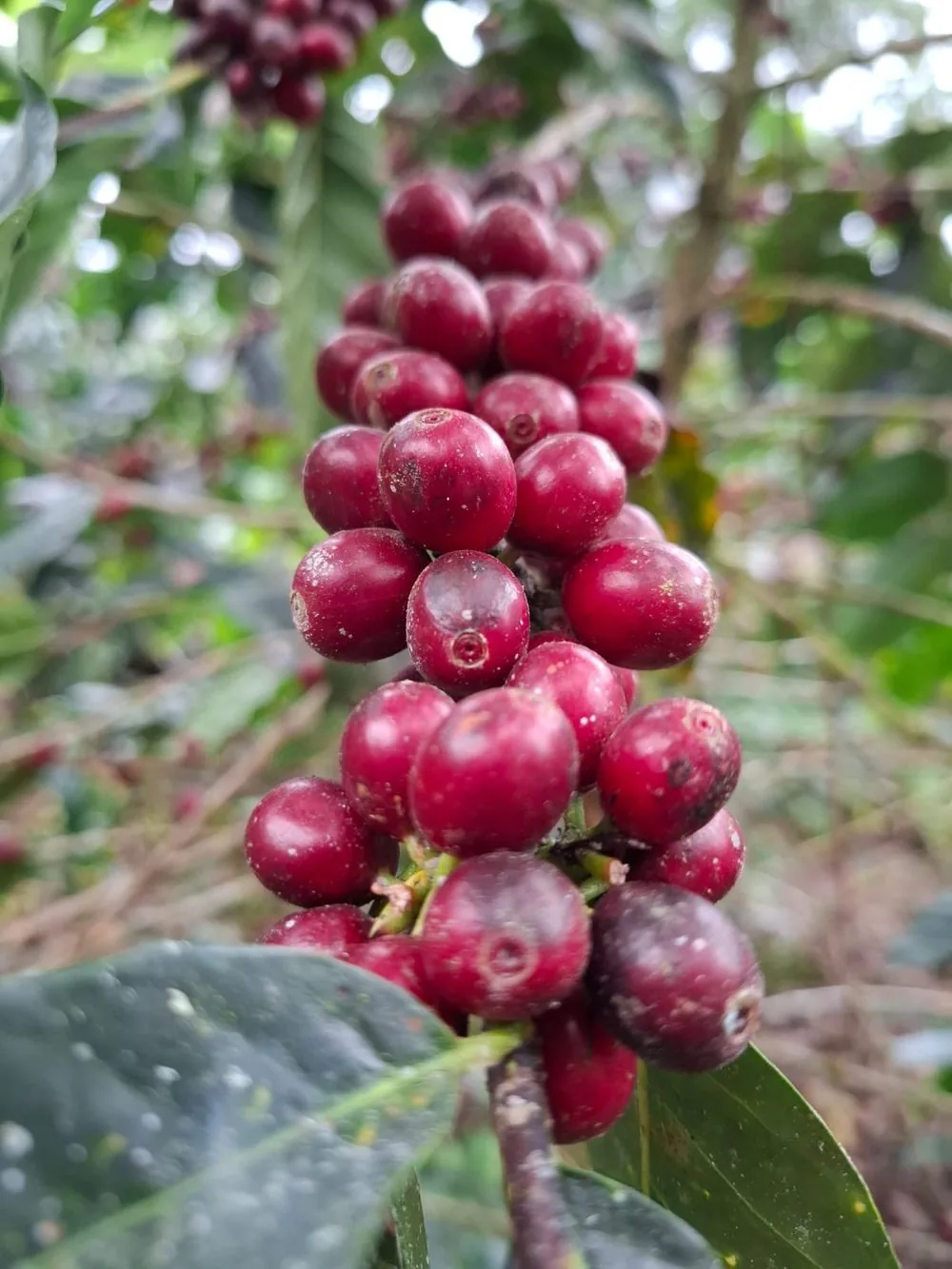
The coffee plant is the evergreen shrub from the highlands of Ethiopia that gives the world its arabica beans, and it makes a handsome houseplant. Its leaves are dark green, glossy and wavy-edged, set in opposite pairs along slender branches. A plant a few years old can produce small, white, sweetly scented flowers in the leaf joints, followed by green fruits that ripen slowly to red. Indoors it wants steady warmth, bright light out of hot sun, humid air and compost that never dries out fully.
Water freely in the growing season, whenever the top of the compost begins to dry, and moderately in winter. Do not let it stand in water.
Humidity
Moderate to high humidity. Mist the leaves or stand the pot on a tray of damp pebbles, and keep it out of draughts.
Soil
A loam-based potting compost with extra organic matter, in a pot with drainage holes.
Temperature
Keep it warm all year, ideally above 15°C, and away from cold draughts.
Size
A tree to 8m in the tropics; usually kept to 1-2m in a pot.
Growth speed
Medium
?Pet safety not confirmed
As a precaution, keep it out of reach of children and pets.
Did you know?
Each red fruit, called a cherry, holds two seeds: the coffee beans. A plant needs to be about four years old before it flowers, and indoors a harvest is a handful of cherries, enough for a cup at best.
Care by Season
Spring
Growth resumes. Repot if needed, prune to shape and start feeding.
Summer
Water freely, feed every two weeks and keep the humidity up. Mature plants flower.
Autumn
Fruits ripen slowly. Reduce feeding as the light fades.
Winter
Water moderately, keep it warm and bright, and move it away from cold windows and radiators.
Growing & Maintenance
Repotting
Repot every two or three years in spring into a pot one size larger.
Fertilising
Feed with a balanced liquid fertiliser every two weeks in the growing season. Do not feed in winter.
Pruning
Cut back tall or leggy stems in spring, just above a pair of leaves, to restrict its size and keep it bushy.
Propagation
By fresh seed sown in warmth. Germination is slow and can be erratic.
Pests & Diseases
Common problems
Brown leaf edges and tips
Most likely cause: Dry air, dry compost or salts from hard water and fertiliser.
What to do: Raise the humidity, water evenly and flush the compost with rainwater.
The plant wilts suddenly
Most likely cause: Dry compost.
What to do: Water thoroughly; it recovers within hours.
Yellow leaves that fall
Most likely cause: Waterlogged compost or cold.
What to do: Let the top dry between waterings and keep it above 15°C.
Pale, scorched patches
Most likely cause: Direct hot sun through glass.
What to do: Move it to bright, indirect light.
Leggy growth and no flowers
Most likely cause: Too little light, or a plant under four years old.
What to do: Give more light and prune the tips; flowers come with age.
Pests & Diseases
Red spider mite
Signs: Fine pale speckling on the leaves and thin webbing in warm, dry rooms.
Treatment: Raise the humidity, rinse the foliage in the shower and repeat weekly. Check the undersides of the leaves and the crevices where the leaf stem meets the main stalk.
Mealybugs
Signs: White, woolly tufts in the leaf joints and along the stems.
Treatment: Dab them off with a cotton bud dipped in alcohol and repeat weekly. Check the undersides of the leaves and the crevices where the leaf stem meets the main stalk.
Scale insects
Signs: Small brown bumps along the stems and leaf veins, with sticky honeydew.
Treatment: Wipe them off with a damp cloth and check again every week.
FAQ
Will my coffee plant produce coffee?
It can, once it is about four years old and if it has enough light and warmth. The white flowers pollinate themselves and the cherries take many months to ripen. Expect a curiosity, not a supply.
Why are the leaf edges turning brown?
Dry air, compost that has dried out, or a build-up of salts from hard water or too much fertiliser. Raise the humidity, water evenly and use rainwater or filtered water if your tap water is hard.
Why is the whole plant drooping?
It is thirsty. Coffee plants wilt dramatically when dry and recover within hours of watering. If the compost is wet and the plant still droops, the roots are waterlogged; let it dry at the top and check the drainage.
How much light does it need?
Bright, indirect light. In nature it grows under the shade of taller trees. Strong midday sun through glass scorches the leaves; deep shade gives thin growth and no flowers.
Can I prune it?
Yes. Pinch or cut back the tips in spring to keep it bushy and to limit its height. It responds with new side shoots.
Can I grow one from a coffee bean?
Only from a fresh, unroasted seed. Roasted beans are dead, and dried green beans germinate poorly. Seeds from a ripe cherry, sown warm straight away, are the most reliable.