No results. Is a plant missing? Tell uscontact@wikiplant.net
Dwarf Banana
Musa acuminata
Care level: Moderate
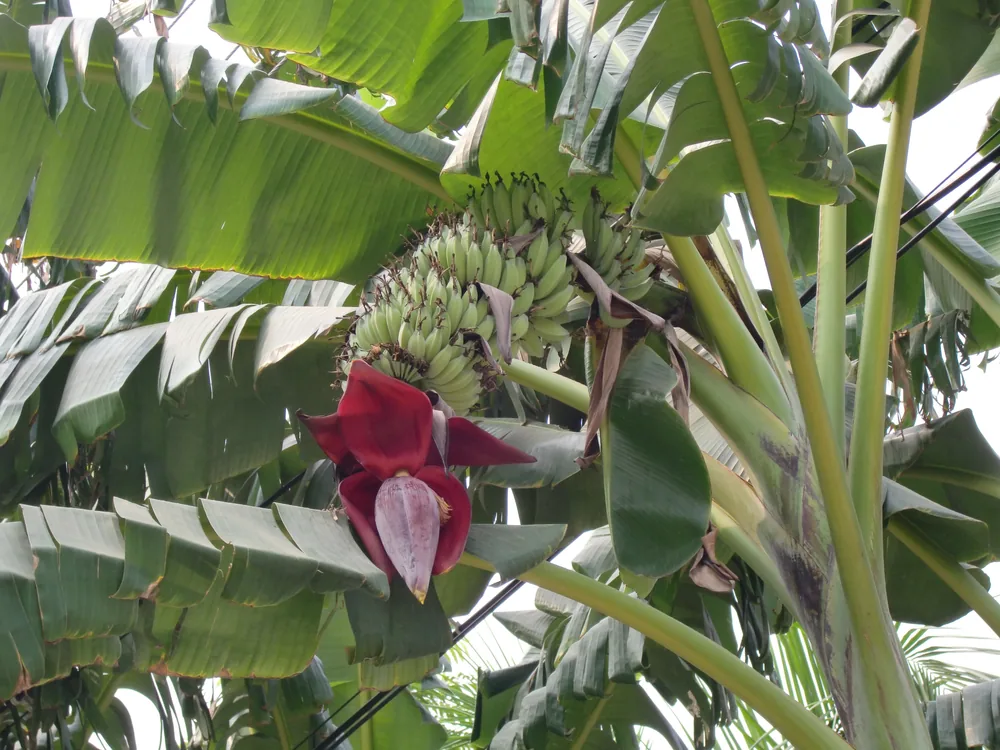
What looks like a trunk on a banana plant is actually a tightly rolled pseudostem made of overlapping leaf bases, not true wood, which is why the whole plant can be cut back and will regrow from its underground corm. Given enough light and warmth, a dwarf Cavendish grown as a houseplant can genuinely flower and produce small, edible bananas indoors, something few other houseplants on this list can claim.
Bright light with several hours of direct sun for the strongest growth.
Water
Keep soil consistently moist, watering roughly every 3-5 days without letting it become waterlogged.
Humidity
Prefers high humidity above 50%, reflecting its tropical origins.
Soil
Rich, well-draining potting mix with organic matter.
Growth speed
Fast
Best position
east / south-east / south / south-west / west-facing windowanywhere up to about 2 m from the window
north / north-east / north-west-facing windowanywhere up to about 1 m from the window
See every window directionHide window directions
Best position
right by the window
about 1 m
about 2 m
about 4 m
4 m or more
north
works well✓
works well✓
too dark○
too dark○
too dark○
north-east
works well✓
works well✓
too dark○
too dark○
too dark○
east
works well✓
works well✓
works well✓
too dark○
too dark○
south-east
works well✓
works well✓
works well✓
too dark○
too dark○
south
works well✓
works well✓
works well✓
too dark○
too dark○
south-west
works well✓
works well✓
works well✓
too dark○
too dark○
west
works well✓
works well✓
works well✓
too dark○
too dark○
north-west
works well✓
works well✓
too dark○
too dark○
too dark○
✓works well~just about○too dark☼too much direct sun
A rough guide based on window direction and typical daylight through the year. Window size, curtains and whatever stands outside matter just as much.
✓Non-toxic to pets
Considered non-toxic to cats and dogs.
Source: ASPCA
Did you know?
Banana plants aren't trees at all; they're the largest herbaceous flowering plants in the world, since their above-ground 'trunk' is made entirely of soft, rolled leaf sheaths rather than woody tissue.
Care by Season
Spring
Resume regular feeding every 2-3 weeks as new leaves unfurl rapidly.
Summer
Water frequently and keep humidity high during the peak growing season.
Autumn
Slow down feeding and watering slightly as growth naturally decreases.
Winter
Water less often, keep warm away from cold drafts, and pause fertilizer until spring.
Growing & Maintenance
Soil and pot
A rich, moist, well-drained potting mix with plenty of organic matter, in a large pot with drainage holes.
Fertilising
Feed every 2-3 weeks in spring and summer, while new leaves unfurl. Pause in winter.
Pruning
Cut brown or badly torn leaves off at the base of the stalk.
Propagation
By separating the suckers that grow at the base, each with some root, when you repot.
Pests & Diseases
Common problems
Brown, shredded leaf edges
Most likely cause: Some shredding is natural. Crispy brown edges come from dry air.
What to do: Raise the humidity above 50%. Torn leaves do not need removing.
Yellow lower leaves
Most likely cause: An occasional old leaf is normal. Several at once point to waterlogged compost.
What to do: Keep the compost moist but never waterlogged and check that the pot drains.
Drooping leaves
Most likely cause: Thirst. The big leaves lose water fast.
What to do: Water thoroughly and do not let the compost dry out.
Slow, pale growth
Most likely cause: Too little light.
What to do: Give it bright light with several hours of direct sun.
No fruit
Most likely cause: Normal indoors. Fruiting needs years of very bright, warm, humid conditions.
What to do: Grow it for its leaves.
Pests & Diseases
Spider mites
Signs: Fine webbing and speckled yellowing on leaves in dry indoor air.
Treatment: Raise humidity, rinse leaves regularly, and apply insecticidal soap if needed. Check the undersides of the leaves and the crevices where the leaf stem meets the main stalk.
Aphids
Signs: Small clustered insects on new unfurling leaves.
Treatment: Rinse off with water and use insecticidal soap for persistent infestations.
Root rot
Signs: Yellowing leaves and mushy, dark roots from waterlogged soil.
Treatment: Improve drainage, reduce watering, and trim away any rotten roots.
FAQ
Can a dwarf banana plant actually produce fruit indoors?
It's possible under ideal conditions, meaning very bright light, high humidity, warmth, and a few years of maturity, though indoor-grown bananas are usually smaller and less abundant than those grown outdoors in full sun.
Why are the edges of my dwarf banana's leaves turning brown and shredding?
Some shredding along the leaf edges is natural and mimics how wild bananas cope with wind, but crispy brown edges specifically usually point to low humidity or a need for more frequent watering.
Is the dwarf banana safe for cats and dogs?
Yes, the dwarf banana is not toxic to cats or dogs.
How often should I water a dwarf banana?
Roughly every 3-5 days in the growing season. Keep the compost consistently moist without letting it become waterlogged, and water less in winter.
How fast does a dwarf banana grow?
Fast. In warmth and good light it unfurls new leaves in quick succession, so it needs regular feeding and a roomy pot.
How do I propagate a dwarf banana?
By division. Separate a sucker from the base with some root attached and pot it up on its own.