No results. Is a plant missing? Tell uscontact@wikiplant.net
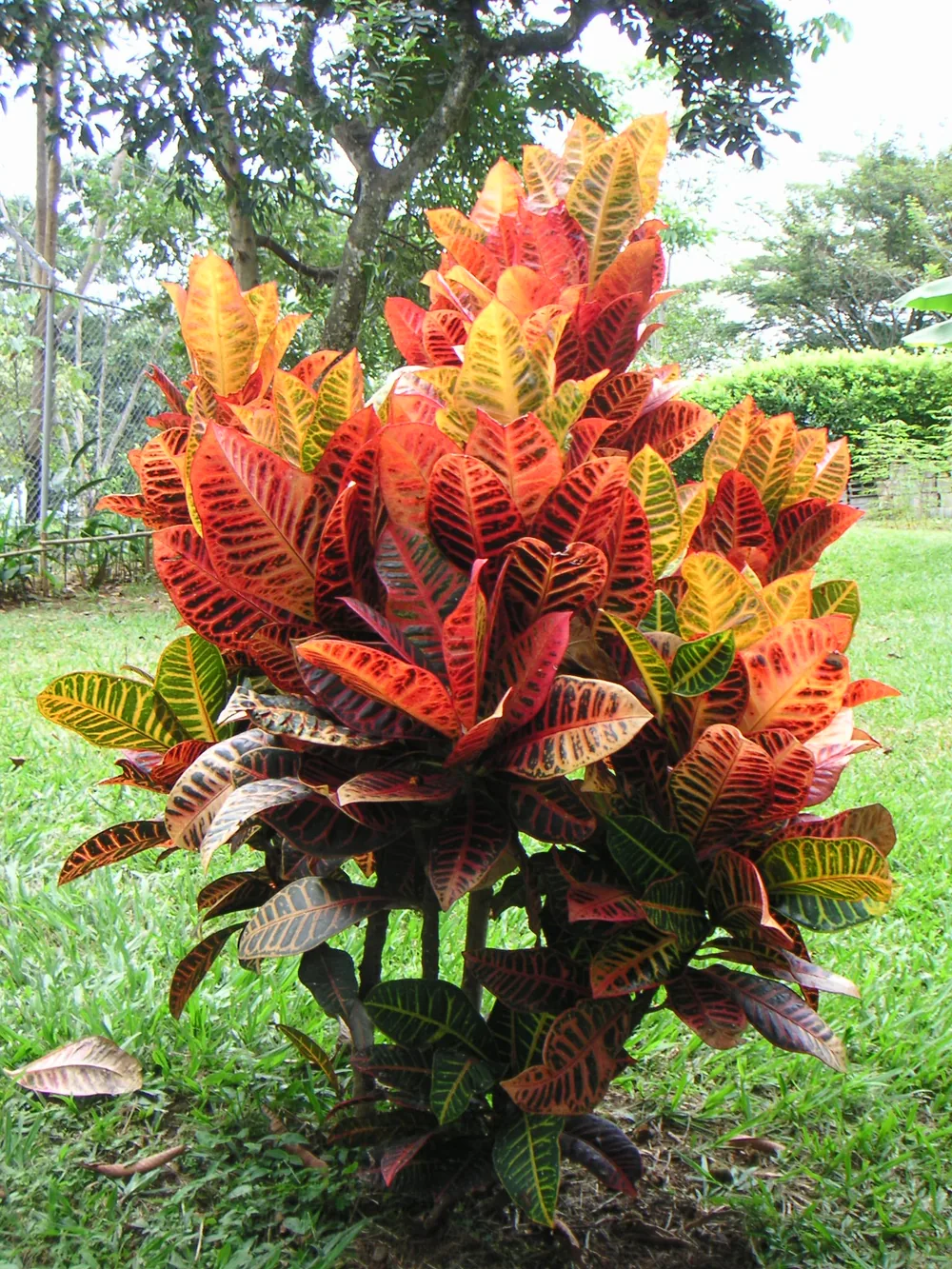
Croton
Codiaeum variegatum
Care level: Moderate
A single croton leaf can show off yellow, orange, red, green, and even purple at once, a riot of color produced by pigments that intensify with strong light rather than fading like most variegation does. Native to the tropical islands of Southeast Asia and the Pacific, it has long been used in Pacific Island cultures for ceremonial dress and decoration thanks to its vivid, almost painted foliage.
Bright light with some direct sun; strong light brings out the most vivid leaf colors.
Water
Keep soil evenly moist, watering roughly every 5-7 days without letting it become soggy.
Humidity
Prefers moderate to high humidity; dry air can cause leaf edges to brown.
Soil
Rich, well-draining potting mix.
Temperature
Warm. Keep it above 10°C and out of cold draughts.
Size
0.6-2.4m tall and 0.6-1.8m wide.
Best position
east / south-east / south / west-facing windowanywhere up to about 2 m from the window
north / north-east / north-west-facing windowanywhere up to about 1 m from the window
south-west-facing windowabout 1 m from the window or further back
Watch for strong direct sun at south-west windows.
See every window directionHide window directions
Best position
right by the window
about 1 m
about 2 m
about 4 m
4 m or more
north
works well✓
works well✓
too dark○
too dark○
too dark○
north-east
works well✓
works well✓
too dark○
too dark○
too dark○
east
works well✓
works well✓
works well✓
too dark○
too dark○
south-east
works well✓
works well✓
works well✓
too dark○
too dark○
south
works well✓
works well✓
works well✓
too dark○
too dark○
south-west
just about~
works well✓
works well✓
too dark○
too dark○
west
works well✓
works well✓
works well✓
too dark○
too dark○
north-west
works well✓
works well✓
too dark○
too dark○
too dark○
✓works well~just about○too dark☼too much direct sun
A rough guide based on window direction and typical daylight through the year. Window size, curtains and whatever stands outside matter just as much.
?Pet safety not confirmed
As a precaution, keep it out of reach of children and pets.
Common mistake
Moving a croton to a new spot or bringing one home from the store often triggers dramatic leaf drop; people frequently assume it's dying, but this is usually just stress from the change in light and humidity, and the plant typically recovers once it settles.
Care by Season
Spring
Resume regular feeding and watering as strong new colorful growth appears.
Summer
Water consistently and provide bright light to maintain vibrant leaf coloring.
Autumn
Reduce feeding and watch for leaf drop if the plant is moved or temperatures fluctuate.
Winter
Water a little less, keep warm and away from cold drafts, and pause fertilizing.
Growing & Maintenance
Soil and pot
A humus-rich, well-drained potting mix in a pot with drainage holes.
Fertilising
Feed regularly in spring and summer, while colourful new growth appears. Pause in winter.
Pruning
Cut leggy stems back in spring to make the plant branch. Wear gloves: the clear sap irritates skin and stains fabric.
Pests & Diseases
Common problems
Leaves dropping after a move
Most likely cause: A reaction to a change in light, temperature or humidity.
What to do: Keep its position and care steady. New leaves follow once it has settled.
New leaves mostly green
Most likely cause: Too little light.
What to do: Give it bright light with some direct sun. Colour returns on new growth.
Brown leaf edges
Most likely cause: Dry air.
What to do: Raise the humidity.
Drooping leaves
Most likely cause: Thirst.
What to do: Water liberally in the growing season, keeping the compost evenly moist but not soggy.
Leaf drop in a cold room
Most likely cause: Temperatures below 10°C or a cold draught.
What to do: Move it somewhere warm and draught-free.
Pests & Diseases
Spider mites
Signs: Fine webbing and speckled dull patches on leaves, especially in dry air.
Treatment: Raise humidity, rinse leaves, and apply insecticidal soap if infestation continues. Check the undersides of the leaves and the crevices where the leaf stem meets the main stalk.
Mealybugs
Signs: White cottony masses at leaf axils and stem joints.
Treatment: Remove with an alcohol-soaked cotton swab and repeat every few days. Check the undersides of the leaves and the crevices where the leaf stem meets the main stalk.
Scale insects
Signs: Small brown bumps on stems and leaf undersides that resist wiping off.
Treatment: Scrape off gently and follow with insecticidal soap or neem oil treatment.
FAQ
Why is my croton dropping leaves after I moved it or brought it home?
Crotons are notoriously sensitive to changes in light, temperature, and humidity, and often drop leaves in response to any relocation; keep conditions stable and it should stabilize and push new growth within a few weeks.
Why are the new leaves on my croton coming in mostly green instead of colorful?
Leaf color in crotons depends heavily on light intensity, so pale or mostly green new growth usually means the plant needs brighter light, ideally with a few hours of gentle direct sun, to develop its full color range.
How often should I water a croton?
Roughly every 5-7 days in the growing season, keeping the compost evenly moist. Water liberally from spring to autumn and sparingly in winter.
How much light does a croton need?
It needs bright light with some direct sun. The stronger the light, the more vivid the leaf colours; in dim light the new leaves come in green.
Is croton sap harmful?
It can irritate skin and it stains fabric. Wear gloves when you prune or take cuttings, and wipe up any drips.
What temperature does a croton need?
It needs warmth and must stay above 10°C. Cold draughts and sudden temperature changes make it drop leaves.