No results. Is a plant missing? Tell uscontact@wikiplant.net
Borage
Borago officinalis
Care level: Very easy
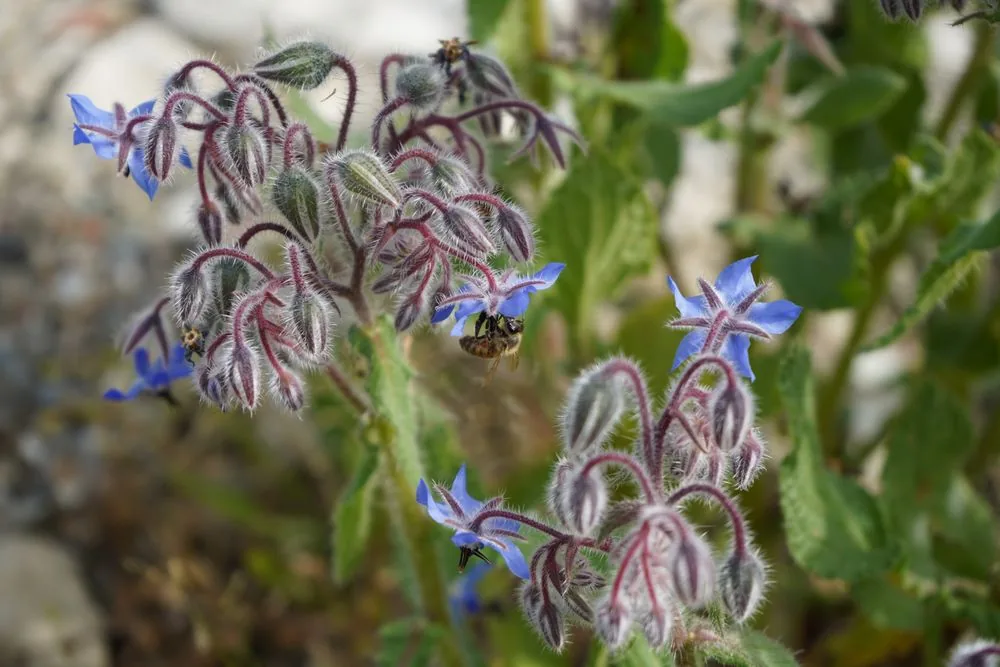
Borage is a large, branching annual herb from the Mediterranean, covered all over in bristly hairs, with coarse, grey-green leaves and nodding clusters of bright blue, star-shaped flowers through the summer. The flowers taste faintly of cucumber and are the classic garnish for summer drinks and salads. It grows in almost any soil in sun or light shade, flowers within a couple of months of sowing and then seeds itself, so one sowing usually means borage for years. Bees visit it from morning to evening.
Water seedlings until established. After that it needs water only in long dry spells.
Humidity
Not a factor for this outdoor plant.
Soil
Any reasonably well-drained soil. It grows larger and softer in rich ground and stays sturdier in poor soil.
Temperature
A hardy annual. It dies after setting seed and comes back from self-sown seedlings.
Size
0.5-1m tall and 30-50cm wide.
Growth speed
Medium
!Toxic to pets
Toxic to cats and dogs if eaten.
It can make cats and dogs unwell, so keep it out of their reach.
If your pet has eaten some, contact your vet.
Source: NC State Extension
Signature feature
Few garden plants draw as many bees. The flowers hang face down, which keeps the nectar dry in rain, and they are worked by honeybees and bumblebees all day. Sow a patch near fruit and vegetables to bring pollinators in.
Care by Season
Spring
Sow where it is to flower from mid-spring. Thin self-sown seedlings.
Summer
Flowers from early summer. Pick flowers, cut back tired plants and sow again for autumn.
Autumn
Late sowings flower until the first frost. Leave a few plants to shed seed.
Winter
The plants die. Seed in the soil carries it through to spring.
Growing & Maintenance
Planting
Sow directly in the ground, or two seeds to a deep pot, from mid-spring. Thin to 30-40cm. Do not transplant older seedlings.
Pruning
Cut plants back by half after the first flush for fresh growth and more flowers. Leave some to self-seed at the end of the season.
Propagation
By seed. It self-sows readily.
Pests & Diseases
Common problems
Plants flop over
Most likely cause: Rich soil, shade or wind.
What to do: Grow in sun and lean soil, support with sticks or cut back by half.
Seedlings everywhere
Most likely cause: Self-seeding.
What to do: Hoe them off while small or deadhead before the seed drops.
Transplanted seedlings wilt and stall
Most likely cause: Damage to the tap root.
What to do: Sow in place.
White coating on the leaves
Most likely cause: Powdery mildew on old, dry plants.
What to do: Remove them and rely on a later sowing.
Few flowers
Most likely cause: Too much shade or nitrogen.
What to do: Move the next sowing into full sun and do not feed.
Pests & Diseases
Slugs and snails
Signs: Seedlings and lower leaves eaten in spring.
Treatment: Protect young plants and pick slugs off in the evening.
Leaf-mining flies
Signs: Pale, winding tunnels or blotches inside the leaves.
Treatment: Pick off affected leaves. The plant is not seriously harmed.
Powdery mildew
Signs: A white powdery coating on the leaves late in summer, on dry soil.
Treatment: Water in dry spells and pull out old plants; younger sowings stay clean for longer.
FAQ
Can you eat borage?
The flowers are the part to use: pull the blue star away from its hairy green base and float it in drinks, freeze it in ice cubes or scatter it over salads. Young leaves have a cucumber flavour, but they contain small amounts of compounds that can harm the liver, so eat them only occasionally and in small quantities.
When and how do I sow it?
Sow where it is to grow from mid-spring, about 1cm deep, and thin the seedlings to 30-40cm apart. It has a tap root and dislikes being transplanted. A second sowing in early summer gives flowers into autumn.
Does it come back every year?
The plant is an annual, but it self-seeds freely and seedlings appear nearby the following spring. Pull out the ones you do not want while they are small.
Why are some flowers pink?
Borage flowers often open pink and turn blue within a day as they mature. Pink and blue on the same plant is normal.
Why is my borage flopping over?
It grows fast and top-heavy, especially in rich soil. Grow it in leaner ground, in full sun, or prop it with a few twiggy sticks. Cutting it back by half after the first flush gives sturdier regrowth.
Is it safe to handle?
The stiff hairs can irritate the skin. Wear gloves when pulling up or cutting back mature plants.