No results. Is a plant missing? Tell uscontact@wikiplant.net
Buddhist Pine
Podocarpus macrophyllus
Care level: Easy
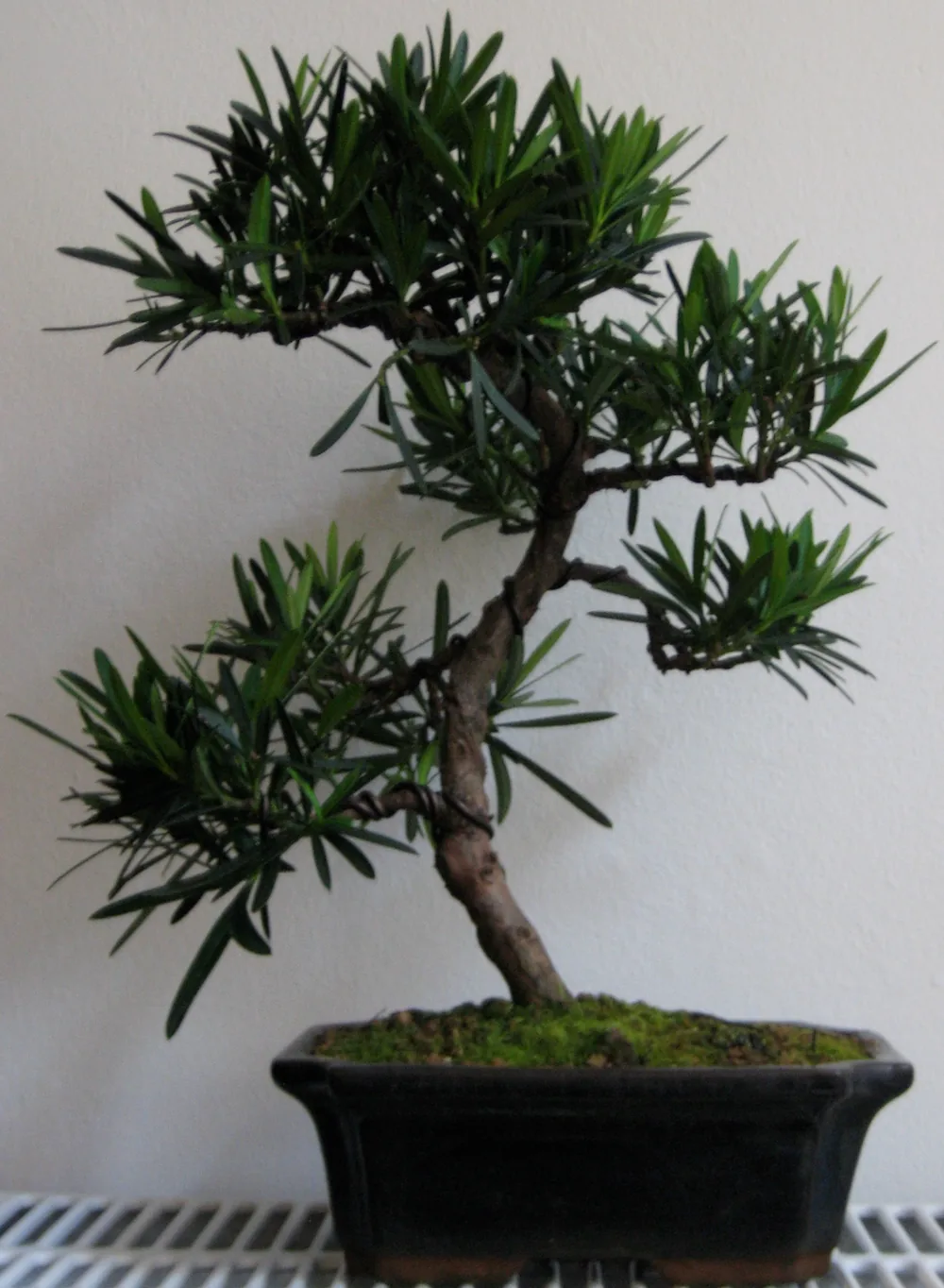
Despite the common name, Buddhist Pine isn't a true pine at all, it's actually in an ancient conifer family that predates pines, and produces soft, long needle-like leaves and small blue-black fruit on female plants. It's one of the few conifers genuinely happy as a houseplant, tolerating lower indoor light far better than true pines, junipers, or other classic outdoor conifer bonsai.
Bright light to some direct sun; tolerates lower indoor light better than most conifer bonsai.
Water
Water when the top of the soil is dry; prefers not to dry out completely between waterings.
Humidity
Prefers moderate humidity; tolerates average indoor air reasonably well.
Soil
Well-draining bonsai soil mix.
Temperature
Tolerates a brief light frost, but not a hard winter.
Size
A tree of 4.5-15m in the ground; kept small in a pot by pruning.
Growth speed
Slow
Best position
south-east / south-facing windowanywhere up to about 1 m from the window
east / west-facing windowright by the window
south-west-facing windowabout 1 m from the window or further back
Watch for strong direct sun at south-west windows.
See every window directionHide window directions
Best position
right by the window
about 1 m
about 2 m
about 4 m
4 m or more
north
too dark○
too dark○
too dark○
too dark○
too dark○
north-east
too dark○
too dark○
too dark○
too dark○
too dark○
east
works well✓
too dark○
too dark○
too dark○
too dark○
south-east
works well✓
works well✓
too dark○
too dark○
too dark○
south
works well✓
works well✓
too dark○
too dark○
too dark○
south-west
just about~
works well✓
too dark○
too dark○
too dark○
west
works well✓
too dark○
too dark○
too dark○
too dark○
north-west
too dark○
too dark○
too dark○
too dark○
too dark○
✓works well~just about○too dark☼too much direct sun
A rough guide based on window direction and typical daylight through the year. Window size, curtains and whatever stands outside matter just as much.
!Toxic to pets
Toxic to cats and dogs if eaten.
Eating it can cause vomiting and an upset stomach.
If your pet has eaten some, contact your vet.
Source: ASPCA
Care by Season
Spring
New soft needles emerge; a good time for light pruning to encourage denser growth.
Summer
Water regularly and feed every few weeks; can move outdoors for summer in a sheltered, partly shaded spot.
Autumn
Bring back indoors before the first frost if it spent summer outside; growth slows.
Winter
Keep in bright light indoors, away from cold drafts and heating vents; water less often.
Growing & Maintenance
Soil and pot
A well-draining bonsai mix that is slightly acidic. Alkaline soil turns the leaves yellow.
Fertilising
Feed every few weeks in summer, while it is growing.
Pruning
It adapts well to shearing. Prune lightly in spring, when the soft new needles emerge, to encourage denser growth.
Pests & Diseases
Common problems
Older, inner needles yellowing and dropping
Most likely cause: Normal ageing.
What to do: Nothing to do. Shake the dead needles out to let in light.
New growth turning yellow
Most likely cause: Chlorosis in alkaline soil or from hard tap water.
What to do: Repot in slightly acidic mix and water with rainwater.
Sticky leaves with a black, sooty film
Most likely cause: Scale insects. Sooty mould grows on the honeydew they leave.
What to do: Treat the scale first, then wipe the mould off the leaves.
Sparse, open growth
Most likely cause: Too little light.
What to do: Move it to bright light with some direct sun.
Yellowing all over and a wet root ball
Most likely cause: Root rot from poor drainage.
What to do: Improve the drainage and let the soil dry slightly between waterings.
Pests & Diseases
Scale insects
Signs: Small brown bumps along stems and needle bases.
Treatment: Scrape off and treat with horticultural oil.
Root rot
Signs: Yellowing needles and soft roots from soil that stays too wet.
Treatment: Improve drainage and let the soil dry slightly between waterings.
Sooty mold
Signs: Black, powdery coating on foliage, usually following a scale or aphid infestation.
Treatment: Treat the underlying insect problem first, then wipe leaves clean; the mold itself doesn't directly harm the plant.
FAQ
Can I keep Buddhist Pine outdoors year-round?
Only in mild, frost-free or lightly frosty climates; it tolerates brief light frost but not a hard winter, unlike most classic outdoor bonsai conifers. In colder regions it needs to come indoors or into a greenhouse for winter.
Why are the needles on my Buddhist Pine turning yellow and dropping?
Older interior needles yellow and drop naturally as the plant ages, which is normal; widespread yellowing of newer growth more often points to overwatering or too little light.
Is the Buddhist Pine toxic to cats and dogs?
Yes, the Buddhist Pine is toxic to cats and dogs. Eating it upsets the stomach. Keep it out of reach of pets.
How do I prune a Buddhist Pine?
Lightly, in spring, as the soft new needles emerge. It takes shearing well, and regular trimming builds a denser shape.
How fast does a Buddhist Pine grow?
Slowly. That makes it easy to keep at the size you want in a pot, even though in the ground it becomes a tree.
How often should I water a Buddhist Pine?
When the top of the soil is dry. It prefers not to dry out completely, but waterlogged soil rots the roots. Water less in winter.