No results. Is a plant missing? Tell uscontact@wikiplant.net
Chinese Privet
Ligustrum sinense
Care level: Easy
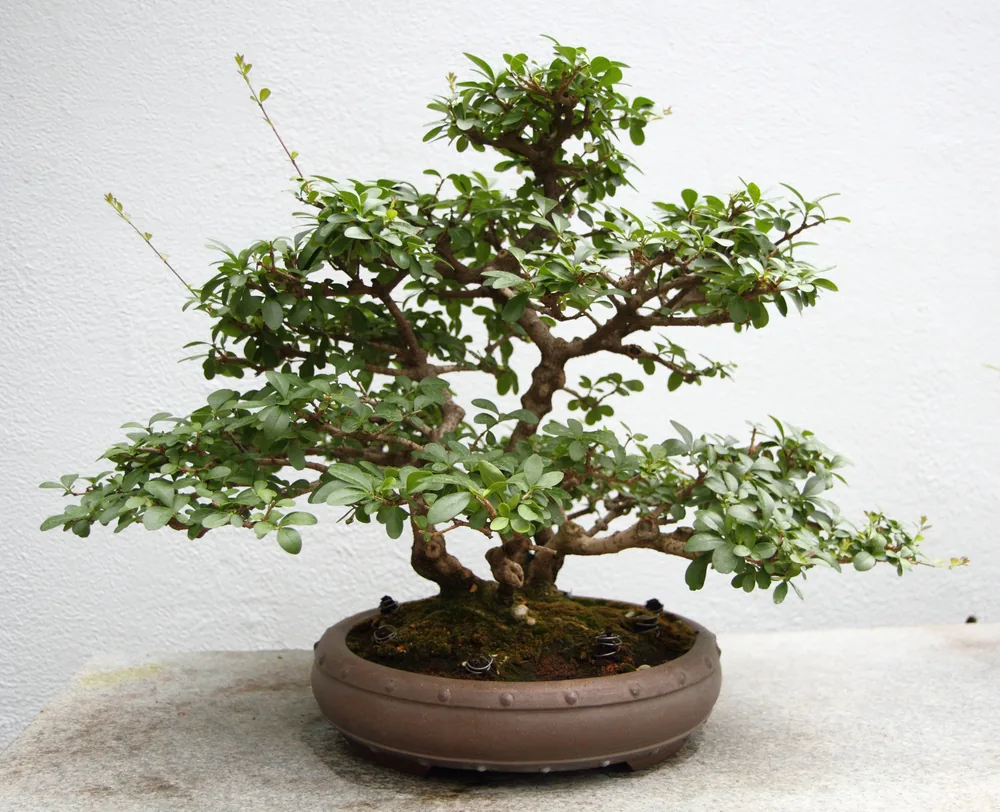
Chinese Privet is a fast-growing shrub commonly used for hedging that also makes a surprisingly forgiving beginner bonsai, tolerating hard pruning, average indoor light, and the occasional missed watering better than most species. Its small, glossy leaves respond well to defoliation, backbudding readily to build the dense, twiggy silhouette bonsai growers aim for.
Bright light to some direct sun; tolerates lower light but grows less densely.
Water
Water when the top of the soil is dry; fairly forgiving of inconsistent watering once established.
Humidity
Adapts well to average indoor humidity.
Soil
Standard well-draining bonsai soil mix.
Size
A shrub of 2-4.5m in the ground; kept small as a bonsai by trimming.
Growth speed
Fast
Best position
south-east / south-facing windowanywhere up to about 1 m from the window
east / west-facing windowright by the window
south-west-facing windowabout 1 m from the window or further back
Watch for strong direct sun at south-west windows.
See every window directionHide window directions
Best position
right by the window
about 1 m
about 2 m
about 4 m
4 m or more
north
too dark○
too dark○
too dark○
too dark○
too dark○
north-east
too dark○
too dark○
too dark○
too dark○
too dark○
east
works well✓
too dark○
too dark○
too dark○
too dark○
south-east
works well✓
works well✓
too dark○
too dark○
too dark○
south
works well✓
works well✓
too dark○
too dark○
too dark○
south-west
just about~
works well✓
too dark○
too dark○
too dark○
west
works well✓
too dark○
too dark○
too dark○
too dark○
north-west
too dark○
too dark○
too dark○
too dark○
too dark○
✓works well~just about○too dark☼too much direct sun
A rough guide based on window direction and typical daylight through the year. Window size, curtains and whatever stands outside matter just as much.
?Pet safety not confirmed
As a precaution, keep it out of reach of children and pets.
Common mistake
Underestimating how fast Privet grows is a common mistake with this species; left unchecked for even a few weeks in the growing season it can throw long, ungainly shoots that quickly undo careful shaping, so it needs more frequent trimming than slower bonsai species.
Care by Season
Spring
Vigorous new growth begins; start regular pinching to control shape as shoots extend.
Summer
Fastest growth of the year; expect to trim every few weeks to maintain shape.
Autumn
Growth slows; a good time for structural pruning and reduced feeding.
Winter
Tolerates cool conditions if kept outdoors in mild climates, or stays actively growing more slowly if kept indoors.
Growing & Maintenance
Soil and pot
A standard, well-draining bonsai mix. It tolerates a range of soils.
Fertilising
Feed through the growing season and reduce in autumn.
Pruning
Pinch or trim the new shoots every few weeks in spring and summer to keep the shape. Autumn, when growth slows, is the time for structural pruning.
Pests & Diseases
Common problems
Long, straggly shoots
Most likely cause: Normal vigour. Privet grows fast.
What to do: Pinch or trim the new shoots every few weeks through the growing season.
Sparse, open growth
Most likely cause: Too little light.
What to do: Move it to bright light with some direct sun.
White powdery coating on the leaves
Most likely cause: Powdery mildew.
What to do: Remove the affected leaves and give the plant more air.
Twigs dying back
Most likely cause: Twig blight or canker.
What to do: Cut the affected twigs back to healthy wood and clean the scissors afterwards.
Yellow leaves and wet soil
Most likely cause: Root rot from poor drainage.
What to do: Improve the drainage and let the soil dry slightly between waterings.
Pests & Diseases
Aphids
Signs: Clusters of small insects on new shoots.
Treatment: Rinse off with water or apply insecticidal soap.
Scale insects
Signs: Small brown bumps along stems.
Treatment: Scrape off and treat with horticultural oil.
Root rot
Signs: Yellowing leaves and soft roots from consistently waterlogged soil.
Treatment: Improve drainage and let the soil dry slightly between waterings.
FAQ
Can I keep Chinese Privet bonsai indoors year-round?
Yes, in most climates it adapts well to being grown indoors year-round near a bright window, though it also does fine outdoors in mild-winter regions; it's genuinely flexible compared to most bonsai species.
Why is my Privet bonsai growing such long, straggly shoots?
This is completely normal vigorous growth for the species; regular pinching or trimming of new shoots throughout the growing season, rather than one big prune, keeps the silhouette dense instead of letting it get away from you.
How often should I water a Chinese Privet bonsai?
When the top of the soil is dry. It forgives the odd missed watering once established, but waterlogged soil rots the roots.
How often does a Privet bonsai need trimming?
Every few weeks in summer, when it grows fastest. Left alone for even a short time, it loses its shape.
How fast does Chinese Privet grow?
Fast. In the ground it becomes a shrub of 2-4.5m, which is why a bonsai needs frequent trimming.
How much light does a Chinese Privet bonsai need?
It needs bright light, with some direct sun. It tolerates lower light but then grows less densely.