No results. Is a plant missing? Tell uscontact@wikiplant.net
Dwarf Lemon Tree
Citrus limon
Care level: Moderate
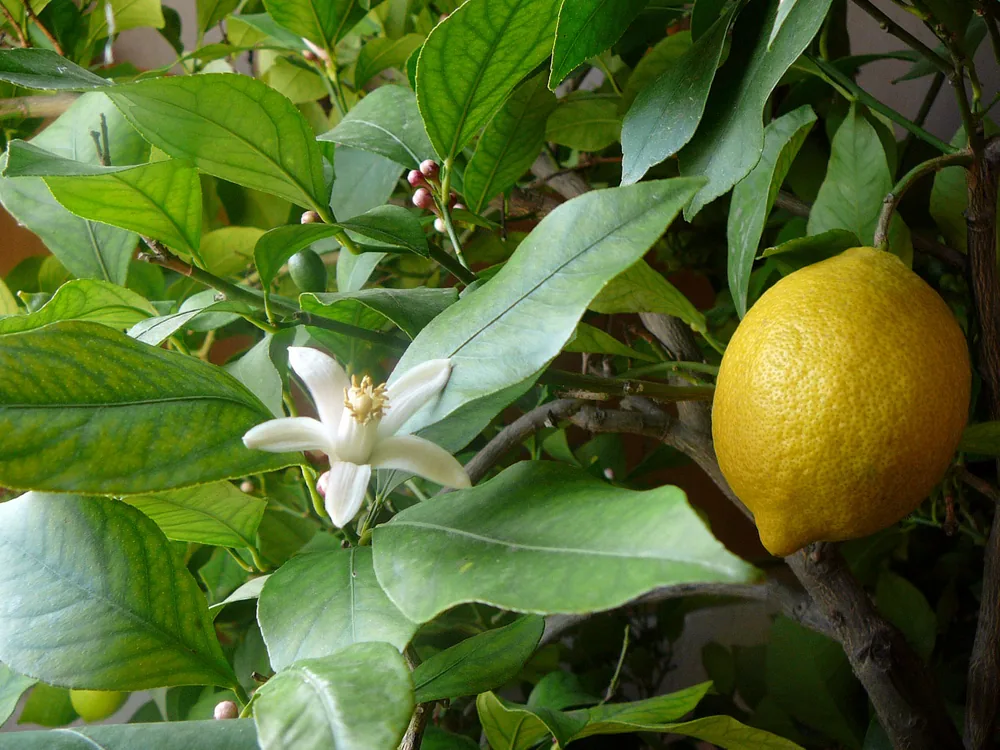
Dwarf lemon trees are grafted onto compact rootstock so they stay small enough for a container while still producing full-sized, fragrant fruit, and because Citrus limon is self-fertile, a single indoor tree can set fruit entirely on its own without a second plant for cross-pollination.
Citrus limon 'Meyer'Citrus limon 'Ponderosa'Citrus limon 'Variegated Pink'
Light
Needs at least 6-8 hours of bright, direct light daily to fruit well; a sunny window or grow light is essential indoors.
Water
Water deeply when the top few centimeters of soil dry out, typically weekly, avoiding both drought and waterlogging.
Humidity
Prefers moderate humidity; dry indoor air can encourage pests and leaf drop.
Soil
Well-draining, slightly acidic potting mix formulated for citrus.
Temperature
Not frost-hardy. Overwinter it indoors in a well-lit spot that is not too warm.
Growth speed
Medium
Best position
south-east / south / south-west-facing windowanywhere up to about 1 m from the window
east / west-facing windowright by the window
See every window directionHide window directions
Best position
right by the window
about 1 m
about 2 m
about 4 m
4 m or more
north
too dark○
too dark○
too dark○
too dark○
too dark○
north-east
too dark○
too dark○
too dark○
too dark○
too dark○
east
works well✓
too dark○
too dark○
too dark○
too dark○
south-east
works well✓
works well✓
too dark○
too dark○
too dark○
south
works well✓
works well✓
too dark○
too dark○
too dark○
south-west
works well✓
works well✓
too dark○
too dark○
too dark○
west
works well✓
too dark○
too dark○
too dark○
too dark○
north-west
too dark○
too dark○
too dark○
too dark○
too dark○
✓works well~just about○too dark☼too much direct sun
A rough guide based on window direction and typical daylight through the year. Window size, curtains and whatever stands outside matter just as much.
?Pet safety not confirmed
As a precaution, keep it out of reach of children and pets.
Common mistake
Indoor lemon trees often flower beautifully but fail to fruit simply because there are no bees or wind indoors to move pollen between blossoms, hand-pollinating with a small paintbrush, dabbing it gently into each open flower, dramatically improves fruit set on a houseplant.
Care by Season
Spring
Resume regular watering and feed with a citrus fertilizer as flowering and new growth begin.
Summer
Water consistently, feed every few weeks, and move outdoors to full sun if possible.
Autumn
Bring plants back indoors before frost and reduce feeding as growth slows.
Winter
Water more sparingly, provide maximum available light, and hold off on fertilizer.
Growing & Maintenance
Soil and pot
A well-draining, slightly acidic citrus mix, in a pot with drainage holes.
Repotting
Only when it is really needed. Citrus dislikes root disturbance, so move it up without breaking the root ball.
Fertilising
A citrus fertiliser every few weeks while the tree is growing and flowering. None in winter.
Pruning
Prune only to keep the shape.
Propagation
From seed, or by grafting, which is how named varieties are produced.
Pests & Diseases
Common problems
Flowers but no fruit
Most likely cause: No pollinators indoors.
What to do: Move pollen from flower to flower with a small soft brush.
Leaves dropping indoors
Most likely cause: Dry heated air, or a sudden change of position.
What to do: Raise the humidity and keep the tree in one bright place through winter.
Yellow leaves
Most likely cause: Waterlogged roots, or too little feed.
What to do: Let the top few centimetres dry before watering and feed regularly in the growing season.
Sticky leaves with a black, sooty film
Most likely cause: Sap-sucking insects such as scale or aphids. Sooty mould grows on their honeydew.
What to do: Deal with the insects first, then wipe the leaves clean.
Sparse, leggy growth
Most likely cause: Too little direct light.
What to do: Give it at least 6-8 hours of bright, direct light a day, or add a grow light.
Pests & Diseases
Spider mites
Signs: Fine webbing and stippled, yellowing leaves in dry indoor air
Treatment: Increase humidity, rinse leaves, and apply insecticidal soap if needed. Check the undersides of the leaves and the crevices where the leaf stem meets the main stalk.
Scale insects
Signs: Small brown bumps on stems and leaves with sticky residue
Treatment: Scrape off and wipe with rubbing alcohol; apply horticultural oil for heavier infestations.
Citrus leaf miner
Signs: Winding silvery trails within young leaves
Treatment: Remove and dispose of affected leaves and apply neem oil to protect new growth.
FAQ
Why does my Dwarf Lemon Tree flower but never produce fruit?
Indoors there are no pollinators to transfer pollen between flowers, so even a healthy, blooming tree often fails to set fruit; gently brushing a small paintbrush inside each open flower to move pollen around usually solves the problem.
Does my Dwarf Lemon Tree need another citrus tree nearby to fruit?
No, Citrus limon is self-fertile, meaning a single tree can pollinate its own flowers and produce fruit without a second plant, as long as pollen is actually transferred between blossoms, whether by insects outdoors or by hand indoors.
How often should I water a Dwarf Lemon Tree?
Typically once a week, when the top few centimetres of compost have dried. Water deeply and avoid both drought and waterlogging. It needs plenty of water while growing and much less in winter.
How do I overwinter a Dwarf Lemon Tree?
Indoors, in the brightest spot you have, and not too warm. Bring it in before the first frost, water sparingly and stop feeding until spring.
Should I prune a Dwarf Lemon Tree?
Only lightly, to keep its shape. It does not need regular hard pruning.
How much sun does a Dwarf Lemon Tree need?
At least 6-8 hours of bright, direct light a day. Outdoors in summer, give it full sun in a spot sheltered from wind.