No results. Is a plant missing? Tell uscontact@wikiplant.net
Fukien Tea
Carmona microphylla
Care level: Moderate
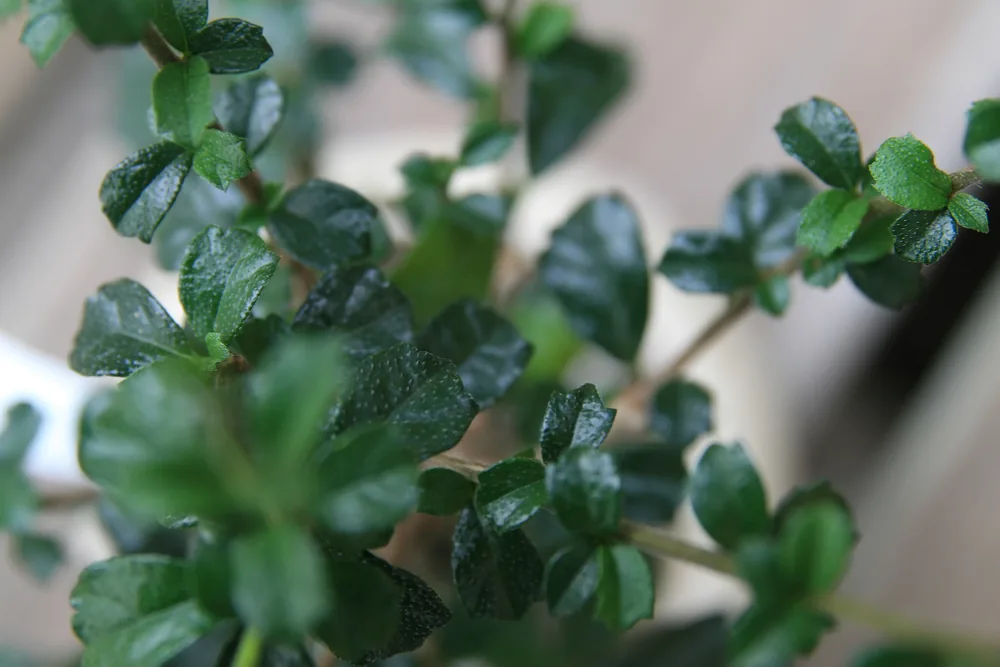
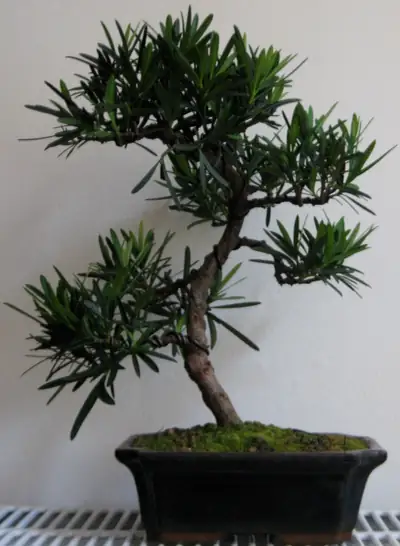
Despite the common name, Fukien Tea has nothing to do with real tea, Camellia sinensis, it's a completely different plant prized for bonsai for its tiny white flowers that can appear almost year-round indoors, followed by small red berries, alongside naturally small, glossy dark green leaves and rough, textured bark that develops character quickly.
Bright light with some direct sun; needed for the best flowering.
Water
Keep soil lightly moist; sensitive to both drying out and staying soggy.
Humidity
Prefers moderate to high humidity; dry indoor air can trigger leaf drop.
Soil
Well-draining bonsai soil mix.
Best position
south-east / south-facing windowanywhere up to about 1 m from the window
east / west-facing windowright by the window
south-west-facing windowabout 1 m from the window or further back
Watch for strong direct sun at south-west windows.
See every window directionHide window directions
Best position
right by the window
about 1 m
about 2 m
about 4 m
4 m or more
north
too dark○
too dark○
too dark○
too dark○
too dark○
north-east
too dark○
too dark○
too dark○
too dark○
too dark○
east
works well✓
too dark○
too dark○
too dark○
too dark○
south-east
works well✓
works well✓
too dark○
too dark○
too dark○
south
works well✓
works well✓
too dark○
too dark○
too dark○
south-west
just about~
works well✓
too dark○
too dark○
too dark○
west
works well✓
too dark○
too dark○
too dark○
too dark○
north-west
too dark○
too dark○
too dark○
too dark○
too dark○
✓works well~just about○too dark☼too much direct sun
A rough guide based on window direction and typical daylight through the year. Window size, curtains and whatever stands outside matter just as much.
?Pet safety not confirmed
As a precaution, keep it out of reach of children and pets.
Care by Season
Spring
Growth resumes and flowering often picks up; resume regular feeding.
Summer
Water regularly and expect the most consistent flowering of the year in good light.
Autumn
Growth and flowering slow gradually; ease off feeding.
Winter
Keep indoors in bright light, away from cold drafts; water a little less often.
Growing & Maintenance
Soil and pot
A well-draining bonsai mix that holds a little moisture without staying wet.
Fertilising
Feed regularly in spring and summer, when the tree grows and flowers. Ease off in autumn.
Pruning
Trim the new shoots back through the growing season to keep the shape.
Pests & Diseases
Common problems
Leaves dropping after a change
Most likely cause: A new position, a draught or a shift in light.
What to do: Find it a bright, draught-free spot and leave it there.
Leaves dropping in heated rooms
Most likely cause: Dry indoor air.
What to do: Raise the humidity with a pebble tray or humidifier.
Yellow leaves and wet soil
Most likely cause: Soil that stays soggy.
What to do: Let the surface dry slightly between waterings and make sure the pot drains.
Dry, crisp leaves
Most likely cause: The soil has dried out. This species does not forgive it.
What to do: Water at once and keep the soil lightly moist from then on.
No flowers
Most likely cause: Too little light.
What to do: Give it bright light with some direct sun.
Pests & Diseases
Spider mites
Signs: Fine webbing and stippled, dull leaves, especially in dry indoor air.
Treatment: Increase humidity, rinse foliage, and apply insecticidal soap if needed. Check the undersides of the leaves and the crevices where the leaf stem meets the main stalk.
Scale insects
Signs: Small brown bumps along stems and leaf undersides.
Treatment: Scrape off and treat with horticultural oil.
Root rot
Signs: Yellowing leaves and soft roots from soil that stays too wet.
Treatment: Improve drainage and let the soil dry slightly between waterings.
FAQ
Why is my Fukien Tea dropping leaves?
This species is notably sensitive to change, a new location, a draft, or a shift in light can trigger leaf drop even when nothing is seriously wrong; keep conditions as stable as possible and new leaves usually return within a few weeks.
Does Fukien Tea need to flower to be healthy?
No, a lack of flowers doesn't mean the plant is unhealthy, flowering depends heavily on light levels and can pause for stretches even on a thriving plant; consistent bright light is the biggest factor in encouraging more frequent blooms.
How often should I water a Fukien Tea bonsai?
Often enough to keep the soil lightly moist. It is sensitive both to drying out and to soggy soil, so check it every day or two and water a little less in winter.
How much light does a Fukien Tea need?
It needs bright light with some direct sun. Good light is also what brings on its small white flowers.
When should I feed a Fukien Tea?
Regularly in spring and summer, when growth and flowering pick up. Ease off in autumn as it slows down.
How do I prune a Fukien Tea bonsai?
Trim the new shoots back during the growing season to hold the shape. Keep it away from draughts afterwards, as it reacts to stress by dropping leaves.