No results. Is a plant missing? Tell uscontact@wikiplant.net
Hawthorn
Crataegus laevigata
Care level: Easy
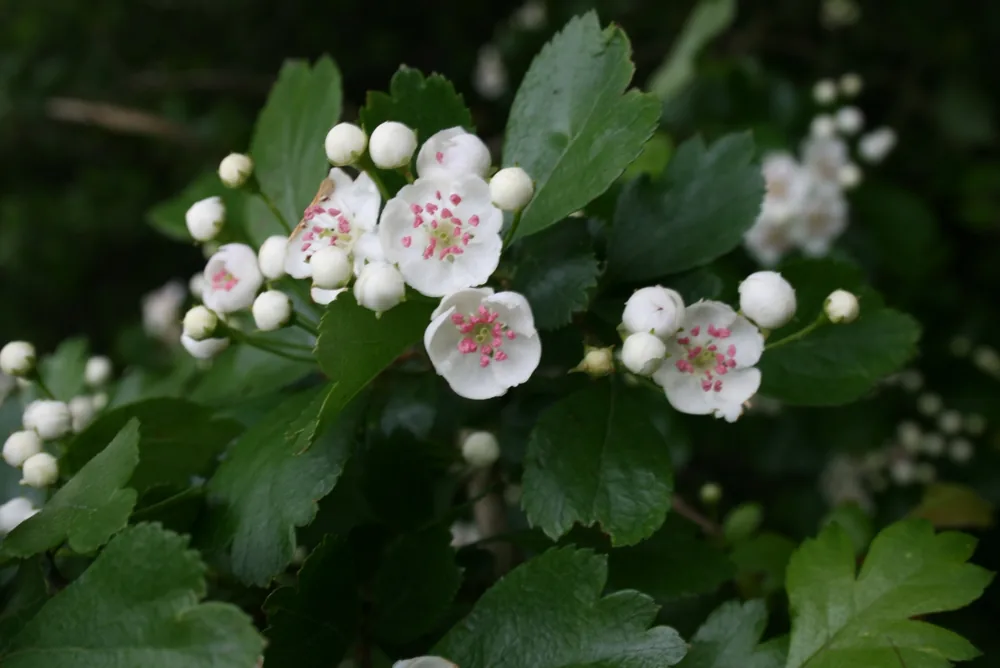
Hawthorn is a deciduous flowering tree valued for putting on a complete show through the seasons: clusters of white or pink spring flowers, small red berries in autumn, and a gnarled, thorny branch structure that's fully visible once the leaves drop. Native to Europe, it's a popular Western bonsai species prized for its toughness and its tolerance of hard pruning.
Full sun to light shade; more sun means better flowering and denser growth.
Water
Keep the soil evenly moist during the growing season; established trees tolerate brief dryness but flower and fruit best without stress.
Humidity
Not a controllable factor outdoors; adapts well to a wide range of humidity levels.
Soil
Any well-draining bonsai soil; Hawthorn isn't particular about soil pH.
Temperature
Very hardy. Protect the roots of a potted tree from prolonged hard frost.
Safety note
The berries are used for jellies and cordials, but the RHS notes that the seeds contain toxins and should be removed before the fruit is eaten. Worth knowing if a fruiting tree stands somewhere children can reach.
Care by Season
Spring
Clusters of white or pink flowers appear on old wood; avoid heavy pruning until after flowering so this year's display isn't cut away.
Summer
Vigorous growth continues; pinch and prune to maintain shape, and watch for the small red berries beginning to form.
Autumn
Berries ripen to red, and leaves may take on some yellow colour before dropping; a good season for structural pruning once bare.
Winter
Fully deciduous and very hardy; the thorny branch structure is fully on display, and this is a good time for wiring and hard structural work.
Growing & Maintenance
Soil and pot
Any well-draining bonsai soil. It is not particular about pH.
Pruning
Leave heavy pruning until after flowering, since it flowers on old wood. Pinch and trim through summer, and wear gloves against the thorns.
Pests & Diseases
Common problems
Few flowers
Most likely cause: Heavy pruning before flowering, or too little sun.
What to do: Prune after flowering and give the tree more sun.
Pale blotches and winding trails in the leaves
Most likely cause: Hawthorn leaf miner.
What to do: Remove and destroy the affected leaves.
White, powdery coating on the leaves
Most likely cause: Powdery mildew.
What to do: Improve the airflow around the tree and remove badly affected leaves.
Curled, sticky shoot tips
Most likely cause: Aphids.
What to do: Rinse them off with a strong spray of water.
Weak growth indoors
Most likely cause: No winter dormancy.
What to do: Keep it outdoors all year.
Pests & Diseases
Aphids
Signs: Clusters of small insects on new shoots and a sticky residue (honeydew) on leaves below.
Treatment: Rinse off with a strong spray of water or apply insecticidal soap, repeating as needed.
Hawthorn leaf miner
Signs: Blotchy brown patches within the leaf tissue where larvae have tunnelled.
Treatment: Remove and destroy affected leaves; damage is mostly cosmetic and rarely threatens the tree's health.
Powdery mildew
Signs: A white, powdery coating on leaves, especially in humid conditions with poor air circulation.
Treatment: Improve airflow around the tree and remove badly affected leaves; treat with a fungicide if it spreads.
FAQ
Are Hawthorn's thorns a problem for bonsai care?
They're sharp enough to be worth respecting: wear gloves when wiring or pruning, and be careful when repotting. Some growers thin out the thorniest young growth over time, though older, established branches naturally carry fewer thorns than vigorous new shoots.
Can I keep a Hawthorn bonsai indoors?
No, not long-term. It's a deciduous tree that needs real seasonal changes, including winter dormancy with a period of cold, to flower and fruit well; indoors it won't get the dormancy it needs and will decline over time.
How often should I water a Hawthorn bonsai?
Often enough to keep the soil evenly moist in the growing season. An established tree tolerates brief dryness, but it flowers and fruits better without it.
How much sun does a Hawthorn bonsai need?
Full sun to light shade. More sun means better flowering and denser growth.
When should I prune a Hawthorn bonsai?
After flowering. The flowers appear on old wood, so heavy pruning earlier in spring removes them.
Does a Hawthorn bonsai flower and fruit?
Yes. Clusters of white or pink flowers appear in spring, and the small berries ripen to red in autumn.