No results. Is a plant missing? Tell uscontact@wikiplant.net
Caladium
Caladium bicolor
Care level: Moderate
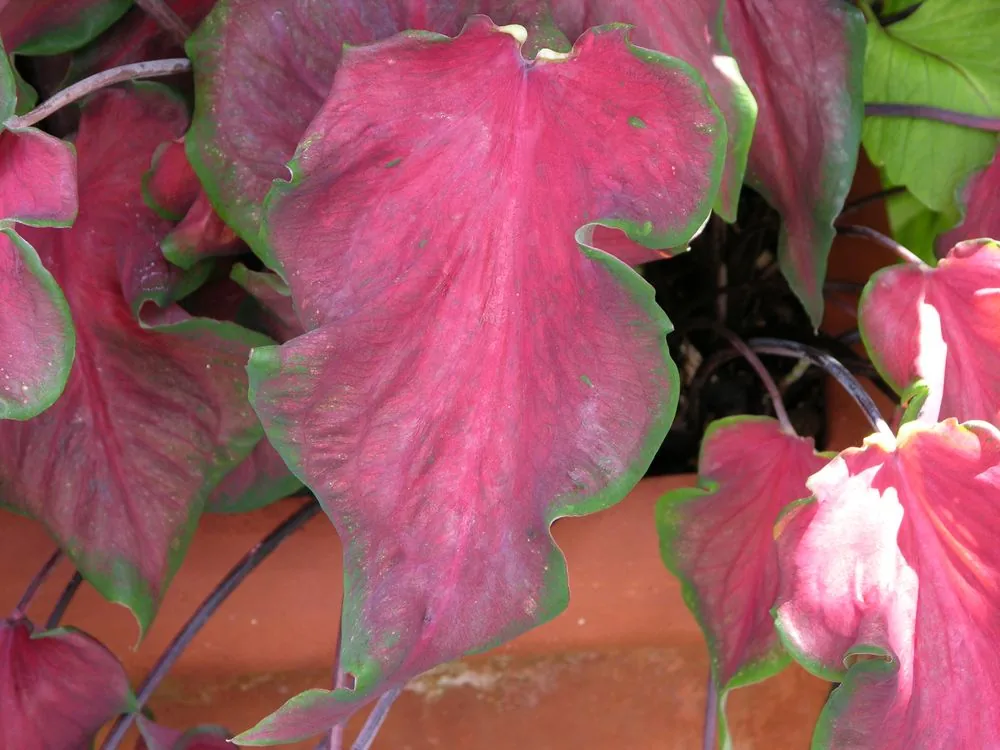
The caladium is a tuberous plant from the tropical forests of South America, grown only for its leaves. They are large, paper-thin and shaped like hearts or arrowheads, and they are patterned in white, pink and red with green veins and margins, so that a pot of them looks more like a bunch of flowers than foliage. It grows fast in warmth from spring to autumn, then dies back and rests as a dry tuber through winter. It needs heat, humidity and shelter from direct sun, and it gives a great deal of colour for a shaded room or a summer balcony.
Caladium bicolor 'Candidum'Caladium bicolor 'Carolyn Whorton'Caladium bicolor 'Florida Red Ruffles'
Light
Bright, indirect light or light shade. No direct sun.
Water
Keep the compost evenly moist while in leaf. Reduce watering as the leaves die back and keep the resting tuber dry.
Humidity
High humidity. Use a pebble tray or group it with other plants; avoid radiators and draughts.
Soil
Rich, free-draining, peat-free compost with added perlite or bark.
Temperature
Warm at all times: 20-25°C in growth and never below about 15°C, even for the resting tuber. Cold stops growth and rots the tuber.
Size
30-60cm tall and 30-75cm wide.
Growth speed
Fast
!Toxic to pets
Toxic to cats and dogs if eaten.
Chewing it can irritate the mouth, causing drooling and trouble swallowing.
If your pet has eaten some, contact your vet.
Source: NC State Extension, Pet Poison Helpline
Did you know?
When the leaves collapse in autumn, the plant is going to sleep, not dying. Stop watering as the leaves yellow, cut them off once they are dry and keep the tuber in its pot of dry compost in a warm room. Start it again in spring with warmth and a little water.
Care by Season
Spring
Start tubers into growth in warmth. Water sparingly until shoots show.
Summer
Full leaf. Water, feed every two weeks and keep humid and shaded from sun.
Autumn
The leaves yellow and collapse. Stop watering and let the plant die back.
Winter
The tuber rests dry in its pot in a warm room. Do not water.
Growing & Maintenance
Repotting
Repot the resting tuber into fresh compost each spring, about 5cm deep with the growing points upwards, in a pot only a little wider than the tuber or a group of tubers.
Fertilising
Feed every two weeks with a balanced liquid fertiliser from the time the leaves unfold until late summer.
Pruning
Cut off yellow or damaged leaves at the base, and remove the dry foliage once the plant has died back.
Propagation
Divide the tubers in spring before starting them, cutting so that each piece has at least one growing point, and let the cuts dry for a day or two before potting.
Pests & Diseases
Common problems
Leaves collapse in autumn
Most likely cause: Natural dormancy.
What to do: Stop watering and store the tuber dry and warm.
Brown, papery patches
Most likely cause: Direct sun.
What to do: Move to bright shade.
Brown leaf edges
Most likely cause: Dry air, dry compost or draughts.
What to do: Raise the humidity and water evenly.
Dull colours and long, weak stalks
Most likely cause: Too little light.
What to do: Move to brighter, indirect light.
Leaves droop in cool weather
Most likely cause: Temperatures below about 15°C.
What to do: Move the plant somewhere warmer.
Tuber does not sprout in spring
Most likely cause: Too cold, or the tuber rotted in storage.
What to do: Start it at 21°C or more; replace it if it is soft.
Pests & Diseases
Red spider mite
Signs: Leaves turn dull and finely speckled, with fine webbing underneath, in warm, dry air.
Treatment: Raise the humidity and wipe the undersides of the leaves gently with a damp cloth. Check the undersides of the leaves and the crevices where the leaf stem meets the main stalk.
Aphids
Signs: Clusters of small insects on the young leaves and stalks, with sticky honeydew.
Treatment: Wipe or rinse them off carefully; the leaves tear easily.
Tuber rot
Signs: The tuber turns soft and smells, and shoots fail to appear or collapse at the base, after cold or wet storage.
Treatment: Discard soft tubers. Store healthy ones dry at 15°C or more and water sparingly when starting them.
FAQ
Why are all the leaves falling over and yellowing in autumn?
It is the natural rest. Caladiums grow for about six months and then die back whatever you do. Let the leaves wither, stop watering and store the tuber dry and warm until spring.
How do I start the tuber again?
In early spring, repot the tuber about 5cm deep in fresh compost with the knobbly side up, put it somewhere warm, at 21°C or more, and keep the compost barely moist until shoots appear. Then water and feed normally. A cold windowsill delays it by weeks.
How much light does it need?
Bright, indirect light. Direct sun scorches the thin leaves in hours, leaving brown, papery patches, while deep shade makes the colours dull and the stalks long and weak. White-leaved varieties burn most easily.
Why are the leaf edges brown?
Dry air, dry compost or a cold draught. Raise the humidity with a pebble tray or by grouping plants, keep the compost evenly moist and keep the plant away from open windows and radiators.
Can I put it outside in summer?
Yes, once nights stay above about 15°C. Stand it in shade or dappled light, sheltered from wind, which tears the leaves. Bring it in before the nights turn cool.
Why are the new leaves small and green?
Too little light or too little food. Move the plant to a brighter position out of direct sun and feed every two weeks while it is growing.
Should I remove the flowers?
You can. The flowers are small, pale, hooded spikes hidden among the leaves. Cutting them off as they appear keeps the plant's energy in the foliage.