Calathea Orbifolia (Calathea orbifolia)

Calathea Orbifolia

Calathea orbifolia
Care level: Moderate

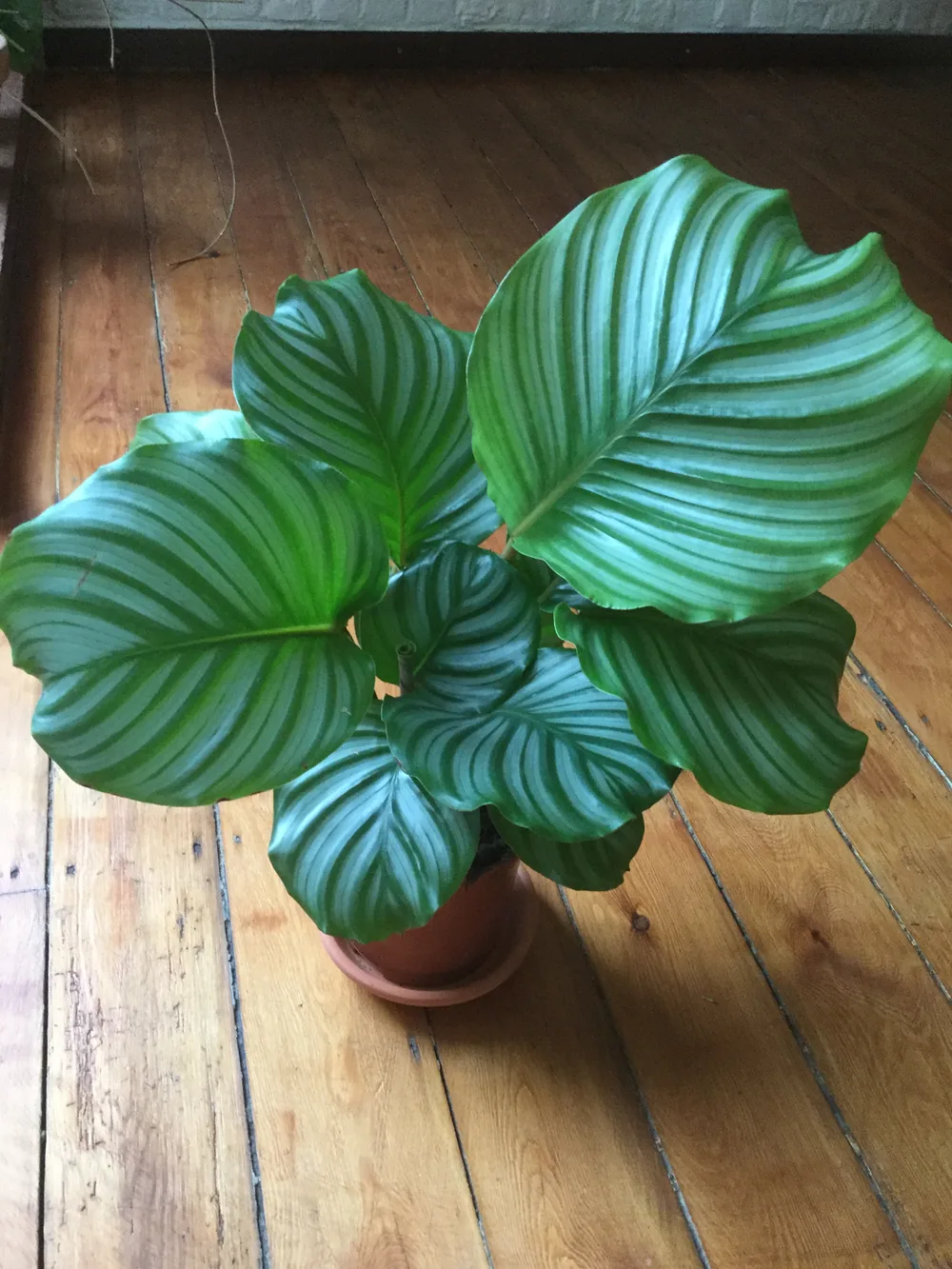
Calathea orbifolia belongs to the prayer-plant family and gets its dramatic silver-striped leaves from Brazilian rainforest floors, where dappled, indirect light and constant moisture in the air are the norm - conditions that make it notoriously fussy in the average dry living room.

I have this plant

Information

Varieties and related species
Calathea 'Medallion'Calathea 'Network'Calathea 'White Fusion'

Light

Prefers medium, indirect light and no direct sun, which fades and scorches its patterned leaves.

Water

Keep soil consistently moist but not soggy, watering roughly weekly with distilled or rain water.

Humidity

Needs high humidity of 60% or more; use a humidifier or pebble tray to prevent crispy leaf edges.

Soil

Light, well-draining, peat-based mix that holds some moisture.

Temperature

A steady 18-24°C. Avoid cold draughts and temperature swings.

Size

60-90cm tall and 30-60cm wide, with leaves up to 30cm across.

Best position

  • north / north-east-facing windowanywhere up to about 2 m from the window
  • east-facing windowabout 1 m from the window or further back
  • west-facing windowabout 2 m from the window or further back

Watch for strong direct sun at east / west windows.

See every window direction Hide window directions
Best positionright by the windowabout 1 mabout 2 mabout 4 m4 m or more
northworks wellworks wellworks welljust aboutjust about
north-eastworks wellworks wellworks welljust aboutjust about
eastjust aboutworks wellworks wellworks wellworks well
south-easttoo much direct sunjust aboutjust aboutworks wellworks well
southtoo much direct suntoo much direct suntoo much direct sunjust aboutworks well
south-westtoo much direct suntoo much direct sunjust aboutworks wellworks well
westtoo much direct suntoo much direct sunworks wellworks wellworks well
north-westtoo much direct sunjust aboutworks welljust aboutjust about

works well just about too dark too much direct sun

A rough guide based on window direction and typical daylight through the year. Window size, curtains and whatever stands outside matter just as much.

Non-toxic to pets

Considered non-toxic to cats and dogs.

Source: ASPCA

Common mistake

The most common reason Calathea orbifolia develops crispy brown edges isn't underwatering - it's low humidity and mineral-rich tap water. Switching to distilled or filtered water and running a humidifier nearby solves it far more often than watering more.

Care by Season

Spring

Resume light feeding monthly as new leaves unfurl.

Summer

Maintain high humidity and consistent moisture; avoid direct afternoon sun.

Autumn

Reduce feeding and monitor humidity as indoor heating begins.

Winter

Water slightly less but never let it fully dry; keep away from cold drafts and dry heater air.

Growing & Maintenance

Soil and pot

A light mix of potting compost with perlite and a little fine bark, which holds moisture but drains freely. A plastic or glazed pot keeps the moisture more even than terracotta.

Repotting

Every two years in spring, one pot size up. The roots are fragile, so disturb the root ball as little as possible.

Fertilising

A balanced liquid feed at half strength once a month in spring and summer. Never feed dry compost: the roots scorch easily, which shows as brown leaf edges.

Pruning

Only remove yellow or crisp leaves, cutting the stalk at the base. Brown edges can be trimmed off following the shape of the leaf.

Propagation

By division only, in spring at repotting. Separate a clump with its own roots and several leaves, and keep it warm and humid while it settles. It does not root from leaf cuttings.

Pests & Diseases

Common problems

Brown, crispy leaf edges and tips

Most likely cause: Air that is too dry, or fluoride in tap water.
What to do: Keep the humidity at 60% or more with a humidifier or pebble tray and water with rainwater or distilled water.

Curling leaves

Most likely cause: Too little water or low humidity.
What to do: Keep the compost evenly moist, never soggy, and raise the humidity.

Faded leaf pattern

Most likely cause: Too little light.
What to do: Move it to brighter, indirect light. Direct sun is too much.

Scorched patches

Most likely cause: Direct sunlight.
What to do: Move it out of the sun to medium, indirect light.

Spots on the leaves

Most likely cause: Water left standing on the foliage.
What to do: Water at the base of the plant and keep the leaves dry. Remove badly spotted leaves.

Yellow leaves and a mushy stem base

Most likely cause: Overwatering. The roots rot in waterlogged compost.
What to do: Let the compost drain freely, trim rotten roots and repot in fresh, light mix.

Pests & Diseases

Spider mites

Signs: Fine webbing and stippled, dull leaves, especially in low humidity.
Treatment: Raise humidity, rinse leaves, and treat with insecticidal soap. Check the undersides of the leaves and the crevices where the leaf stem meets the main stalk.

Leaf curling/browning

Signs: Crispy brown edges and curling leaves from dry air or hard water.
Treatment: Increase humidity and switch to distilled or filtered water.

Root rot

Signs: Mushy stem base and yellowing leaves from waterlogged soil.
Treatment: Repot into fresh, well-draining mix and trim away rotten roots.

FAQ

Why do the leaves of my Calathea orbifolia move at night?

This is normal behaviour, called nyctinasty. The plant raises and folds its leaves when it gets dark and lowers them again in daylight. It is not a sign of stress.

Why are the leaf edges of my Calathea orbifolia turning brown and crispy?

The usual cause is air that is too dry, often combined with fluoride in tap water. Keep the humidity at 60% or more and switch to rainwater or distilled water. Edges that are already brown do not turn green again.

Is Calathea orbifolia safe for cats and dogs?

Yes, Calathea orbifolia is not toxic to cats or dogs. It is a good choice for a home with pets.

How often should I water Calathea orbifolia?

Roughly once a week, so that the compost stays evenly moist but never soggy. Use rainwater or distilled water if you can. Water a little less in winter, without letting it dry out fully.

How much light does Calathea orbifolia need?

It needs medium to bright indirect light and no direct sun. Sun scorches and fades the leaves, while too little light makes the silver pattern fade.

How do I propagate Calathea orbifolia?

By division in spring. Separate a clump with its own roots and several leaves when you repot, and keep it warm and humid while it settles.

You might also like