No results. Is a plant missing? Tell uscontact@wikiplant.net
Calathea roseopicta
Goeppertia roseopicta
Care level: Hard
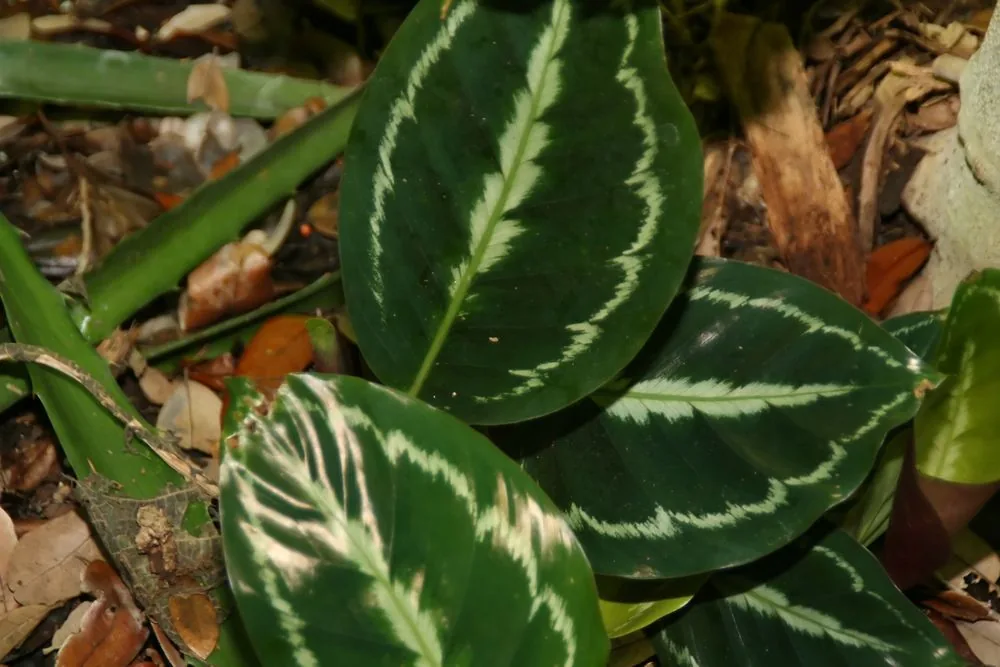
Calathea roseopicta, the rose-painted calathea, is a low, clump-forming foliage plant from the rainforests of western South America. Its broad, rounded, dark green leaves look hand-painted: a pink midrib, a feathered band of pink or cream running parallel to the edge, and a purple underside. It stays compact, around 25-60cm, and like the rest of the prayer plant family it folds its leaves upward at night. It needs warmth, high humidity and shelter from draughts to keep its leaves unblemished.
Bright, indirect or filtered light. No direct sun.
Water
Water moderately when in growth and keep the compost just moist in winter.
Humidity
High. Group it with other plants, use a pebble tray or run a humidifier.
Soil
Peat-free potting compost that holds moisture and drains freely.
Temperature
A constant temperature of at least 16°C, with no draughts.
Size
25-60cm tall and 30-60cm wide.
?Pet safety not confirmed
As a precaution, keep it out of reach of children and pets.
Beginner tip
Put this plant where the conditions stay the same: a warm room, away from doors, radiators and cold glass, in bright light without direct sun. It reacts to changes more than to any single fault, and a plant that is moved about rarely looks its best.
Care by Season
Spring
New leaves unroll. Divide or repot in late spring and begin feeding monthly.
Summer
Keep the compost evenly moist and the air humid. Keep it out of direct sun.
Autumn
Growth slows. Water a little less and stop feeding.
Winter
Keep it warm and away from cold glass and radiators. Keep the compost just moist.
Growing & Maintenance
Soil and pot
Use a peat-free compost that holds moisture yet drains freely, in a pot with drainage holes.
Repotting
Repot in late spring when the roots fill the pot, moving up one pot size.
Fertilising
Feed monthly with a balanced liquid fertiliser while the plant is growing.
Propagation
By division in late spring.
Pests & Diseases
Common problems
Brown leaf edges and tips
Most likely cause: Dry air or compost that dried out.
What to do: Raise the humidity and water more evenly.
Curling leaves
Most likely cause: Thirst or very dry air.
What to do: Water thoroughly and raise the humidity.
Faded pattern
Most likely cause: Too much light.
What to do: Move it out of direct sun.
Yellow, limp leaves
Most likely cause: Compost that is too wet.
What to do: Let the surface begin to dry before watering again.
Leaves drooping after a move
Most likely cause: A change in temperature, or a draught.
What to do: Give it a warm, sheltered, permanent place.
Pests & Diseases
Spider mites
Signs: Fine pale speckling on the leaves and thin webbing on the undersides, in dry air.
Treatment: Rinse the leaves with lukewarm water and raise the humidity around the plant. Check the undersides of the leaves and the crevices where the leaf stem meets the main stalk.
Whiteflies
Signs: Tiny white insects that fly up when the leaves are disturbed.
Treatment: Hang yellow sticky traps nearby and rinse the undersides of the leaves.
Root rot
Signs: Yellow, limp leaves on a plant standing in wet compost.
Treatment: Trim away soft brown roots, repot in fresh compost and water less.
FAQ
Why are the leaf edges turning brown?
The air is too dry, or the compost has been allowed to dry out. Raise the humidity around the plant, keep the compost just moist at all times, and keep it out of draughts.
How often should I water Calathea roseopicta?
Water moderately while it is growing, whenever the surface starts to dry, and keep the compost just moist in winter. It should never be either soggy or bone dry.
Why are the leaves curling?
Curling is a sign of thirst or very dry air. Water thoroughly, let the excess drain, and raise the humidity; the leaves open out again within a day or two.
Why is the pattern fading?
Too much light. Direct sun bleaches the markings and can scorch the leaf. Move the plant to bright, indirect or filtered light.
Does it flower?
Small white and purple flowers may appear in summer, low among the leaves. They are of little interest next to the foliage.
How do I propagate it?
By division in late spring. Split the clump into pieces with roots and leaves, pot them separately and keep them warm and humid while they settle.