No results. Is a plant missing? Tell uscontact@wikiplant.net
Zebra Plant
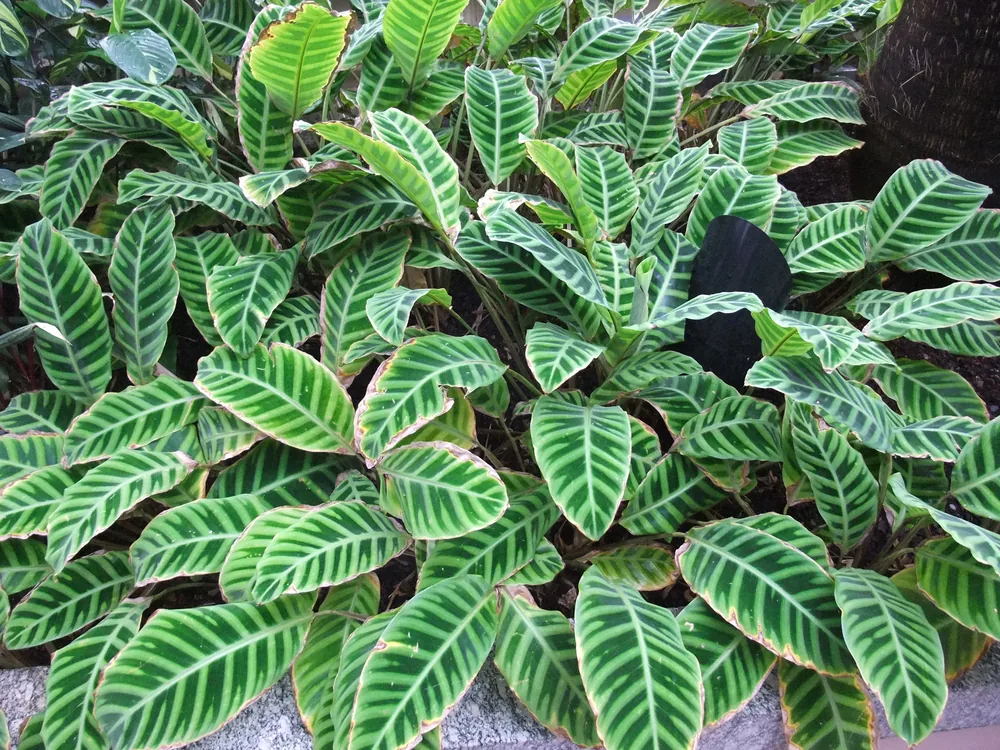
Calathea zebrina
Care level: Moderate
Calathea zebrina is one of the classic 'prayer plants,' a group named for the way their leaves rise and fold together each evening like hands in prayer and lower again at dawn, a rhythmic daily movement driven by tiny pulvinus joints at the base of each leaf stalk, not by anything simple like light chasing.
Medium, indirect light is ideal; direct sun fades and burns the velvety leaves.
Water
Keep soil evenly moist using distilled or filtered water, watering roughly weekly; sensitive to mineral buildup and drying out.
Humidity
Needs high humidity, ideally 60% or more, to prevent crispy leaf edges.
Soil
Rich, well-draining potting mix that retains moisture without becoming soggy.
Temperature
18-24°C, away from cold draughts.
Size
30-90cm tall and 30-60cm wide.
Growth speed
Medium
Best position
north / north-east-facing windowanywhere up to about 2 m from the window
east-facing windowabout 1 m from the window or further back
west-facing windowabout 2 m from the window or further back
Watch for strong direct sun at east / west windows.
See every window directionHide window directions
Best position
right by the window
about 1 m
about 2 m
about 4 m
4 m or more
north
works well✓
works well✓
works well✓
just about~
just about~
north-east
works well✓
works well✓
works well✓
just about~
just about~
east
just about~
works well✓
works well✓
works well✓
works well✓
south-east
too much direct sun☼
just about~
just about~
works well✓
works well✓
south
too much direct sun☼
too much direct sun☼
too much direct sun☼
just about~
works well✓
south-west
too much direct sun☼
too much direct sun☼
just about~
works well✓
works well✓
west
too much direct sun☼
too much direct sun☼
works well✓
works well✓
works well✓
north-west
too much direct sun☼
just about~
works well✓
just about~
just about~
✓works well~just about○too dark☼too much direct sun
A rough guide based on window direction and typical daylight through the year. Window size, curtains and whatever stands outside matter just as much.
✓Non-toxic to pets
Considered non-toxic to cats and dogs.
Source: ASPCA
Did you know?
The dramatic dark stripes radiating across each leaf, which give the Zebra Plant its name, are thought to have evolved to mimic patterns of light and shadow on the rainforest floor, helping camouflage the plant from leaf-eating animals in its native Brazil.
Care by Season
Spring
Resume regular watering and begin light monthly feeding as growth picks up.
Summer
Keep humidity high with misting or a pebble tray and maintain even soil moisture.
Autumn
Reduce feeding and slightly ease off watering frequency.
Winter
Water a little less, keep away from cold drafts and heating vents, and maintain humidity.
Growing & Maintenance
Soil and pot
A rich, peat-based mix that stays moist but drains well, in a pot with drainage holes.
Repotting
Every two years, in spring.
Fertilising
A light liquid feed once a month in spring and summer.
Pruning
Cut yellow or crisp leaves off at the base of their stalk.
Propagation
By division when you repot.
Pests & Diseases
Common problems
Brown, crispy leaf edges
Most likely cause: Low humidity, or fluoride in tap water.
What to do: Keep the humidity above 60% and water with distilled, filtered or rain water.
Curling leaves
Most likely cause: Dry compost or dry air.
What to do: Keep the compost evenly moist and raise the humidity.
Faded or scorched leaves
Most likely cause: Direct sun.
What to do: Move it to medium, indirect light.
Yellow leaves and a soft stem base
Most likely cause: Overwatering, which leads to root rot.
What to do: Let the compost drain freely, trim rotten roots and repot in fresh mix.
Leaves folding upright at night
Most likely cause: Normal for this plant family.
What to do: Nothing to do.
Pests & Diseases
Spider mites
Signs: Fine webbing and pale stippling on leaves in dry air
Treatment: Raise humidity, rinse leaves, and apply insecticidal soap if needed. Check the undersides of the leaves and the crevices where the leaf stem meets the main stalk.
Mealybugs
Signs: White cottony clusters at leaf bases
Treatment: Dab with rubbing-alcohol soaked cotton swab and repeat weekly. Check the undersides of the leaves and the crevices where the leaf stem meets the main stalk.
Root rot
Signs: Yellowing leaves and mushy roots from waterlogged soil
Treatment: Remove from wet soil, trim rotten roots, and repot in fresh, well-draining mix.
FAQ
Why does my Zebra Plant fold its leaves up at night?
This is normal 'nyctinastic' movement common to prayer-plant relatives, tiny hinge-like joints called pulvini at the base of each leaf respond to the day-night cycle, folding leaves upright at night and lowering them again in daylight.
Why are the edges of my Zebra Plant's leaves turning brown and crispy?
Crispy edges are almost always a humidity problem, this species needs 60% or higher humidity along with consistently moist, mineral-poor water, so tap water with heavy mineral content and dry indoor air are the two most common culprits.
Is the Zebra Plant safe for cats and dogs?
Yes, Calathea zebrina is not toxic to cats or dogs.
How often should I water a Zebra Plant?
Roughly once a week, so the compost stays evenly moist but never soggy. Use distilled, filtered or rain water, as the plant is sensitive to minerals in tap water.
When should I repot a Zebra Plant?
Every two years, in spring. Use a rich, peat-based mix and a pot one size larger.
How do I propagate a Zebra Plant?
By division. Separate a clump with its own roots and leaves when you repot and pot it up on its own.