No results. Is a plant missing? Tell uscontact@wikiplant.net
Cape sundew
Drosera capensis
Care level: Easy
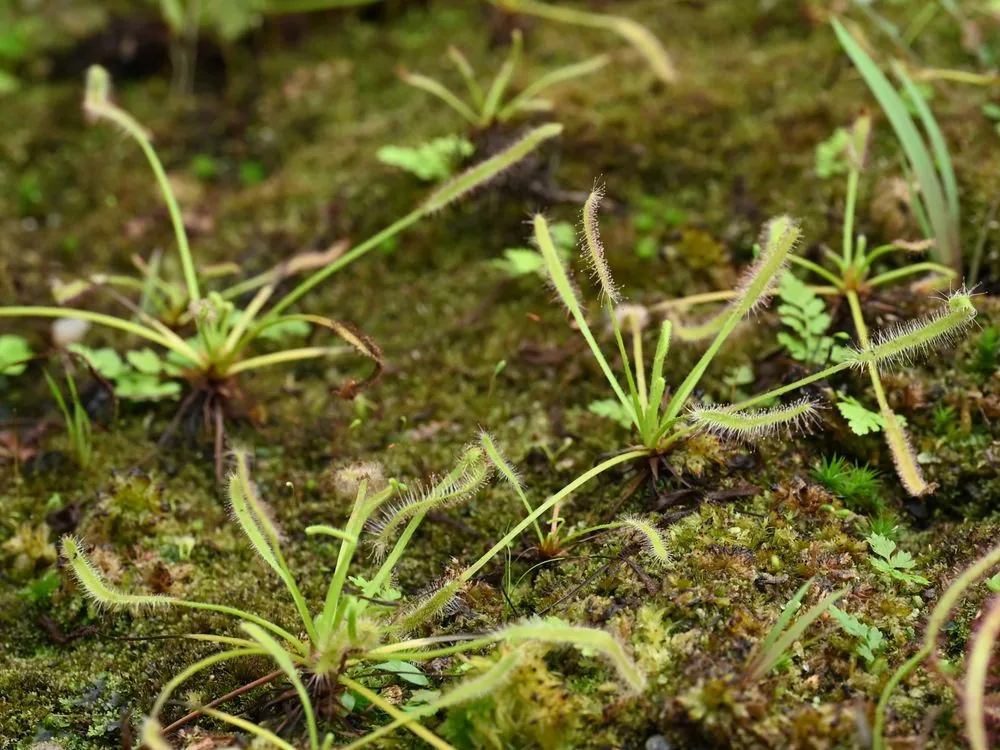
The Cape sundew is a small carnivorous plant from the wet, peaty ground of South Africa's Cape region. It forms a rosette of narrow, strap-shaped leaves covered in fine hairs, each tipped with a drop of clear, sticky liquid that glitters in the light. Small flies and gnats that land on a leaf are held fast, and the leaf slowly curls around them to digest them. In summer, tall stems carry rows of small pink flowers that open one at a time. It is the easiest carnivorous plant to keep on a windowsill, and it needs no cold winter rest.
As a precaution, keep it out of reach of children and pets.
Common mistake
Tap water and plant food are the two things that kill it. The roots are adapted to wet, mineral-poor peat, so the lime and salts in tap water and any fertiliser build up and slowly poison the plant. Use rainwater, distilled or deionised water only, and never feed the soil.
Care by Season
Spring
Growth speeds up. Repot or divide if needed and start standing the pot in water.
Summer
Flowers. Keep the saucer filled and give full light.
Autumn
Growth slows. Remove dead leaves and spent flower stems.
Winter
Keep cool to warm and bright, with the compost just damp. Protect from frost.
Growing & Maintenance
Repotting
Repot in spring every year or two into fresh carnivorous plant compost. A tall pot suits the long roots. Do not firm the compost hard.
Fertilising
None. Fertiliser in the compost damages the roots; the plant feeds itself with the insects it catches.
Pruning
Snip off blackened old leaves at the base and cut down flower stems once they finish, or earlier to stop it seeding around.
Propagation
Sow the fine seed on the surface of wet compost without covering it, or take leaf or root cuttings laid on damp compost in spring.
Pests & Diseases
Common problems
No sticky droplets
Most likely cause: Too little light or very dry air.
What to do: Move to a brighter spot and keep the compost wet.
Leaves blacken from the tip
Most likely cause: Normal ageing of the oldest leaves, or tap water if many leaves are affected.
What to do: Remove them and water only with rainwater.
Whole plant collapses
Most likely cause: The compost dried out, or fertiliser or hard water reached the roots.
What to do: Rewet with rainwater, repot into fresh compost if fed, and wait for regrowth from the roots.
Pale, floppy leaves
Most likely cause: Not enough light.
What to do: Move to a sunnier windowsill or under a grow light.
Leaves scorched in summer
Most likely cause: Hot midday sun through glass.
What to do: Give light shade in the hottest hours.
Seedlings everywhere
Most likely cause: Self-sown seed.
What to do: Cut the flower stems before the seed pods ripen.
Pests & Diseases
Aphids
Signs: Twisted, stunted new leaves and flower stems with clusters of small green insects.
Treatment: Pick them off or submerge the whole plant in rainwater for a day or two. Avoid soap sprays, which damage the leaves.
Grey mould
Signs: Fluffy grey growth on dead leaves at the centre of the rosette in cool, still, damp conditions.
Treatment: Remove dead leaves promptly and give more light and air in winter.
Mealybugs
Signs: White, woolly tufts at the leaf bases.
Treatment: Dab them with a fine brush dipped in methylated spirit and repeat weekly. Check the undersides of the leaves and the crevices where the leaf stem meets the main stalk.
FAQ
How do I water a Cape sundew?
Stand the pot in a saucer holding a centimetre or two of rainwater throughout the growing season, so the compost never dries. In winter keep the compost just damp instead of standing wet.
Why has my sundew lost its sticky drops?
Usually too little light, air that is too dry or a recent move. Give it the brightest spot you have and keep the saucer topped up; the dew returns on new leaves within a week or two.
Do I need to feed it insects?
No. It catches fungus gnats and small flies by itself, even indoors, and grows well on light alone. Do not give it meat, cheese or fertiliser.
Does it need a winter rest?
No. Unlike the Venus flytrap it has no true dormancy. It slows down in a cool, bright place and carries on growing in a warm one.
Why are there seedlings in my other pots?
The flowers pollinate themselves and scatter fine seed that germinates readily in any wet, peaty compost nearby. Cut off the flower stems before the seed ripens if you want to prevent it.
The whole plant has died back. Is it dead?
Not necessarily. After frost, drought or great heat the top can die while the thick roots survive. Keep the compost wet and wait a few weeks for new shoots.
Which compost should I use?
A lime-free, nutrient-poor mix, such as sphagnum moss peat or a peat-free carnivorous plant compost blended with lime-free sand or perlite. Ordinary potting compost is too rich.