No results. Is a plant missing? Tell uscontact@wikiplant.net
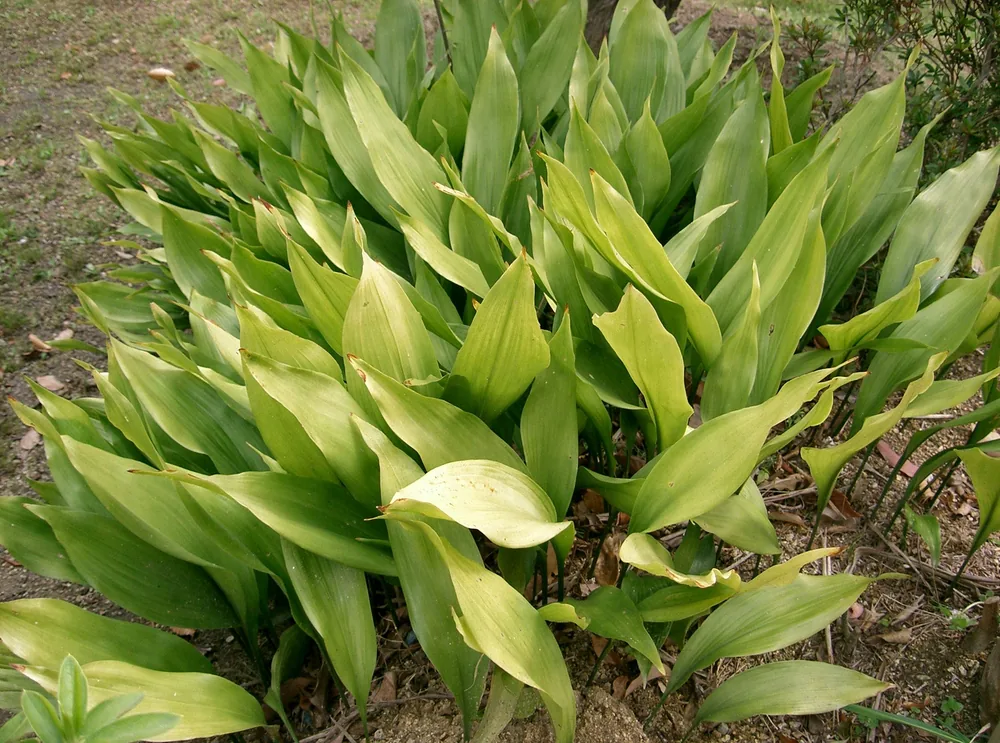
Cast Iron Plant
Aspidistra elatior
Care level: Very easy
The cast iron plant earned its name during the Victorian era, when it was one of the only houseplants tough enough to survive the gas lighting, coal soot, and dim, poorly ventilated parlors of the time, making it a genuine survivor of some of the harshest indoor conditions any plant has faced. It grows so slowly that a single plant can live and look essentially unchanged for decades, quietly outlasting owners, moves, and neglect alike.
Tolerates deep shade very well; avoid direct sun which can bleach the dark leaves.
Water
Let soil dry out between waterings, roughly every 2 weeks, as it is very drought tolerant.
Humidity
Adapts to low, average indoor humidity without issue.
Soil
Standard well-draining potting mix.
Size
30-90cm tall and wide.
Growth speed
Slow
Best position
north / north-east-facing windowanywhere up to about 2 m from the window
east-facing windowabout 1 m from the window or further back
west-facing windowabout 2 m from the window or further back
Watch for strong direct sun at east / west windows.
See every window directionHide window directions
Best position
right by the window
about 1 m
about 2 m
about 4 m
4 m or more
north
works well✓
works well✓
works well✓
just about~
just about~
north-east
works well✓
works well✓
works well✓
just about~
just about~
east
just about~
works well✓
works well✓
works well✓
works well✓
south-east
too much direct sun☼
just about~
just about~
works well✓
works well✓
south
too much direct sun☼
too much direct sun☼
too much direct sun☼
just about~
works well✓
south-west
too much direct sun☼
too much direct sun☼
just about~
works well✓
works well✓
west
too much direct sun☼
too much direct sun☼
works well✓
works well✓
works well✓
north-west
too much direct sun☼
just about~
works well✓
just about~
just about~
✓works well~just about○too dark☼too much direct sun
A rough guide based on window direction and typical daylight through the year. Window size, curtains and whatever stands outside matter just as much.
✓Non-toxic to pets
Considered non-toxic to cats and dogs.
Source: ASPCA
Did you know?
Cast iron plants produce small, unusual flowers right at the soil surface, often hidden under the leaves, which are believed to be pollinated by ground-dwelling insects like slugs and fungus gnats rather than the bees or moths that pollinate most flowers.
Care by Season
Spring
Resume light feeding once a month as new leaves slowly emerge.
Summer
Water when soil dries and wipe leaves occasionally to remove dust.
Autumn
Reduce feeding and continue watering only when soil is dry.
Winter
Water sparingly, this tough plant tolerates cool rooms and irregular care well.
Growing & Maintenance
Soil and pot
A standard, well-drained potting mix. It tolerates poor soil.
Fertilising
A light feed once a month in spring and summer, as new leaves emerge.
Pruning
Cut damaged or brown leaves off at soil level. Wipe the leaves now and then to remove dust.
Propagation
By dividing the rhizome when you repot, with a few leaves on each piece.
Pests & Diseases
Common problems
No new growth for months
Most likely cause: Normal. It is one of the slowest-growing houseplants.
What to do: Nothing to do. Expect only a few new leaves a year.
Bleached leaves
Most likely cause: Direct sun.
What to do: Move it into shade or indirect light.
Yellow leaves and a soft rhizome
Most likely cause: Overwatering.
What to do: Cut back watering sharply, trim the rotten rhizome and let the compost dry between waterings.
Dull, dusty leaves
Most likely cause: Dust on the broad leaf surfaces.
What to do: Wipe the leaves with a damp cloth.
No flowers
Most likely cause: Normal. It rarely blooms, and the flowers sit hidden at soil level.
What to do: More light makes flowering a little more likely.
Pests & Diseases
Spider mites
Signs: Fine webbing and faint speckling on leaves, though infestations are uncommon.
Treatment: Wipe leaves down periodically and apply insecticidal soap if mites appear. Check the undersides of the leaves and the crevices where the leaf stem meets the main stalk.
Scale insects
Signs: Small brown bumps along leaf undersides and stems.
Treatment: Scrape off by hand and treat with insecticidal soap or neem oil.
Root rot
Signs: Soft, blackened rhizome and yellowing leaves from prolonged overwatering.
Treatment: Cut back watering drastically, trim rotten rhizome sections, and repot into fresh, dry mix.
FAQ
Why has my cast iron plant not grown at all in months?
This is completely normal, it's one of the slowest-growing common houseplants, sometimes producing only a handful of new leaves per year, so lack of visible growth isn't a sign of a problem as long as leaves stay green and firm.
Can a cast iron plant survive in a room with almost no natural light?
Yes, better than almost any other common houseplant; it tolerates deep shade well, though growth will be extremely slow, and it still does best with at least some indirect light rather than a completely windowless room.
Is the cast iron plant safe for cats and dogs?
Yes, the cast iron plant is not toxic to cats or dogs.
How often should I water a cast iron plant?
Roughly every two weeks, once the compost has dried. Water regularly from spring to autumn and sparingly in winter. It is very drought-tolerant.
How big does a cast iron plant get?
Between 30 and 90cm tall and wide. It grows slowly, so it takes years to reach that size.
How do I propagate a cast iron plant?
By division. Split the rhizome into pieces that each carry a few leaves when you repot.