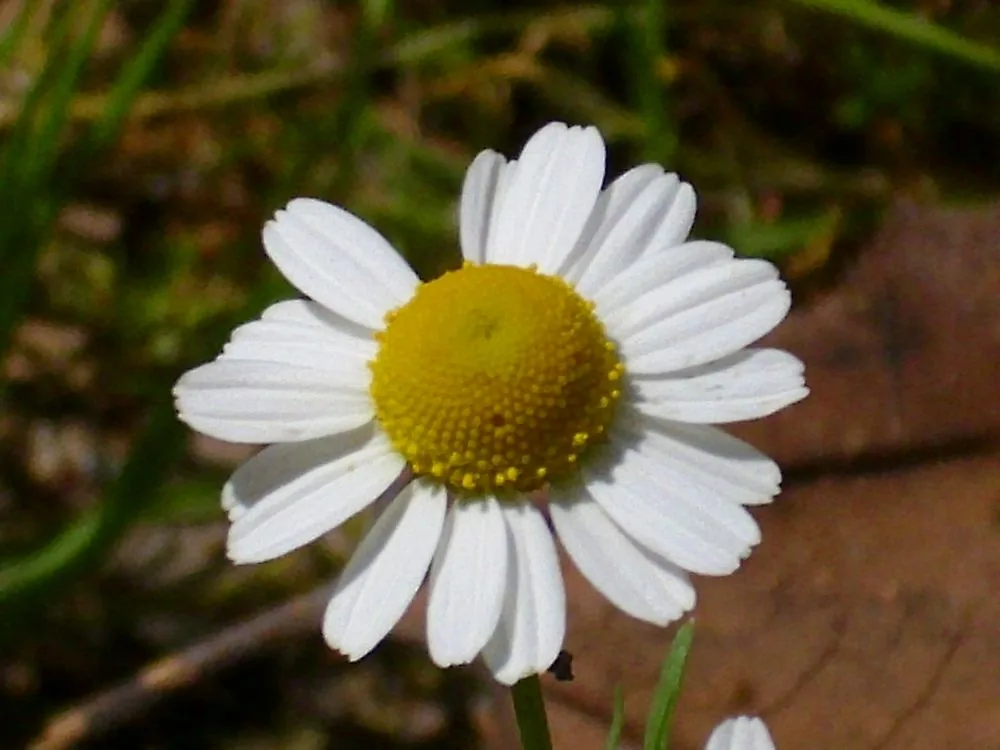
A single chamomile flower with white petals around a domed yellow centre, seen close up

Chamomile

Matricaria chamomilla
Care level: Very easy

German chamomile is a slender, branching annual herb with feathery, finely divided leaves and a mass of small daisy flowers from early summer. Each flower has white rays around a yellow centre that rises into a hollow cone as it ages, while the rays bend backwards. The whole plant smells sweetly of apples when crushed. The flowers are the part used: picked when fully open and dried, they make chamomile tea. It grows fast from seed in any sunny, well-drained spot, and it seeds itself around so readily that one sowing usually lasts for years.

I have this plant

Information

Varieties and related species
Matricaria chamomilla 'Bodegold'Chamaemelum nobileChamaemelum nobile 'Treneague'

Light

Full sun. It grows thin and flowers poorly in shade.

Water

Water seedlings until established. After that it needs watering only in long dry spells.

Humidity

Not a factor for this outdoor herb.

Soil

Light, well-drained soil of low to moderate fertility. It germinates best on bare, disturbed ground.

Size

15-60cm tall and 15-40cm wide.

Growth speed

Fast

Toxic to pets

Toxic to cats and dogs if eaten.

It can make cats and dogs unwell, so keep it out of their reach.

If your pet has eaten some, contact your vet.

Source: NC State Extension

Beginner tip

Pick the flowers every few days, on a dry morning, when the white rays are flat and before they droop. Regular picking keeps the plant flowering for weeks. Spread the flower heads in a single layer in a warm, shaded, airy place until they are crisp, then store them in a closed jar.

Care by Season

Spring

Sow on the surface of bare soil. Thin the seedlings.

Summer

Flowers from early summer. Pick every few days and dry the flowers.

Autumn

Leave some flowers to seed, or sow again in early autumn for an earlier crop next year.

Winter

Autumn-sown seedlings stand through winter as small rosettes.

Growing & Maintenance

Planting

Sow where the plants are to flower, on the surface, and thin to 20cm. Seedlings raised in pots can be planted out while small; older plants resent root disturbance.

Fertilising

None. Rich soil gives tall, floppy plants with fewer flowers.

Pruning

No pruning. Picking the flowers is all the trimming it needs; pull up the plants when they finish.

Propagation

By seed, sown in spring or early autumn. Let a few plants set seed and they will sow the next crop themselves.

Pests & Diseases

Common problems

Tall plants that fall over

Most likely cause: Rich soil, shade or crowding.
What to do: Grow in poorer soil in full sun and thin to 20cm.

Few flowers

Most likely cause: Too much shade or feeding.
What to do: Move the next sowing to a sunnier, poorer spot.

Seed does not come up

Most likely cause: Seed was covered with soil, or the surface dried out.
What to do: Sow on the surface, press in and keep moist until seedlings show.

Flowering stops in midsummer

Most likely cause: Flowers left to set seed, or heat and drought.
What to do: Pick regularly and water in dry spells.

Seedlings everywhere

Most likely cause: Self-seeding.
What to do: Hoe off unwanted seedlings, or pick all the flowers before they ripen.

Dried flowers smell musty

Most likely cause: Dried too slowly or stored before fully dry.
What to do: Dry in a single layer in a warm, airy place and store only when crisp.

Pests & Diseases

Aphids

Signs: Clusters of black or green insects on the stems below the flower buds.
Treatment: Rinse them off with water; ladybirds and hoverflies usually clear them.

Slugs and snails

Signs: Seedlings eaten off soon after they appear.
Treatment: Hand-pick after dark and sow a little more thickly to allow for losses.

Powdery mildew

Signs: A white, powdery coating on the leaves of crowded plants in dry weather.
Treatment: Thin the plants and water in dry spells; pull up badly affected plants.

FAQ

How do I make chamomile tea from my own plants?

Use about a teaspoon of dried flowers, or a small handful of fresh ones, per cup. Pour on water just off the boil, cover and leave for five minutes, then strain. Covering the cup keeps the scented oils in the tea.

How do I sow chamomile?

Scatter the fine seed on the surface of raked soil in spring or early autumn and press it in without covering it, since it needs light to germinate. Thin the seedlings to about 20cm apart. Autumn sowings flower earlier the following year.

Is this the chamomile used for lawns?

No. Lawn chamomile is Roman chamomile, Chamaemelum nobile, a low, creeping perennial. German chamomile is an upright annual. Both are used for tea, but the German kind is the one usually grown for it.

How do I tell it from the similar wild daisies?

Crush a flower: true chamomile smells of apples. Cut the yellow centre in half and it is hollow, while the scentless mayweed has a solid centre and no fragrance.

Does it come back every year?

The plants are annuals and die after seeding, but they self-seed freely, so new plants appear nearby each year as long as some flowers are left to ripen and the soil is not mulched heavily.

Can I grow it in a pot?

Yes. Sow a pinch of seed on the surface of a pot of multipurpose compost mixed with a little sand, keep it in full sun and water when the surface dries. Do not feed it.

Can anyone drink chamomile tea?

People who are allergic to plants of the daisy family, such as ragweed, can react to chamomile, and handling the plant can irritate sensitive skin. If that applies to you, avoid it.

You might also like