No results. Is a plant missing? Tell uscontact@wikiplant.net
Chinese Evergreen
Aglaonema commutatum
Care level: Easy
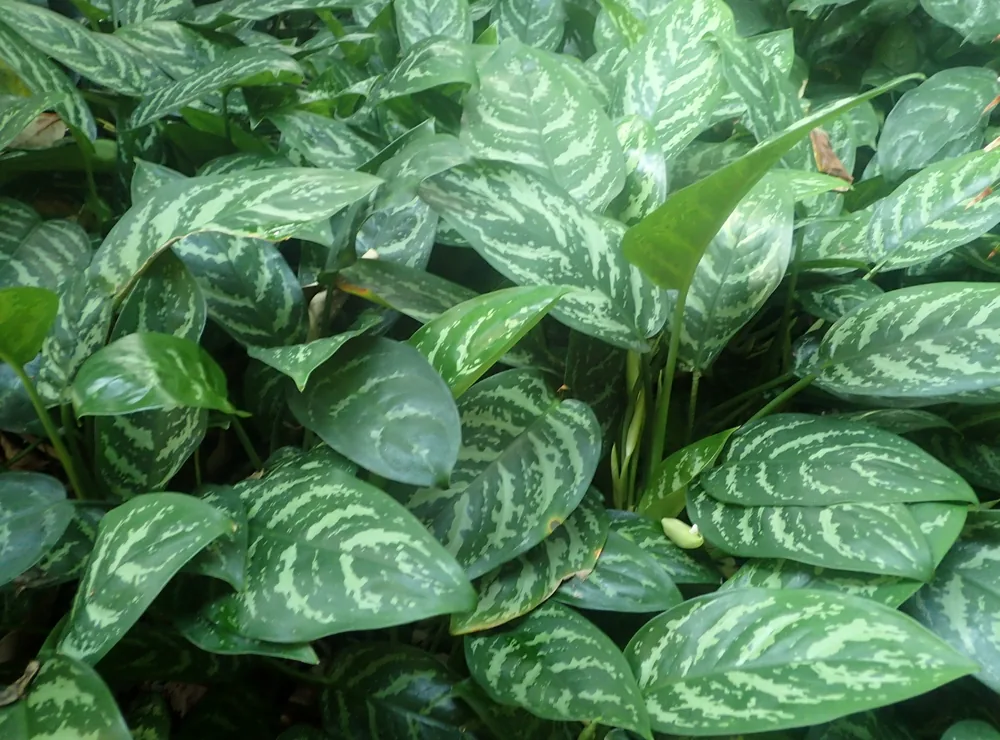
Chinese evergreen has furnished offices and dim hallways for decades because it tolerates fluorescent light and infrequent care better than almost any other houseplant, and as a general rule the more silver, pink, or red coloring a cultivar shows, the more light it actually needs to keep that color vivid.
Tolerates low light well, though variegated varieties prefer medium to bright indirect light for best color.
Water
Water when the top 2-3cm of soil is dry, roughly every 1-2 weeks; avoid soggy soil.
Humidity
Tolerates average home humidity but grows lusher with moderate humidity.
Soil
Well-draining, general-purpose potting mix.
Temperature
21-27°C by day. It does not tolerate cold.
Size
30-50cm tall and 30-45cm wide.
Growth speed
Medium
Best position
east / south-east-facing windowanywhere up to 4 m or more from the window
north / north-east / north-west-facing windowanywhere up to about 2 m from the window
south / west-facing windowabout 1 m from the window or further back
Watch for strong direct sun at south / west windows.
See every window directionHide window directions
Best position
right by the window
about 1 m
about 2 m
about 4 m
4 m or more
north
works well✓
works well✓
works well✓
just about~
just about~
north-east
works well✓
works well✓
works well✓
just about~
just about~
east
works well✓
works well✓
works well✓
works well✓
works well✓
south-east
works well✓
works well✓
works well✓
works well✓
works well✓
south
just about~
works well✓
works well✓
works well✓
works well✓
south-west
just about~
just about~
works well✓
works well✓
works well✓
west
just about~
works well✓
works well✓
works well✓
works well✓
north-west
works well✓
works well✓
works well✓
just about~
just about~
✓works well~just about○too dark☼too much direct sun
A rough guide based on window direction and typical daylight through the year. Window size, curtains and whatever stands outside matter just as much.
?Pet safety not confirmed
As a precaution, keep it out of reach of children and pets.
Did you know?
As a rule of thumb across Aglaonema cultivars, the more variegation or pink and red coloring a plant shows, the more light it needs. Solid dark green forms tolerate the deepest shade, while heavily patterned or red-tinged varieties fade without brighter, indirect light.
Care by Season
Spring
Resume light feeding monthly as new leaves emerge.
Summer
Water consistently and keep away from cold air conditioning drafts.
Autumn
Reduce watering frequency as growth slows.
Winter
Water sparingly and keep in a warm spot away from cold drafts below 15C.
Growing & Maintenance
Soil and pot
General-purpose potting compost with some perlite, in a pot with drainage holes. It grows well slightly snug in its pot.
Repotting
Every 2-3 years in spring; it is a slow grower. Move up one pot size.
Fertilising
A balanced liquid feed at half strength once a month in spring and summer. No feeding in winter.
Pruning
Remove yellow lower leaves at the base. If the stems become bare and leggy, cut them back to 5-10cm above the soil in spring; new shoots come from the base.
Propagation
Divide the clump at repotting, or root 10-15cm stem cuttings in water or moist compost in spring or summer.
Pests & Diseases
Common problems
Brown leaves or leaf edges
Most likely cause: Very dry air or a draughty position.
What to do: Move it out of the draught and raise the humidity.
Yellow leaves and soft, dark roots
Most likely cause: Overwatering.
What to do: Let the compost dry between waterings, trim rotten roots and repot in fresh mix. Water with room-temperature water, not cold.
Bare, leggy stems
Most likely cause: Normal with age: the stem lengthens and the lower leaves are lost.
What to do: Cut the stems back to 5-10cm above the compost in spring. New shoots come from the base.
Leaf pattern fading to green
Most likely cause: Too little light. Colourful varieties need more light than plain green ones.
What to do: Move it to medium or bright indirect light.
Limp, damaged leaves after a cold spell
Most likely cause: Cold. The plant is intolerant of low temperatures.
What to do: Move it to a warm room, away from cold windows and air conditioning.
Pests & Diseases
Mealybugs
Signs: White cottony clumps at leaf joints and stems.
Treatment: Dab with an alcohol-soaked cotton swab and repeat weekly. Check the undersides of the leaves and the crevices where the leaf stem meets the main stalk.
Spider mites
Signs: Fine webbing and speckled, dull leaves in dry air.
Treatment: Increase humidity, rinse leaves, and apply insecticidal soap. Check the undersides of the leaves and the crevices where the leaf stem meets the main stalk.
Root rot
Signs: Yellowing leaves and mushy, dark roots from overwatering.
Treatment: Remove from wet soil, trim rotten roots, and repot in fresh, well-draining mix.
FAQ
Why is my Chinese evergreen losing its variegation?
Because it is not getting enough light. Patterned and colourful varieties need medium to bright indirect light to keep their markings, while plain green forms tolerate shade.
Can a Chinese evergreen survive in an office with no natural light?
Yes, it is one of the most shade-tolerant houseplants and copes with office lighting. Growth is slow there, and it will not flower in low light.
How often should I water a Chinese evergreen?
About every 1-2 weeks, when the top 2-3cm of compost is dry. Keep it moist from spring to autumn and water less in winter. Use water at room temperature.
Why is my Chinese evergreen getting leggy?
This is normal as the plant ages: the stem grows longer and loses its lower leaves. Cut the stems back to 5-10cm above the compost in spring and new shoots will grow from the base.
Should I remove the flowers of a Chinese evergreen?
Yes, it is worth removing them. Cutting off flowers and fruits directs the plant's energy into leaf growth.
How do I propagate a Chinese evergreen?
Divide the clump when you repot, or root stem cuttings 10-15cm long in water or moist compost. Spring and summer are the best time.