No results. Is a plant missing? Tell uscontact@wikiplant.net
Chives
Allium schoenoprasum
Care level: Very easy
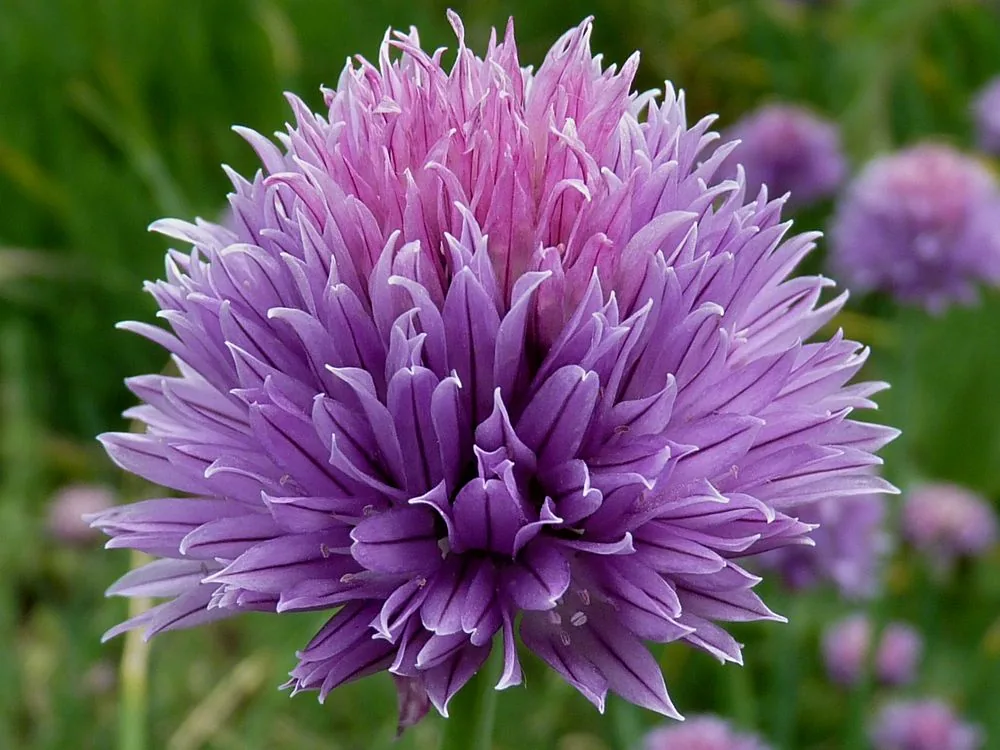
Chives are the smallest of the edible onions: a clump-forming perennial with hollow, grass-like leaves that taste mildly of onion, topped in late spring and summer by round purple flower heads. Both the leaves and the flowers are edible. The plant dies back in winter and returns from its small bulbs every spring, and it grows as happily in a pot on a sunny windowsill as in open ground.
Full sun to partial shade. The sunnier the spot, the stronger the growth and the better the flowering.
Water
Keep the soil lightly moist. Plants in the ground cope with a short dry spell, but pots need regular watering in summer.
Humidity
Not a factor for this plant, outdoors or on a windowsill.
Soil
Fertile, well-drained soil. Work grit into heavy clay so the bulbs do not sit wet.
Temperature
Fully hardy, to about -20°C. The leaves die back in winter.
Size
30-46cm tall and 30-43cm wide.
Growth speed
Medium
!Toxic to pets
Toxic to cats and dogs if eaten.
Like onion and garlic, it can damage red blood cells and cause anaemia, along with vomiting and diarrhoea.
If your pet has eaten some, contact your vet.
Source: NC State Extension, Pet Poison Helpline
Beginner tip
Harvest by cutting whole leaves close to the base rather than snipping off the tips. A leaf cut at the base is replaced by a fresh one, while a leaf with its tip removed simply browns at the cut.
Care by Season
Spring
New leaves appear early. Sow indoors eight to ten weeks before the last frost or outdoors after it, and divide crowded clumps.
Summer
Harvest regularly and enjoy the flowers. Once they fade, cut the clump back to about 5cm for a fresh flush of leaves.
Autumn
Divide clumps now if you did not in spring. A small clump potted up and brought to a windowsill extends the harvest.
Winter
The plant is dormant and needs nothing. Make sure pots are not standing in water.
Growing & Maintenance
Planting
Plant in fertile, well-drained soil in sun or light shade, in the ground or in a pot. Sow indoors eight to ten weeks before the last frost, or straight outdoors once frost has passed.
Pruning
Harvest often to keep new leaves coming. After flowering, cut the whole clump back to about 5cm from the base.
Propagation
By seed, or by dividing the clump in spring or autumn. Plants also seed themselves if the flower heads are left on.
Pests & Diseases
Common problems
Brown, dry leaf tips
Most likely cause: The compost dried out, or the leaves were snipped at the tips.
What to do: Water more regularly and cut whole leaves at the base.
Thin, floppy leaves
Most likely cause: Too little light, most often indoors.
What to do: Move the pot to the sunniest spot you have.
Coarse, tough leaves
Most likely cause: The plant is flowering or has just finished.
What to do: Cut the clump back to about 5cm and wait for new growth.
A crowded clump with fewer leaves
Most likely cause: The clump has not been divided for years.
What to do: Lift and divide it in spring or autumn.
Seedlings coming up everywhere
Most likely cause: The flower heads were left to set seed.
What to do: Remove the flowers as they fade.
Pests & Diseases
Onion white rot
Signs: Leaves yellow and wilt, and the base of the bulbs is covered in white, fluffy mould dotted with tiny black specks.
Treatment: Lift and destroy affected plants with the soil around them. The fungus stays in the soil for many years, so grow no onions, garlic, leeks or chives in that spot.
Onion downy mildew
Signs: Pale patches on the leaves that turn grey and fuzzy in damp weather, after which the leaves collapse.
Treatment: Remove affected leaves, give the plants more space and air, and water at the base rather than over the foliage.
Root rot
Signs: Yellow, limp leaves and soft bulbs in soil that stays wet.
Treatment: Improve the drainage with grit or move the clump to a drier spot. Replant only the firm, healthy parts.
FAQ
How do I harvest chives without weakening the plant?
Start once the leaves are about 15cm tall and cut them close to the base with scissors. Take a part of the clump at a time rather than all of it, and the plant keeps producing new leaves through the season.
Should I let my chives flower?
You can. The flowers are edible and rich in nectar, so bees visit them constantly. The leaves do turn coarser while the plant flowers, so cut the whole clump back to about 5cm once the flowers fade and it will send up tender new growth.
Can I grow chives indoors?
Yes. A pot on a sunny windowsill works well, as long as the compost drains freely and never dries out completely. Indoor plants grow thinner than outdoor ones, so give them the brightest spot you have.
Are chives toxic to cats and dogs?
Yes. Like onion, garlic and leek, chives can damage a pet's red blood cells and cause anaemia, along with vomiting and diarrhoea. Cats are especially sensitive, so grow chives where pets cannot graze on them.
Do chives come back every year?
Yes. Chives are a hardy perennial. The leaves die back to the ground in winter and new ones appear from the bulbs in early spring.
When should I divide chives?
In spring or autumn, once the clump has become crowded. Lift it, pull it apart into smaller clumps and replant them straight away.