No results. Is a plant missing? Tell uscontact@wikiplant.net
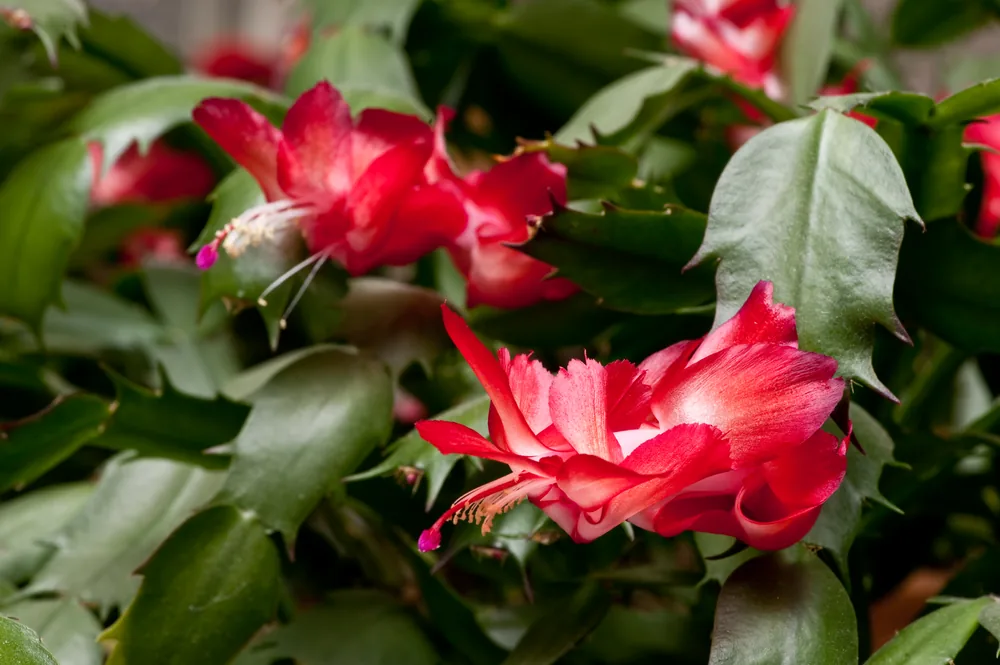
Christmas Cactus
Schlumbergera truncata
Care level: Easy
Unlike the desert cacti it's often grouped with, Schlumbergera truncata is an epiphyte from the humid coastal mountain forests of Brazil, growing tucked into tree branches rather than baking in sand, which is why it wants more moisture and shade than a typical cactus.
Prefers bright, indirect light; unlike desert cacti, it avoids intense direct midday sun.
Water
Water when the top layer of soil is dry, roughly every 1-2 weeks, keeping soil more evenly moist than a desert cactus.
Humidity
Appreciates moderate humidity, being a tropical forest cactus rather than a desert species.
Soil
Well-draining mix with added perlite or orchid bark, less gritty than typical cactus soil.
Temperature
Normal room temperatures. Cooler nights in autumn help it set flower buds.
Best position
east / south-east-facing windowanywhere up to about 2 m from the window
north / north-east / north-west-facing windowanywhere up to about 1 m from the window
south / west-facing windowabout 1 m from the window or further back
Watch for strong direct sun at south / west windows.
See every window directionHide window directions
Best position
right by the window
about 1 m
about 2 m
about 4 m
4 m or more
north
works well✓
works well✓
too dark○
too dark○
too dark○
north-east
works well✓
works well✓
too dark○
too dark○
too dark○
east
works well✓
works well✓
works well✓
too dark○
too dark○
south-east
works well✓
works well✓
works well✓
too dark○
too dark○
south
just about~
works well✓
works well✓
too dark○
too dark○
south-west
just about~
just about~
works well✓
too dark○
too dark○
west
just about~
works well✓
works well✓
too dark○
too dark○
north-west
works well✓
works well✓
too dark○
too dark○
too dark○
✓works well~just about○too dark☼too much direct sun
A rough guide based on window direction and typical daylight through the year. Window size, curtains and whatever stands outside matter just as much.
?Pet safety not confirmed
As a precaution, keep it out of reach of children and pets.
Did you know?
Christmas cacti are famously long-lived and are often passed down through families as heirloom plants, with some specimens documented to survive for 20, 30, or even more than 50 years with consistent care.
Care by Season
Spring
Resume regular watering and light feeding after flowering finishes.
Summer
Water consistently and consider a partly shaded spot outdoors.
Autumn
Provide cooler nights and shorter days (about 12-14 hours of darkness) to trigger bud formation.
Winter
Water moderately during flowering and avoid moving the plant, which can cause bud drop.
Growing & Maintenance
Soil and pot
An airy, moist mix with perlite or orchid bark, less gritty than a desert cactus mix, in a pot with drainage holes.
Fertilising
Feed lightly once a month from the end of flowering through summer.
Propagation
From cuttings of two or three stem segments, left to dry for a day and then set in barely moist mix.
Pests & Diseases
Common problems
No flowers
Most likely cause: No cool nights and long, uninterrupted dark in autumn.
What to do: For several weeks in autumn, give it cooler nights and 12-14 hours of darkness, away from evening lamps.
Buds dropping before they open
Most likely cause: A draught, a temperature swing or a move.
What to do: Once buds have formed, leave the plant where it is and keep conditions steady.
Limp, wrinkled segments
Most likely cause: Either thirst or rotted roots.
What to do: Feel the compost. Dry: water. Wet: let it dry out, check the roots and repot if they are rotten.
Red-tinged segments
Most likely cause: Too much direct sun.
What to do: Move it to bright, indirect light.
Soft, rotting stem base
Most likely cause: Overwatering.
What to do: Take cuttings from healthy segments and repot them in fresh, airy mix.
Pests & Diseases
Mealybugs
Signs: White cottony clumps at segment joints.
Treatment: Dab with an alcohol-soaked cotton swab and repeat weekly. Check the undersides of the leaves and the crevices where the leaf stem meets the main stalk.
Root rot
Signs: Limp, discolored segments and mushy roots from overwatering.
Treatment: Remove from wet soil, trim rotten roots, and repot in fresh, well-draining mix.
Bud drop
Signs: Flower buds falling before opening, often from sudden temperature or light changes.
Treatment: Keep the plant in a stable location with consistent light and temperature during budding.
FAQ
Why won't my Christmas cactus bloom?
Flowering is triggered by several weeks of cooler nights and roughly 12-14 hours of uninterrupted darkness in autumn. A plant exposed to artificial light at night, such as a lamp or TV glow, often fails to set buds.
Why are the buds falling off my Christmas cactus before they open?
Bud drop usually follows a sudden change in temperature, light, or the plant's location. Once buds form, keep the plant in a stable spot and avoid moving or rotating it until flowering finishes.
How often should I water a Christmas cactus?
Roughly every 1-2 weeks, when the top layer of compost is dry. It is a forest cactus and likes more even moisture than a desert cactus, but not wet roots.
How do I propagate a Christmas cactus?
From stem cuttings. Twist off a piece of two or three segments, let it dry for a day and set it in barely moist mix.
How much light does a Christmas cactus need?
It needs bright, indirect light. Unlike desert cacti, it does not want intense midday sun, which turns the segments red.
When should I feed a Christmas cactus?
Once a month, starting after flowering has finished and continuing through summer.