No results. Is a plant missing? Tell uscontact@wikiplant.net
Crown of Thorns
Euphorbia milii
Care level: Easy
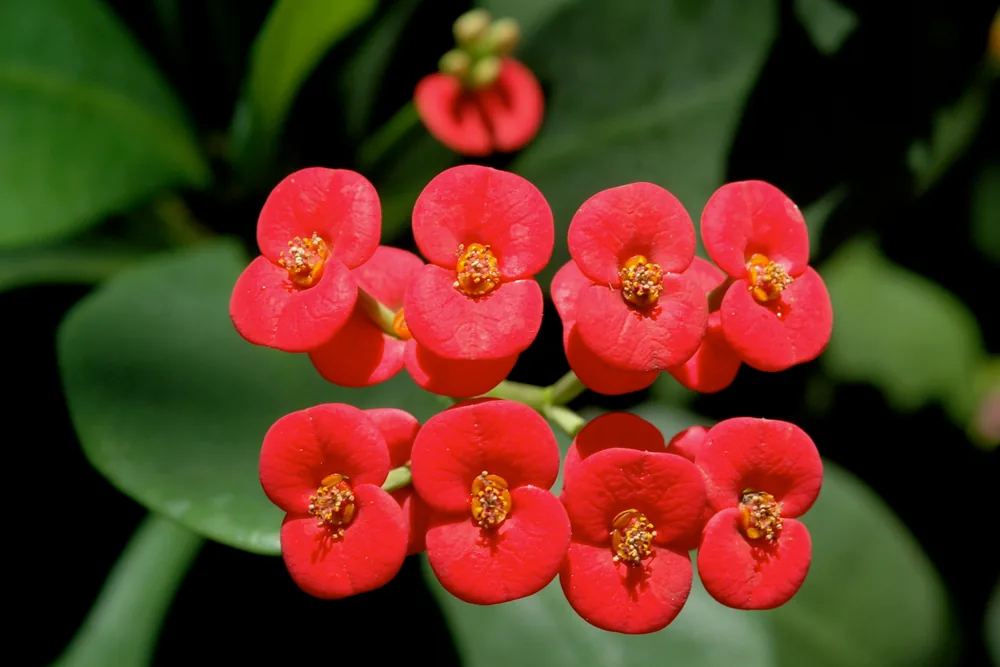
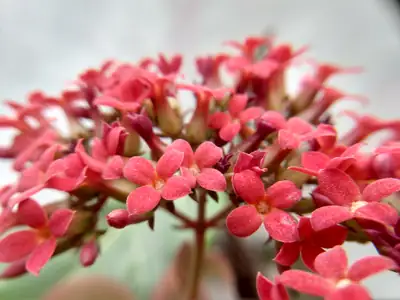
Native to Madagascar, Euphorbia milii earned its common name from a persistent legend that it was the plant woven into Christ's crown of thorns, despite the species never having grown anywhere near the Middle East. Its vivid red or yellow "flowers" aren't petals at all but colorful bracts surrounding tiny true flowers at the center.
Short and SweetYellow-flowered formEuphorbia milii var. hislopii
Light
Needs bright direct sun for several hours a day to flower well; a south-facing window is ideal.
Water
Let soil dry out completely between waterings, roughly every 2 weeks, less in winter; very drought-tolerant once established.
Humidity
Tolerates dry household air well; no extra humidity needed.
Soil
Fast-draining cactus or succulent mix to prevent waterlogged roots.
Temperature
Keep it above 10°C in winter. It does not survive near-freezing temperatures.
Size
0.9-1.8m tall and 45-90cm wide with age.
Best position
south-east / south / south-west-facing windowanywhere up to about 1 m from the window
east / west-facing windowright by the window
See every window directionHide window directions
Best position
right by the window
about 1 m
about 2 m
about 4 m
4 m or more
north
too dark○
too dark○
too dark○
too dark○
too dark○
north-east
too dark○
too dark○
too dark○
too dark○
too dark○
east
works well✓
too dark○
too dark○
too dark○
too dark○
south-east
works well✓
works well✓
too dark○
too dark○
too dark○
south
works well✓
works well✓
too dark○
too dark○
too dark○
south-west
works well✓
works well✓
too dark○
too dark○
too dark○
west
works well✓
too dark○
too dark○
too dark○
too dark○
north-west
too dark○
too dark○
too dark○
too dark○
too dark○
✓works well~just about○too dark☼too much direct sun
A rough guide based on window direction and typical daylight through the year. Window size, curtains and whatever stands outside matter just as much.
?Pet safety not confirmed
As a precaution, keep it out of reach of children and pets.
Safety note
The stems and thorns ooze a milky white latex sap that is toxic if ingested and can irritate skin and eyes on contact; keep it away from curious pets and children, and wear gloves when pruning or repotting.
Care by Season
Spring
Resume regular watering and begin light feeding as new growth and buds appear.
Summer
Give maximum sun and water when soil is fully dry; this is its main flowering season.
Autumn
Cut back watering and stop feeding as growth and flowering slow down.
Winter
Keep in a bright, cool spot, water only occasionally, and protect from cold drafts below 10°C.
Growing & Maintenance
Soil and pot
A fast-draining cactus or succulent mix in a pot with drainage holes.
Fertilising
A light feed in spring and summer, when new growth and buds appear. Stop in autumn.
Propagation
From stem cuttings. Wear gloves, rinse the milky sap off the cut and let it dry for a few days before planting in dry mix.
Pests & Diseases
Common problems
No flowers
Most likely cause: Too little direct sun.
What to do: Give it several hours of direct sun a day, ideally in a south-facing window.
Leaves dropping before winter
Most likely cause: Normal. The plant sheds leaves in cycles before its winter rest.
What to do: Water only occasionally over winter. New leaves appear in spring.
Yellow leaves and soft stems
Most likely cause: Overwatering, which leads to root rot.
What to do: Let the compost dry out completely between waterings and repot into fresh, dry mix if the roots have rotted.
Long, bare, leaning stems
Most likely cause: Too little light.
What to do: Move it into full sun.
Sudden leaf drop in a cold spot
Most likely cause: Cold draughts or temperatures below 10°C.
What to do: Move it somewhere warmer.
Pests & Diseases
Mealybugs
Signs: White cottony clusters in leaf axils and stem joints
Treatment: Dab with rubbing-alcohol swab and repeat weekly; wear gloves as the milky sap irritates skin. Check the undersides of the leaves and the crevices where the leaf stem meets the main stalk.
Spider mites
Signs: Fine webbing and stippled leaves in dry conditions
Treatment: Increase airflow and wipe down stems and leaves regularly. Check the undersides of the leaves and the crevices where the leaf stem meets the main stalk.
Root rot
Signs: Soft, blackened stem base and dropping leaves from overwatering
Treatment: Remove from wet soil, let cut areas callous, and repot in dry, gritty mix.
FAQ
Is Crown of Thorns safe to keep around cats or dogs?
It's best kept out of reach; the milky sap is toxic if chewed or eaten and can cause mouth irritation, drooling, or vomiting in pets, on top of the sharp thorns lining every stem.
Why won't my Crown of Thorns flower?
Flowering depends heavily on light; it needs several hours of direct, bright sun daily, and a plant kept in a dim corner will stay green and thorny without producing the colorful bracts.
How often should I water a Crown of Thorns?
Roughly every two weeks, once the compost has dried out completely, and less in winter. It is drought-tolerant and rots if kept wet.
How do I propagate a Crown of Thorns?
From stem cuttings. Wear gloves, rinse off the sap, let the cut end dry for a few days and then plant it in dry cactus mix.
How big does a Crown of Thorns get?
With age it reaches 0.9-1.8m tall and 45-90cm wide. Indoors in a pot it grows slowly towards that size.
When does a Crown of Thorns flower?
Indoors it can flower from late winter right through to autumn, as long as it gets enough direct sun.