No results. Is a plant missing? Tell uscontact@wikiplant.net
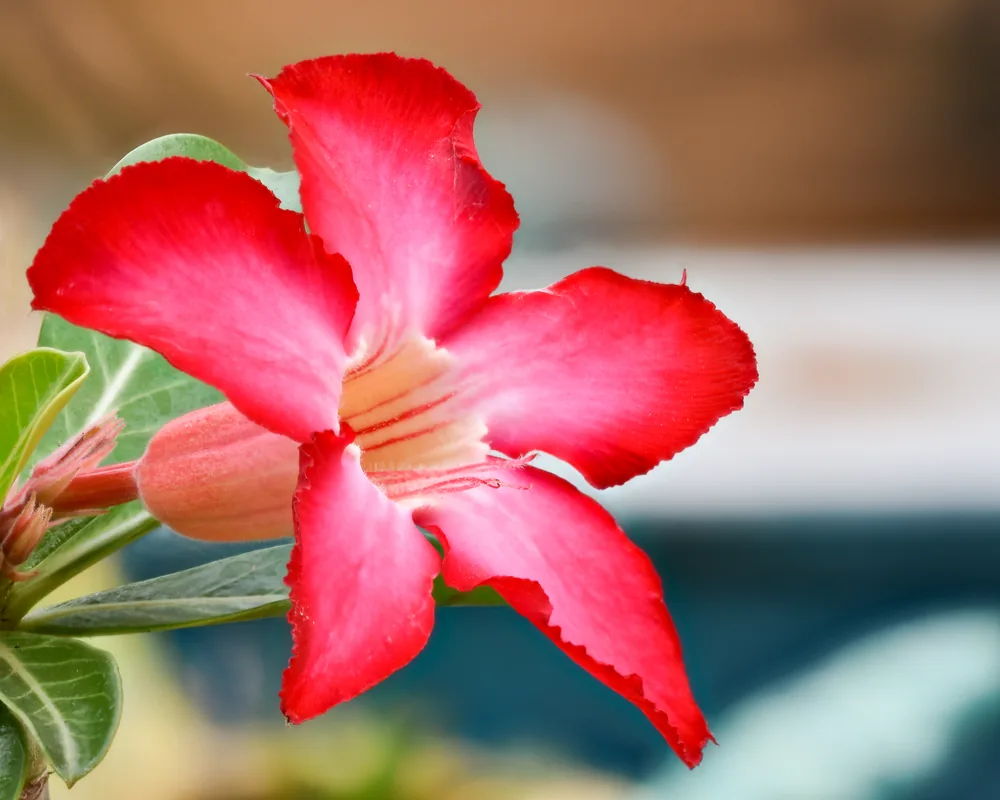
Desert Rose
Adenium obesum
Care level: Moderate
Adenium obesum stores water in a swollen, bulbous base called a caudex, much like a miniature baobab tree, which is why growers often deliberately expose part of it above the soil line to show off its sculptural shape. In parts of its native East African range, the toxic sap has traditionally been used to make hunting arrow poison.
Double-flowered hybridsAdenium obesum var. multiflorumVariegated leaf forms
Light
Needs full sun, at least 6 hours a day, to flower and keep its swollen caudex healthy; the brightest window available.
Water
Water thoroughly then let it dry out completely, roughly every 1-2 weeks in growth and much less in winter dormancy.
Humidity
Tolerates dry indoor air well; avoid high humidity, which encourages rot.
Soil
Very fast-draining succulent mix, ideally with extra perlite or pumice around the swollen root base.
Temperature
Warm. Bring it indoors when nights fall below 13°C.
Size
0.9-2.7m tall in the ground in a hot climate; much smaller in a pot.
Growth speed
Slow
Best position
south-east / south / south-west-facing windowanywhere up to about 1 m from the window
east / west-facing windowright by the window
See every window directionHide window directions
Best position
right by the window
about 1 m
about 2 m
about 4 m
4 m or more
north
too dark○
too dark○
too dark○
too dark○
too dark○
north-east
too dark○
too dark○
too dark○
too dark○
too dark○
east
works well✓
too dark○
too dark○
too dark○
too dark○
south-east
works well✓
works well✓
too dark○
too dark○
too dark○
south
works well✓
works well✓
too dark○
too dark○
too dark○
south-west
works well✓
works well✓
too dark○
too dark○
too dark○
west
works well✓
too dark○
too dark○
too dark○
too dark○
north-west
too dark○
too dark○
too dark○
too dark○
too dark○
✓works well~just about○too dark☼too much direct sun
A rough guide based on window direction and typical daylight through the year. Window size, curtains and whatever stands outside matter just as much.
!Toxic to pets
Toxic to cats and dogs if eaten.
Can cause vomiting and diarrhoea, and more rarely affects heart rhythm.
If your pet has eaten some, contact your vet.
Source: ASPCA
Safety note
All parts of the plant, especially the sap, are toxic if ingested and can irritate skin; keep it well out of reach of pets and small children, and wash hands after pruning or repotting.
Care by Season
Spring
Resume regular watering and feeding as new leaves and flower buds emerge.
Summer
This is peak growth and flowering season; water when dry and keep it in maximum sun.
Autumn
Taper off watering and feeding as the plant prepares to slow down for winter.
Winter
Many desert roses drop leaves and go dormant; water only minimally and keep warm, away from cold drafts.
Growing & Maintenance
Soil and pot
A very fast-draining cactus mix, with extra perlite or pumice, in a pot with several drainage holes.
Fertilising
Feed in spring, as new leaves and flower buds emerge. None while the plant is dormant.
Propagation
From seed, from stem cuttings or by grafting. Wear gloves: the milky sap is poisonous.
Pests & Diseases
Common problems
Swollen base shrinking or wrinkling
Most likely cause: Underwatering, or damaged roots.
What to do: Check that the roots are firm, then water thoroughly and let the compost dry out again.
All the leaves drop in winter
Most likely cause: Normal dormancy when light and temperature fall.
What to do: Water only minimally and keep the plant warm until growth restarts.
Soft, mushy base or stems
Most likely cause: Rot from wet compost.
What to do: Cut all rotten tissue back to healthy flesh, let the wounds dry and repot in dry, gritty mix.
No flowers
Most likely cause: Too little sun.
What to do: Give it full sun, at least six hours a day.
Spots on the leaves
Most likely cause: A fungal leaf spot.
What to do: Remove the affected leaves and keep the foliage dry.
Pests & Diseases
Mealybugs
Signs: White cottony masses in leaf joints and around the caudex
Treatment: Treat with an alcohol-dipped swab and repeat weekly until gone. Check the undersides of the leaves and the crevices where the leaf stem meets the main stalk.
Spider mites
Signs: Fine webbing and speckled, dulled leaves in dry heat
Treatment: Increase airflow and rinse leaves periodically. Check the undersides of the leaves and the crevices where the leaf stem meets the main stalk.
Root and stem rot
Signs: Soft, mushy caudex or blackened base, usually from overwatering or cold
Treatment: Cut away all rotten tissue back to healthy flesh, let it dry and callous, then repot in dry mix.
FAQ
Why is the swollen base of my Desert Rose shrinking or wrinkling?
A wrinkled caudex usually signals underwatering or root damage; check that roots are healthy and firm, then water thoroughly and let it dry out fully before watering again, since chronic underwatering depletes the stored water reserves.
Is it normal for my Desert Rose to drop all its leaves in winter?
Yes, many Desert Roses go dormant and lose most or all of their leaves when temperatures and light drop; keep watering to a minimum during this rest period and resume normal care once new growth appears in spring.
Is the Desert Rose toxic to cats and dogs?
Yes, the Desert Rose is toxic to cats and dogs, and the sap can affect the heart. Keep the plant well out of reach and wear gloves when you handle it.
How often should I water a Desert Rose?
Roughly every 1-2 weeks while it is growing, letting the compost dry out completely in between. Water much less during winter dormancy.
What temperature does a Desert Rose need?
It needs warmth. Bring it indoors when nights fall below 13°C and keep it away from cold draughts.
How do I propagate a Desert Rose?
From seed, from stem cuttings or by grafting. Plants grown from seed form the best swollen base.